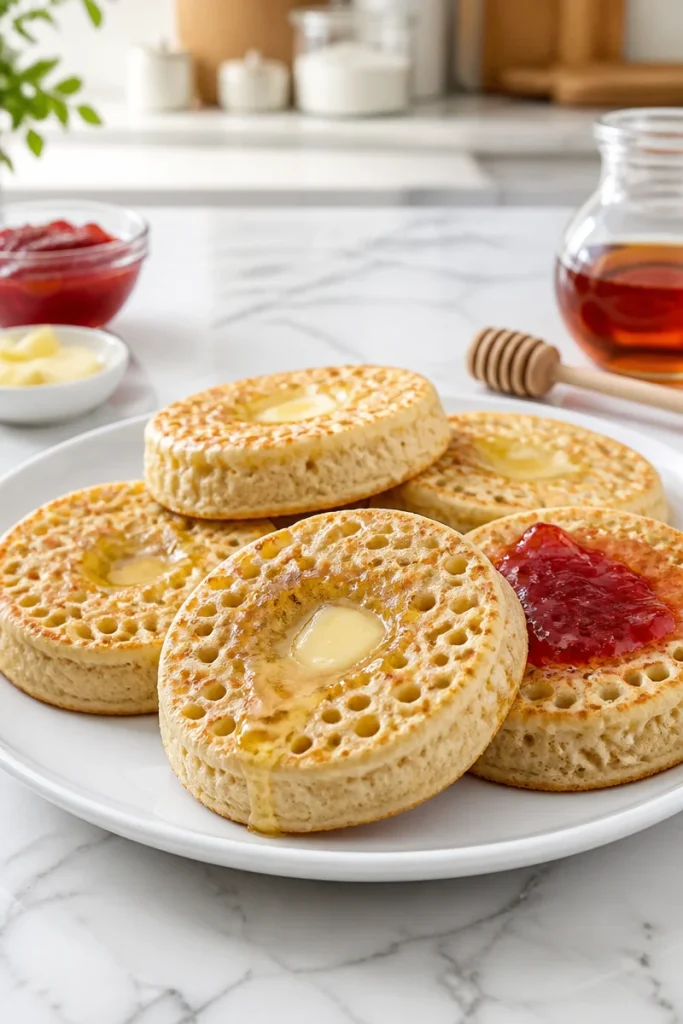
Ingredients
Method
Preparation
- Stir the sugar and yeast into the warm milk, then let it foam for about 10 minutes if using active dry yeast.
- Whisk together the flour and salt in a large bowl.
- Pour the liquid mixture into the flour and stir until you have a thick dough.
- Cover the bowl loosely and let it rise in a warm spot for 1 to 2 hours, until nearly doubled.
Mixing and Resting
- Dissolve the baking soda in warm water and beat into the dough for 1 to 2 minutes until it becomes a thick, pourable batter.
- Cover and let it rest for at least 30 minutes until the batter looks bubbly.
Cooking
- Grease the rings and the skillet. Set rings in the skillet over medium-high heat.
- Fill each ring about half to slightly more than half full with batter.
- Cook for about 10 minutes until the tops look set and bottoms are lightly browned.
- Flip the crumpets and cook for an additional 1 to 2 minutes until golden, or toast later.
Notes
Store leftover crumpets in an airtight container in the refrigerator for up to 3 days or freeze for 2 months. Toast for best texture upon reheating. Be careful with batter resting times and pan temperatures.