If you have ever wanted a dinner that feels like pure comfort, this Osaka style okonomiyaki cabbage pancake is a wonderful place to start. It is hearty, cozy, and full of that savory-sweet flavor that makes people go back for one more slice. In my opinion, it is one of those meals that feels homemade in the best way, because every bite is warm, soft, and just a little crisp around the edges.
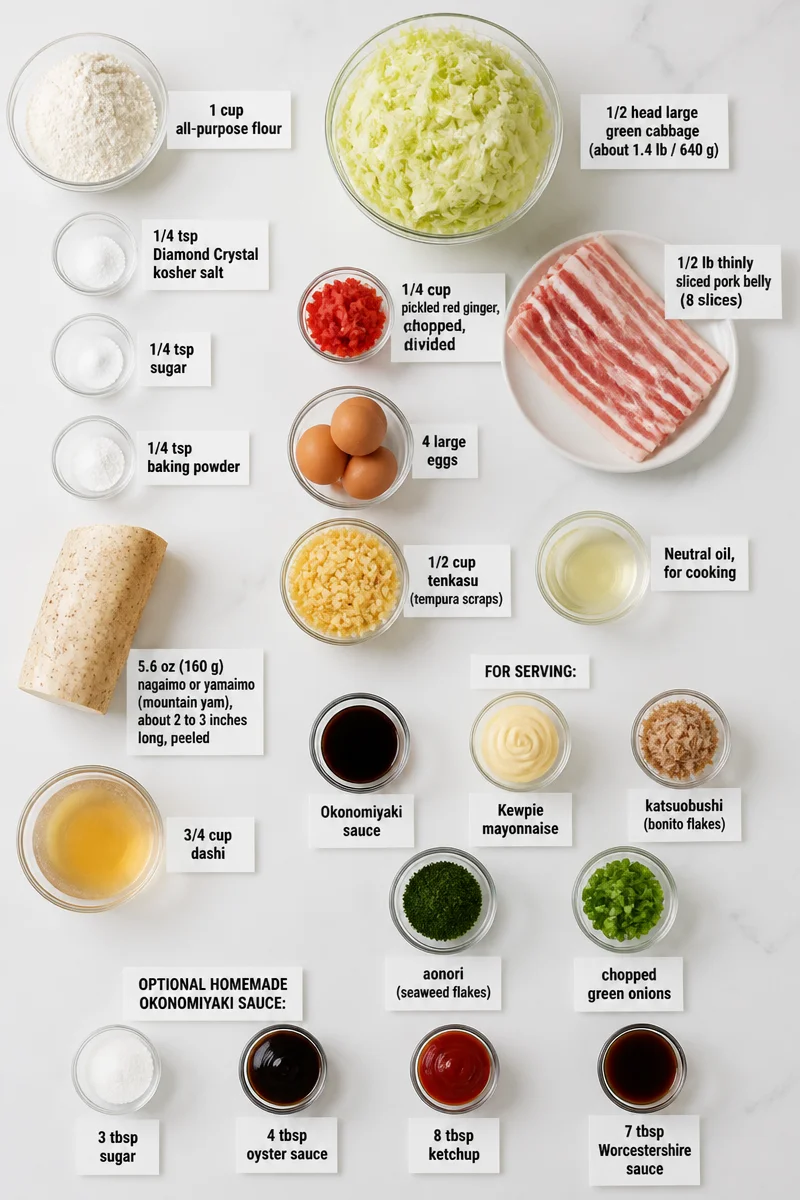
What makes this okonomiyaki so satisfying is the balance of simple ingredients. The base batter uses 1 cup all-purpose flour, 1/4 tsp Diamond Crystal kosher salt, 1/4 tsp sugar, 1/4 tsp baking powder, 5.6 oz (160 g) nagaimo or yamaimo, and 3/4 cup dashi. Then comes the good part, with 1/2 head large green cabbage, 1/4 cup pickled red ginger, 1/2 lb thinly sliced pork belly, 4 large eggs, and 1/2 cup tenkasu. After that, the toppings bring it all together with okonomiyaki sauce, Kewpie mayonnaise, katsuobushi, aonori, and chopped green onions. As a result, you get a dish that is savory, fluffy, rich, and deeply satisfying, with a nice bite from the cabbage and a gentle lift from the ginger.
The method is simple too, and that is part of the charm. First, you mix the batter base and let it rest so the nagaimo can work its magic. Then you prep the cabbage, fold everything together, and cook the pancakes in lidded pans so they stay tender inside while the bottom browns nicely. After that, you flip, finish cooking, and top with sauce and garnishes. Because the steps are clear and the timing is manageable, this recipe feels very doable, even if you are new to Japanese home cooking.
This Osaka style okonomiyaki cabbage pancake is perfect for chilly nights, weekend cooking, or a relaxed family dinner. It also works well for a casual gathering, since everyone can cut their own wedge and add extra sauce or mayo if they like. In short, it is the kind of meal that feels festive without being fussy.
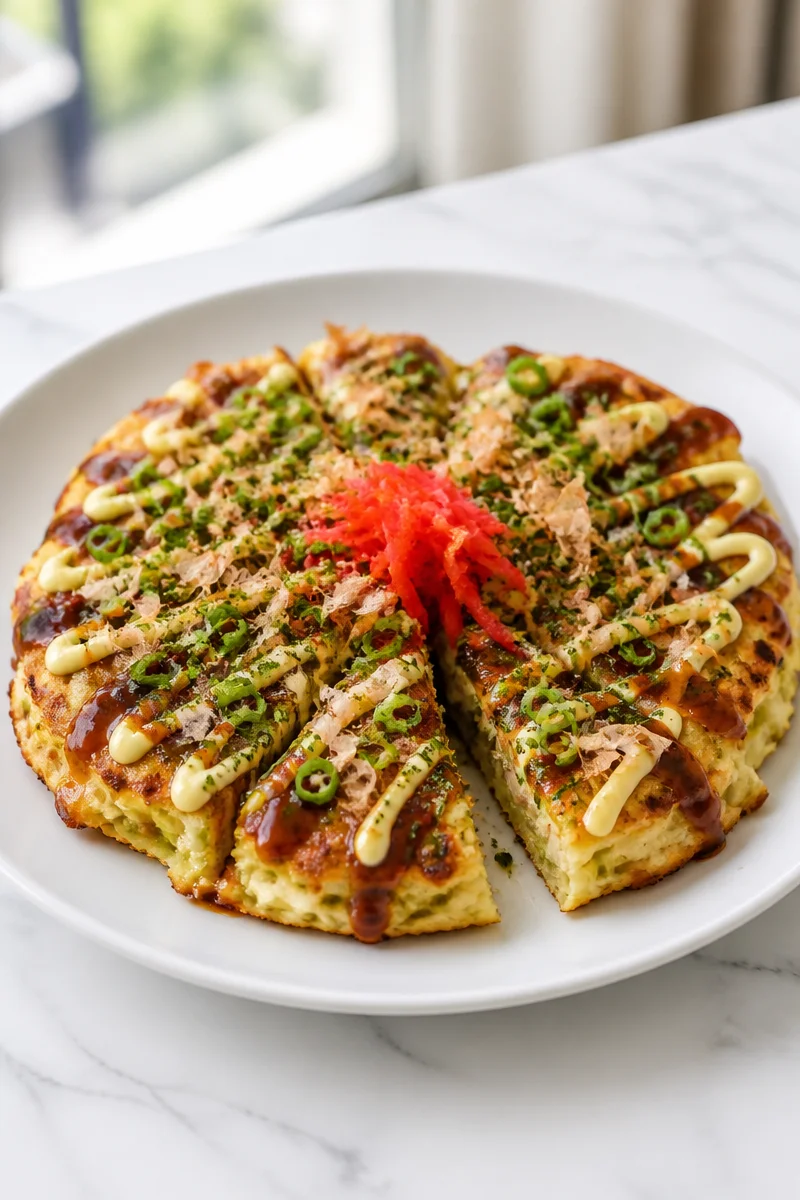
Why You’ll Love This Osaka Style Okonomiyaki Cabbage Pancake
- It is hearty and comforting, yet still packed with vegetables.
- The ingredient list is simple, but the flavor is rich and layered.
- The batter and filling come together in a flexible, forgiving way.
- The pork belly, cabbage, and toppings make every bite satisfying.
- It reheats well, so leftovers are just as welcome the next day.
Cabbage Tips
Cabbage is the heart of this Osaka style okonomiyaki cabbage pancake, so choosing and prepping it well matters. Look for a large green cabbage that feels heavy for its size and has crisp leaves. Then, slice it into thin strips and mince it so it folds into the batter more easily. After that, wash and dry it very well, because excess water can thin the batter and make the pancake harder to cook. If you have a salad spinner, use it. That extra step helps the cabbage keep its texture while still cooking through.
Options for Substitutions
- Swap nagaimo or yamaimo with a small amount of mashed potato for a softer batter, although the texture will be less stretchy.
- Use vegetable dashi or a light broth if you want a vegetarian base.
- Replace pork belly with thinly sliced chicken, shrimp, or mushrooms for a different filling.
- Use plain panko crumbs if you cannot find tenkasu, since they still add a little crunch.
- If you do not have pickled red ginger, use finely chopped pickles or leave it out and add a touch more sauce on top.
- For the sauce, use store-bought okonomiyaki sauce, or make the homemade version with sugar, oyster sauce, ketchup, and Worcestershire sauce.
Watch Out for These Mistakes
First, do not skip the batter rest. The nagaimo helps create a light, tender texture, but the batter needs time to settle. If you cook it right away, the pancake may not hold together as well. So, if you can, let it rest for at least 1 hour, or even overnight in the refrigerator.
Next, be careful not to add too much cabbage too fast. Fold it in one-third at a time, and stop if the batter starts to look overloaded. Otherwise, the pancake can turn loose and hard to shape. Also, make sure the cabbage is dry, because wet cabbage can make the mixture thin and messy.
Another common mistake is cooking over heat that is too high. Medium heat with a lid works best because it gives the pork belly time to cook and lets the center steam gently. If the heat is too strong, the outside may brown too fast while the middle stays underdone. So, keep an eye on the pan and adjust the heat if needed.
Finally, do not press too hard when you flip the pancake. A gentle press is enough. If you squash it too much, you can lose the fluffy texture that makes this Osaka style okonomiyaki cabbage pancake so good. A little care here makes a big difference.
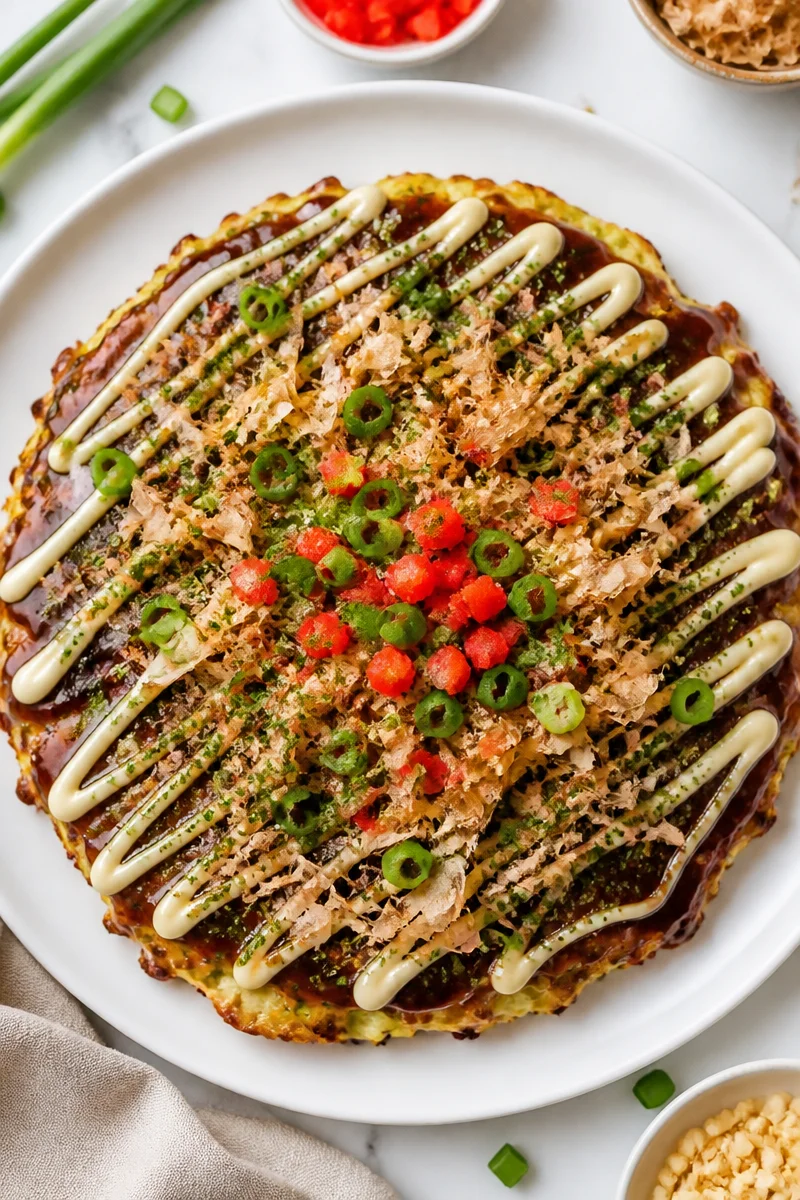
What to Serve With Osaka Style Okonomiyaki Cabbage Pancake?
This Osaka style okonomiyaki cabbage pancake is filling on its own, but it also pairs nicely with a few simple sides. A bowl of miso soup brings a warm, savory balance, while a crisp cucumber salad adds freshness. You could also serve steamed rice if you want a bigger meal, or a light fruit dish afterward to cut through the rich sauce and mayo. If you are hosting, iced green tea is a natural match and helps keep the meal feeling balanced.
Storage Instructions
Store: Keep plain leftover pancakes in the refrigerator for up to 3 days. Wrap them well so they do not dry out.
Freeze: For longer storage, wrap each plain pancake in foil, then place it in a freezer bag. Freeze for up to 1 month.
Reheat: For the stovetop, warm the pancake over medium-low heat in a covered pan until hot through. For the microwave, heat in short bursts until warmed, though the texture will be softer. If reheating from frozen, thaw first if you can, then warm gently so the center heats evenly.
Recipe Info
Preparation Time: 15 minutes, plus 1 hour batter resting
Cooking Time: 25 minutes
Total Time: 1 hour 40 minutes
Level of Difficulty: Easy to Medium
Servings: 4
Calories: 725 kcal per serving
Estimated Nutrition
Estimated nutrition for the whole recipe (without optional ingredients):
- Calories: 2,700 to 3,000
- Protein: 70 to 90 g
- Fat: 170 to 210 g
- Carbohydrates: 180 to 230 g
Ingredients
- 1 cup all-purpose flour
- 1/4 tsp Diamond Crystal kosher salt
- 1/4 tsp sugar
- 1/4 tsp baking powder
- 5.6 oz (160 g) nagaimo or yamaimo (mountain yam), about 2 to 3 inches long, peeled
- 3/4 cup dashi
- 1/2 head large green cabbage (about 1.4 lb / 640 g)
- 1/4 cup pickled red ginger, chopped, divided
- 1/2 lb thinly sliced pork belly (8 slices)
- 4 large eggs
- 1/2 cup tenkasu (tempura scraps)
- Neutral oil, for cooking
- Okonomiyaki sauce, Kewpie mayonnaise, katsuobushi (bonito flakes), aonori (seaweed flakes), chopped green onions
- 3 tbsp sugar
- 4 tbsp oyster sauce
- 8 tbsp ketchup
- 7 tbsp Worcestershire sauce
Step-by-Step Instructions
Step 1: Make the Batter Base
Mix the flour, salt, sugar, and baking powder in a bowl. Then grate the peeled nagaimo and stir it in with the dashi. After that, let the batter rest for at least 1 hour, or overnight in the refrigerator if that is easier. This rest time helps the texture come together, so do not rush it. Also, wash your hands well after handling nagaimo, since it can itch.
Step 2: Prepare the Cabbage and Other Fillings
Core the cabbage, then slice it into 1/2-inch strips and mince it. Wash and dry it thoroughly, and if you have one, a salad spinner works very well. Next, chop the pickled red ginger and cut the pork belly into 4-inch pieces. Once everything is ready, the final mixing step goes much faster.
Step 3: Mix the Batter
Add the eggs, tenkasu, and two-thirds of the chopped pickled ginger to the batter. Then fold in the cabbage one-third at a time. If the bowl starts to feel too full, stop and work with what you have. The batter should coat the cabbage rather than drown it.
Step 4: Make the Optional Sauce
If you want to make the homemade okonomiyaki sauce, stir the sugar, oyster sauce, ketchup, and Worcestershire sauce together until smooth. The result should be glossy and balanced, with a sweet-savory taste that works well on the pancake. You can also make this ahead of time and keep it in the fridge.
Step 5: Cook the First Side
Heat a little oil in two large lidded pans over medium heat. Then divide the batter into two circles, each about 6 inches across and 3/4 inch thick. Lay 3 slices of pork belly on top of each pancake. If you only have one pan, cook in two rounds instead. Cover and cook on medium-low for about 5 minutes, until the bottom is browned.
Step 6: Flip and Finish Cooking
Flip the pancakes carefully, then press them gently so they hold together. Cover again and cook for about 5 minutes more. After that, flip once more and cook uncovered for 2 minutes. This final uncovered time helps the outside set and gives you a better finish.
Step 7: Top and Serve
Brush the pancakes with okonomiyaki sauce and zigzag with mayonnaise. Then sprinkle on katsuobushi, aonori, chopped green onions, and the remaining pickled ginger. Cut into wedges and serve hot. That last step is the best part, because the toppings melt slightly into the pancake and bring everything together.
Conclusion
This Osaka style okonomiyaki cabbage pancake is cozy, flavorful, and easy to love. With cabbage, pork belly, a light yam-based batter, and all those classic toppings, it delivers the kind of comfort food that feels special without being complicated. Since the recipe also stores and reheats well, it is a smart choice for busy home cooks who want something satisfying and fun.
If you try this recipe, I would love to hear how it turned out. Share your thoughts, leave a comment, or explore more Japanese-inspired comfort food recipes for your next home-cooked meal.
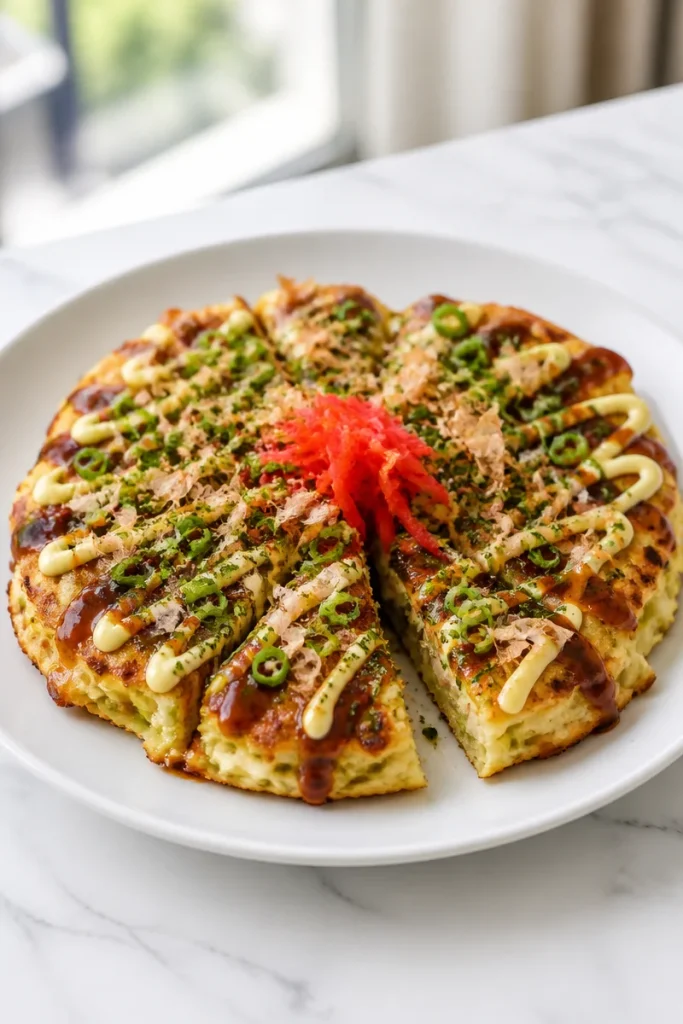
Osaka Style Okonomiyaki Cabbage Pancake
Ingredients
Method
- Mix the flour, salt, sugar, and baking powder in a bowl. Then grate the peeled nagaimo and stir it in with the dashi. Let the batter rest for at least 1 hour, or overnight if easier.
- Core the cabbage, slice it into 1/2-inch strips, and mince it. Wash and dry it thoroughly.
- Chop the pickled red ginger and cut the pork belly into 4-inch pieces.
- Add the eggs, tenkasu, and two-thirds of the chopped pickled ginger to the batter. Fold in the cabbage one-third at a time.
- Heat oil in two large lidded pans over medium heat. Divide the batter into two circles about 6 inches across and 3/4 inch thick. Lay 3 slices of pork belly on top of each pancake. Cover and cook on medium-low for about 5 minutes.
- Flip the pancakes carefully, then press gently to hold together. Cover and cook for about 5 minutes more, then flip once more and cook uncovered for 2 minutes.
- Brush the pancakes with okonomiyaki sauce and zigzag with mayonnaise. Sprinkle with katsuobushi, aonori, green onions, and remaining ginger. Cut into wedges and serve hot.
