This crispy Japanese karaage fried chicken is pure comfort. It is the kind of dish that feels special, yet it still fits into a regular weeknight when you want something warm, savory, and deeply satisfying. The outside turns crisp and golden, while the inside stays juicy and tender. In my opinion, that balance is what makes karaage such a family favorite.
What makes this recipe shine is the simple mix of boneless, skin-on chicken thighs, Diamond Crystal kosher salt, black pepper, fresh ginger, garlic, soy sauce, sake, and toasted sesame oil. Then the chicken gets a light coating of potato starch or cornstarch plus a little all-purpose flour, which helps create that famous crackly crust. Finally, it is fried in neutral oil and served with lemon wedges, Japanese Kewpie mayonnaise, and shichimi togarashi for a bright, rich finish.
The method is easier than it sounds, and that is one reason I love it. First, you cut and season the chicken, then mix it with the marinade. After a short 30-minute rest, you coat the pieces and fry them twice. Since this recipe contains alcohol, it is intended for guests of legal drinking age. Even so, the cooking steps are very straightforward, and the double-fry method gives you great texture without much fuss.
This Japanese karaage fried chicken is perfect for chilly nights, casual dinners, game day snacks, or potlucks. It travels well, it reheats nicely, and it always disappears fast. So if you want a crispy chicken recipe that feels both familiar and a little special, this one is a wonderful choice.
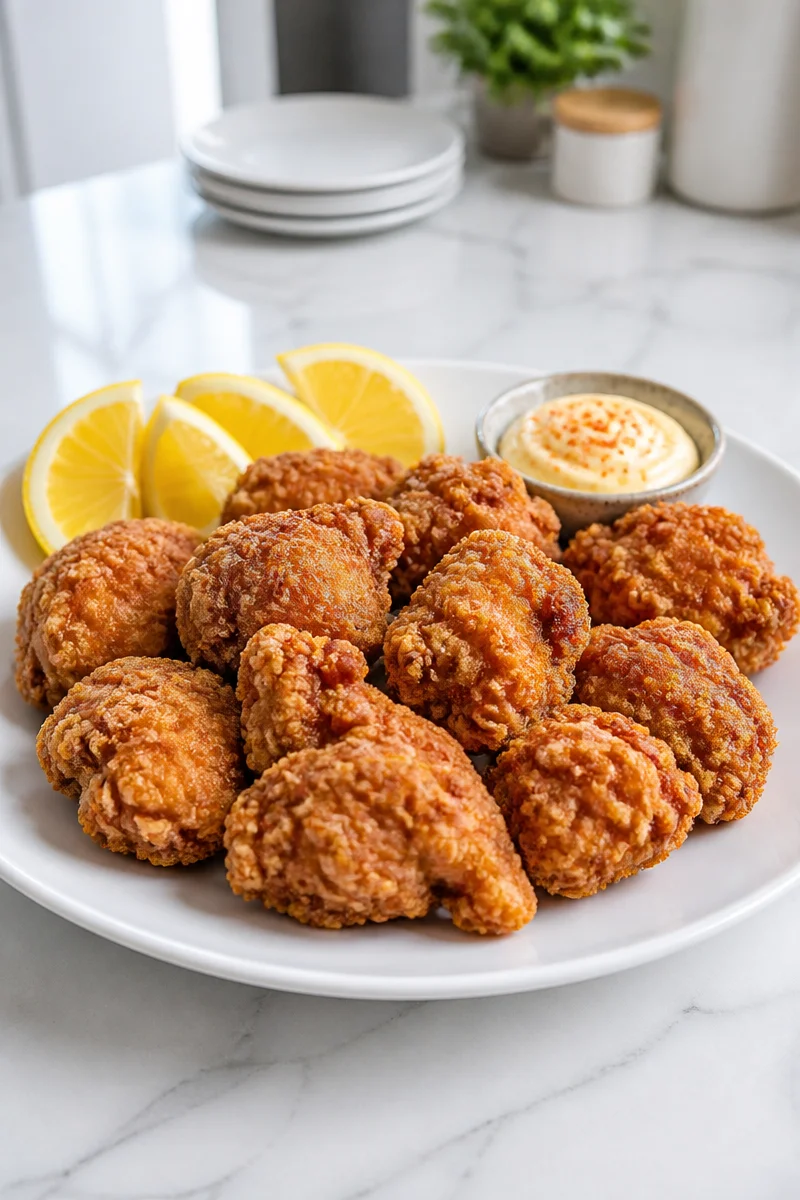
Why You’ll Love This Crispy Japanese Karaage Fried Chicken
- Fast and approachable: You only need about 15 minutes of prep and 15 minutes of cooking, not counting marinating time.
- Big flavor: Ginger, garlic, soy sauce, and sesame oil bring deep savory taste with very little effort.
- Very crispy texture: The double-fry method gives the karaage its light, crunchy crust.
- Great for sharing: This crispy Japanese karaage fried chicken is ideal for family meals, parties, and small gatherings.
- Easy to serve: Add lemon, Kewpie mayonnaise, or shichimi togarashi, and the dish feels complete right away.
Chicken Thigh Tips
The best chicken for karaage is boneless, skin-on chicken thighs. They stay juicy during frying, and the skin adds extra flavor and richness. Try to cut the chicken into even 2-inch pieces, because that helps them cook at the same rate. If some pieces are much larger than others, you may end up with uneven texture.
Also, do not marinate the chicken too long. A short 30-minute marinade is enough to flavor the meat without making it too salty or soft. In addition, make sure the pieces are not dripping wet before coating them. A light, even coating helps the flour and starch stick well, which gives you that crisp, classic karaage crust.
Options for Substitutions
- Use boneless chicken breast instead of thighs if you want a leaner option. However, reduce the frying time by 15 to 20 seconds.
- Swap potato starch for cornstarch if that is what you have on hand.
- Replace sake with dry sherry or Chinese rice wine. If needed, you can also leave it out.
- Use regular soy sauce if you do not have a low-sodium version, but taste carefully so the marinade does not get too salty.
- Swap Diamond Crystal kosher salt for another kosher salt, but use less if your salt is finer and saltier by volume.
- Use toasted sesame oil only in the marinade, and if you do not have it, you can omit it rather than replacing it with a strong oil.
Watch Out for These Mistakes
One common mistake is marinating the chicken too long. Because this recipe includes soy sauce and sake, the flavor can become too strong if the chicken sits for hours. Instead, stick close to the recommended 30 minutes. That gives you good flavor without changing the texture of the meat too much.
Another issue is frying too many pieces at once. When the pot gets crowded, the oil temperature drops. As a result, the chicken absorbs more oil and loses crispness. For best results, fry only 3 to 5 pieces at a time and keep the temperature steady.
It is also important not to skip the first fry and the short rest in between. The first fry cooks the chicken gently, while the rest time lets the heat settle through the pieces. Then the second fry at 350°F creates that deep golden crust. If you rush this step, the chicken may look done but will not have the same crisp bite.
Finally, use a thermometer if you can. The chicken should reach 165°F inside. That helps you avoid undercooking, and it also keeps the meat juicy instead of dry. With fried chicken, a little temperature control goes a long way.
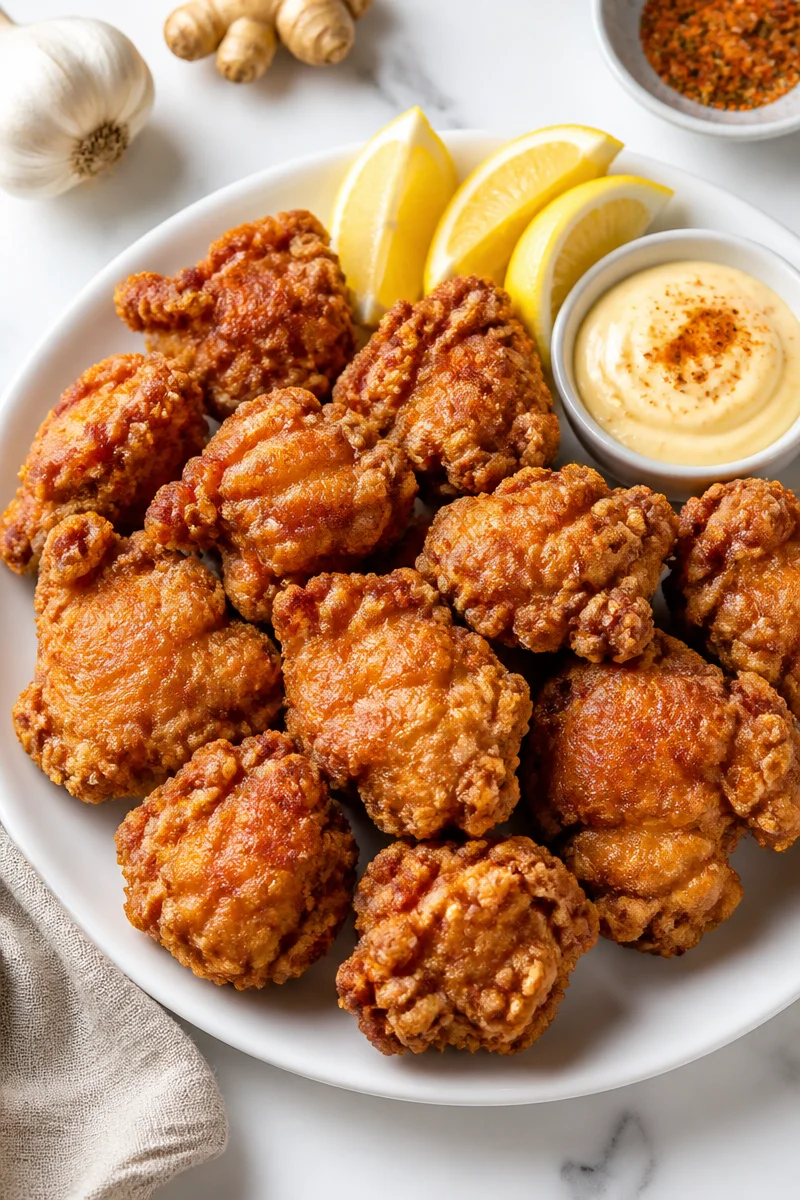
What to Serve With Crispy Japanese Karaage Fried Chicken?
This crispy Japanese karaage fried chicken pairs well with simple sides that balance the rich, savory flavor. I like it with steamed rice, a crisp cabbage salad, or quick pickles for freshness. You could also serve it with miso soup, edamame, or a light cucumber salad. Since the chicken is already bold and crunchy, the best side dishes are the ones that bring cool, clean contrast.
Storage Instructions
Store: Keep leftovers in the refrigerator for up to 3 days. Place them in an airtight container once they have fully cooled.
Freeze: Freeze the karaage for up to 1 month. For best results, freeze in a single layer first, then move the pieces to a freezer bag or container.
Reheat: For the best texture, reheat in a 350°F oven for 7 to 8 minutes, until warm and crispy. If you are in a hurry, you can use the microwave, but the coating will soften. If using the microwave, heat in short bursts and then crisp the chicken briefly in a hot skillet or oven if possible.
Recipe Info
Preparation Time: 15 minutes, plus 30 minutes marinating
Cooking Time: 15 minutes
Total Time: 1 hour
Level of Difficulty: Easy
Servings: 4
Calories: 450 kcal per serving, estimated
Estimated Nutrition
Estimated nutrition for the whole recipe (without optional ingredients):
Calories: 1,700 to 1,900
Protein: 105 to 125 g
Fat: 120 to 145 g
Carbohydrates: 20 to 35 g
Ingredients
- 1 1/2 lb boneless, skin-on chicken thighs (4 to 6 pieces)
- 1/2 tsp Diamond Crystal kosher salt
- 1/8 tsp freshly ground black pepper
- 1/2 tsp fresh ginger, grated with its juice
- 1 clove garlic, minced or pressed
- 1/2 to 1 tbsp soy sauce
- 1/2 tbsp sake (or dry sherry or Chinese rice wine; can be omitted)
- 1/2 tsp toasted sesame oil
- 2 tbsp potato starch or cornstarch, plus more if needed
- 2 tbsp all-purpose flour, plus more if needed
- 3 to 4 cups neutral oil, for deep frying (at least 1 to 1 1/2 inches deep)
- Lemon wedges, Japanese Kewpie mayonnaise, shichimi togarashi (seven spice)
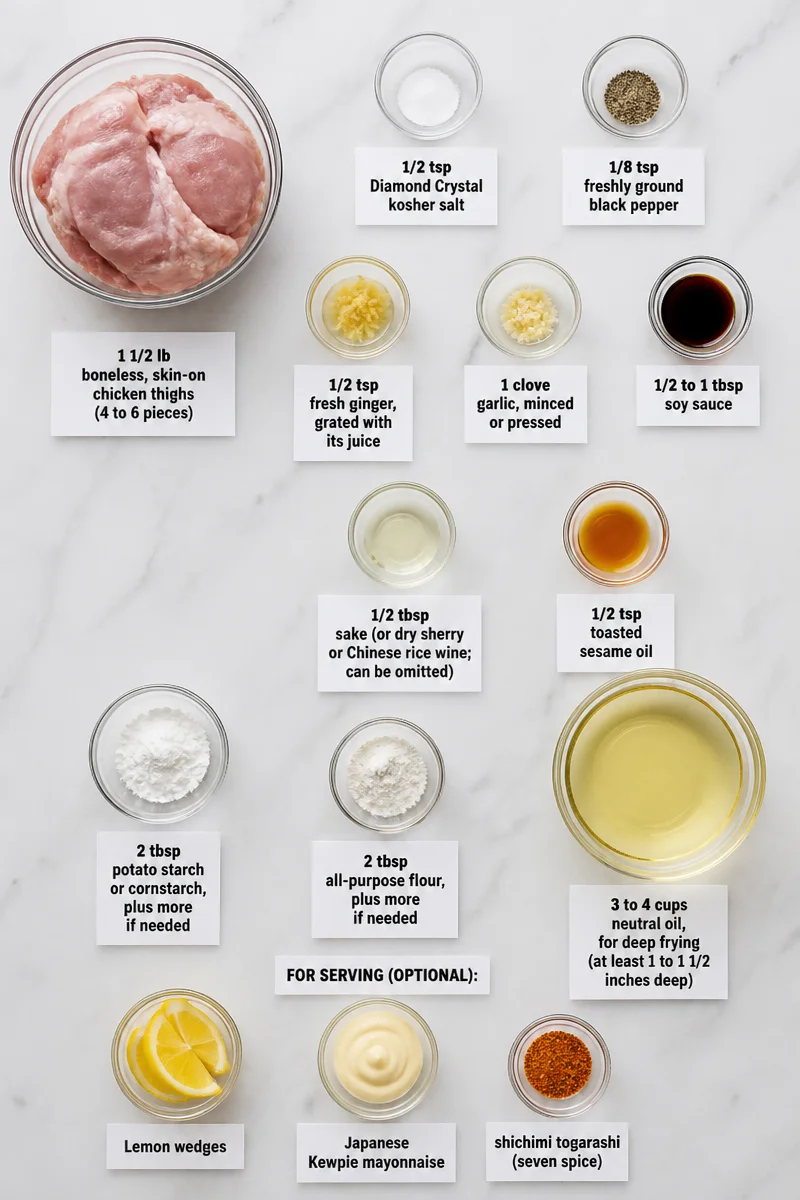
Step-by-Step Instructions
Step 1: Cut and Season the Chicken
Cut the boneless, skin-on chicken thighs into 2-inch pieces. Then season them with the salt and pepper. This first step may seem small, but it helps the flavor soak into the meat more evenly.
Step 2: Mix the Marinade
In a large bowl, whisk together the ginger, garlic, soy sauce, sake, and sesame oil. Add the chicken, and mix by hand until every piece is coated. The marinade should cling lightly to the chicken, not pool at the bottom of the bowl.
Step 3: Marinate Briefly
Cover the bowl and refrigerate the chicken for 30 minutes. Do not marinate much longer, because the chicken can become too salty or soft. Meanwhile, you can get the oil ready and prepare your coating.
Step 4: Heat the Oil
Pour the neutral oil into a heavy pot until it reaches 1 to 1 1/2 inches deep. Then heat it over medium-low heat to 325°F. Keeping the temperature steady is important, so take your time here.
Step 5: Coat the Chicken
Lightly coat each piece in flour and shake off the excess. Next, coat it in potato starch and shake off the excess again. This double coating helps create the light, crisp crust that karaage is known for.
Step 6: Fry the Chicken the First Time
Fry 3 to 5 pieces at a time at 325°F for about 90 seconds, or until lightly golden. Then drain the chicken on a wire rack. Between batches, skim crumbs from the oil so they do not burn and darken the flavor.
Step 7: Rest the Fried Pieces
Let the first batch rest on the wire rack while you fry the remaining pieces. This short rest helps the surface dry a little, which makes the second fry even crispier.
Step 8: Fry the Chicken a Second Time
Raise the oil temperature to 350°F. Fry the rested chicken for about 45 seconds, until deep golden brown and crisp. Drain again on the wire rack. Check that the chicken reaches 165°F inside for safe cooking.
Step 9: Serve Hot
Serve the karaage hot with lemon wedges, mayonnaise, and shichimi togarashi. The lemon adds brightness, the mayonnaise adds creaminess, and the spice blend gives a nice little kick.
Step 10: Follow the Small Tips
Cut the chicken into even pieces and do not overcrowd the pot. In addition, keep an eye on the oil temperature, because that is one of the biggest keys to great karaage. If you use chicken breast, reduce the frying time by 15 to 20 seconds.
Step 11: Store Leftovers Properly
If you have leftovers, cool them first, then refrigerate for up to 3 days or freeze for up to 1 month. To bring back the crisp texture, reheat in a 350°F oven for 7 to 8 minutes until warm and crunchy again.
Conclusion
Crispy Japanese karaage fried chicken is a simple dish with big reward. With a short marinade, a light coating of flour and starch, and a careful double fry, you get chicken that is juicy inside and crisp outside. The flavor is savory, lightly gingery, and just rich enough to feel special.
If you love easy comfort food with a little Japanese flair, this recipe is one to keep close. Try it for dinner, share it with family, and let me know how it turns out. If you enjoy recipes like this, explore more crispy chicken ideas and serving tips on the blog.
Karaage Fried Chicken
Ingredients
Method
- Cut the boneless, skin-on chicken thighs into 2-inch pieces and season them with salt and pepper.
- In a large bowl, whisk together ginger, garlic, soy sauce, sake, and sesame oil. Add the chicken and mix until each piece is coated.
- Cover and refrigerate the chicken for 30 minutes to marinate.
- Pour neutral oil into a pot until it's 1 to 1 1/2 inches deep, and heat to 325°F.
- Lightly coat each piece of chicken in flour, then potato starch, shaking off the excess.
- Fry 3 to 5 pieces at a time at 325°F for about 90 seconds until lightly golden, then drain on a wire rack.
- Let the fried chicken rest on the rack while frying the remaining pieces.
- Increase the oil temperature to 350°F and fry the rested chicken for about 45 seconds until deep golden brown.
- Confirm the chicken reaches 165°F inside for safe cooking.
- Serve hot with lemon wedges, mayonnaise, and shichimi togarashi.
- Store leftovers in an airtight container in the refrigerator for up to 3 days, or freeze for up to 1 month.
- To reheat, warm in a 350°F oven for 7 to 8 minutes for best texture.
