This traditional Sussex pond pudding with lemon is pure comfort in a bowl. It is the kind of old-fashioned dessert that feels special, yet still cozy and familiar. Also, it brings that lovely mix of rich, buttery sweetness and bright lemon flavor that keeps each bite interesting. If you enjoy classic British baking, this one is a real treat.
The recipe uses a simple suet crust made with self-rising flour, shredded suet, and whole milk. Then the filling adds unsalted butter, soft light brown sugar, and a whole lemon pricked all over so its juices and oils can soak into the pudding as it steams. Along with kitchen string, foil, and parchment paper, these humble ingredients create a deeply flavorful dessert with a soft, syrupy center and a tender crust.
Method-wise, this pudding is easier than it looks. You make a soft dough, line a pudding basin, tuck in the butter, sugar, and lemon, then seal it with a lid of dough. After that, the pudding steams slowly for 3 hours 30 minutes, which gives you time to relax while the kitchen fills with a warm, buttery scent. In the end, you turn it out and let the sauce pool around it, which feels wonderfully rustic.
This is a great dessert for cold weather, Sunday dinners, holiday meals, or any time you want something comforting and a little different. It is also a strong choice for family gatherings, since it makes 8 servings and serves well with simple sides. Best of all, the flavors are bold, old-fashioned, and satisfying.

Why You’ll Love This Traditional Sussex Pond Pudding with Lemon
- It uses simple pantry ingredients, so you do not need a long shopping list.
- The pudding has a rich, buttery sauce and a bright lemon center, so every bite tastes balanced.
- It is a true make-ahead dessert, which helps when you are planning a family meal.
- The steaming method creates a soft, tender texture that feels special and homey.
- It is a classic comfort food dessert, so it works well for both holidays and everyday treats.
Lemon Tips
The star fruit in this Sussex pond pudding is the lemon, so choosing the right one matters. Look for a large, ripe, unwaxed, thin-skinned lemon because the peel and juice both help flavor the pudding. Also, a thinner skin usually means more juice and less bitterness. Before using it, wash it well and prick it all over with a skewer so the hot butter and sugar can seep in during steaming. If your lemons are small, use two instead of one so you still get that bright citrus note. Finally, make sure the lemon feels firm, not soft, because that usually means it is fresher and juicier.
Options for Substitutions
- Use vegetable shortening or vegetable suet instead of shredded suet if you want a more widely available option.
- Swap the self-rising flour for all-purpose flour plus baking powder if that is what you have on hand.
- Replace the whole milk with a dairy-free milk, such as oat milk, for a lighter variation.
- Use golden syrup in place of some of the brown sugar if you want a deeper caramel flavor.
- Try orange instead of lemon for a sweeter, softer citrus taste.
- If you do not have parchment and foil, use a pudding cloth and lid setup if you are comfortable with traditional steaming methods.
Watch Out for These Mistakes
One common mistake is making the dough too wet. The suet crust should be soft, but it should not be sticky. So, add the milk little by little, and stop as soon as the dough comes together. If you add too much milk, the crust may become heavy or hard to handle.
Another issue is not sealing the pudding well. Since the filling melts as it cooks, the top and bottom crust need to be pressed together firmly. Also, make sure the foil and parchment are tied tightly around the basin so steam does not get inside. A weak seal can lead to leaks, and then you lose some of that lovely butter sauce.
Steaming time matters too. Because this pudding cooks for 3 hours 30 minutes, it needs steady, gentle heat. If the water boils too hard, the pudding can shake and cook unevenly. On the other hand, if the water runs too low, the basin may overheat. So, keep the simmer gentle and top up with boiling water as needed.
Finally, do not rush the turning out stage. After steaming, let the pudding stand just long enough to settle, then run a knife around the edge before lifting it out. That helps it release cleanly. If you skip that step, the crust may tear and the sauce may not pool as nicely on the plate.

What to Serve With Traditional Sussex Pond Pudding with Lemon?
This traditional Sussex pond pudding with lemon is rich, so it pairs best with simple sides that do not compete with the sauce. A spoonful of vanilla ice cream works very well because it melts into the warm pudding. Custard is another classic choice, and it adds a creamy finish. If you want something lighter, try whipped cream or a small scoop of plain Greek yogurt for a tangy contrast. For drinks, a cup of hot tea or coffee makes a nice match after dinner.
Storage Instructions
Store: Keep leftovers covered in the fridge for up to 2 days.
Freeze: You can freeze portions for up to 1 month, although the crust may soften a little after thawing.
Reheat: For the stovetop, place a portion in a covered pan over low heat with a splash of water, then warm gently until hot. For the microwave, heat in short bursts until warmed through, and do not overcook or the sauce may split.
Recipe Info
Preparation Time: 15 minutes
Cooking Time: 3 hours 30 minutes
Total Time: 3 hours 45 minutes
Level of Difficulty: Easy
Servings: 8 servings
Calories: 433 kcal per serving
Estimated Nutrition
Estimated nutrition for the whole recipe (without optional ingredients):
- Calories: 3,400 to 3,600 kcal total
- Protein: 30 to 40 g total
- Fat: 240 to 270 g total
- Carbohydrates: 260 to 300 g total
Ingredients
-
For the suet crust:
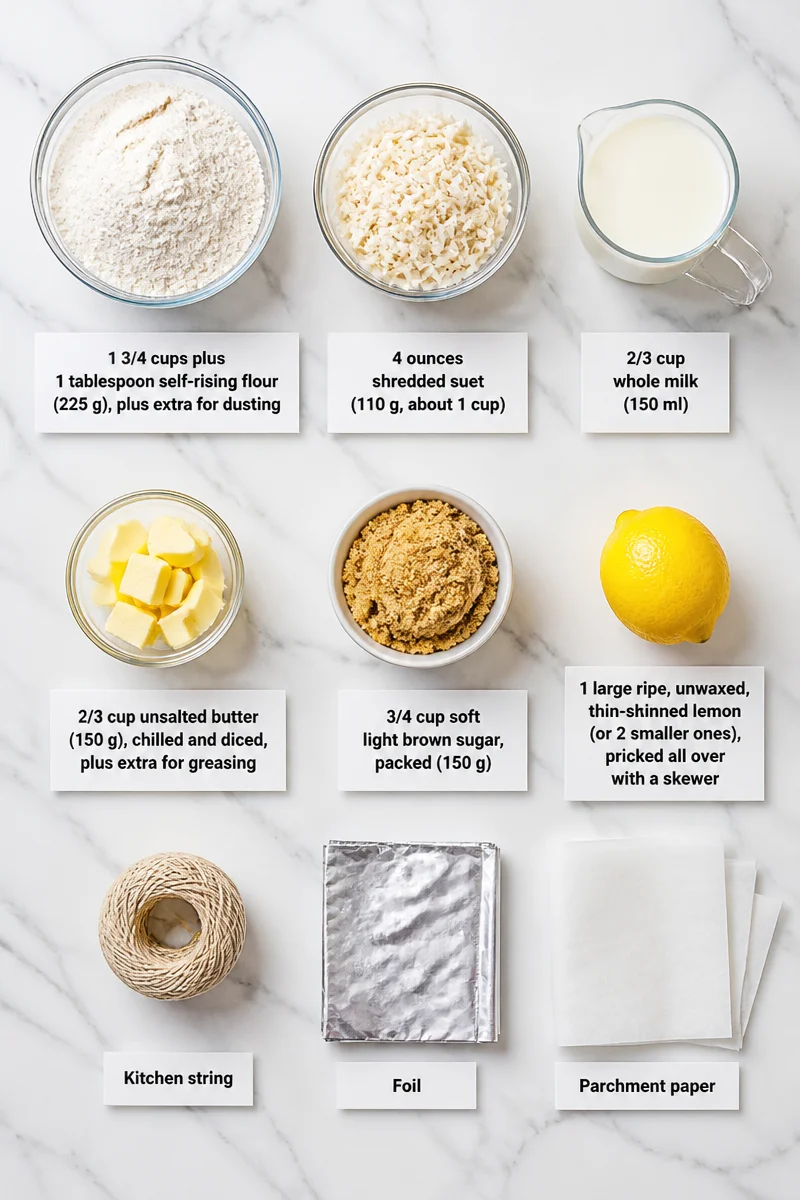
- 1 3/4 cups plus 1 tablespoon self-rising flour (225 g), plus extra for dusting
- 4 ounces shredded suet (110 g, about 1 cup)
- 2/3 cup whole milk (150 ml)
-
For the filling:
- 2/3 cup unsalted butter (150 g), chilled and diced, plus extra for greasing
- 3/4 cup soft light brown sugar, packed (150 g)
- 1 large ripe, unwaxed, thin-skinned lemon (or 2 smaller ones), pricked all over with a skewer
-
Also needed:
- Kitchen string
- Foil and parchment paper
Step-by-Step Instructions
Step 1: Prepare the Basin and Make the Dough
Grease a 6-cup (1.5-liter) pudding basin with butter. Then sift the flour into a large bowl and stir in the suet. After that, add the milk quickly and mix until you have a soft dough that is not sticky. You may not need all of the milk, so add it slowly and stop when the dough feels right.
Step 2: Line the Basin
Set aside one quarter of the dough for the lid. On a lightly floured surface, roll the larger piece into a 12-inch circle. Then use it to line the greased basin, pressing it in gently so it fits well and leaves no gaps.
Step 3: Add the Filling
Put half the butter, about 5 tablespoons, and half the sugar, about 1/3 cup, into the lined basin. Next, set the pricked lemon on top. Then add the rest of the butter and sugar around it so the fruit sits snugly in the center.
Step 4: Seal the Pudding
Brush the exposed edge of the dough with a little water. Roll the reserved dough into a round lid, lay it over the filling, and press the edges together firmly to seal. Trim off any extra dough so the top looks neat and closed.
Step 5: Cover and Steam
Grease a square of foil, cover it with a sheet of parchment, and grease that too. Make a pleat across the middle so the pudding has room to rise. Lay it over the basin, greased side down, and scrunch it tightly around the rim. Tie it on with string, then tie a second, longer piece of string to opposite sides of the basin to make a lifting handle.
Step 6: Cook, Unmold, and Serve
Put an upturned saucer in the bottom of a large saucepan and stand the basin on it. Pour in boiling water so it comes halfway up the basin. Cover, bring to a gentle simmer, and steam for 3 1/2 hours, topping up with boiling water as it evaporates. Then use the string handle to lift the basin out. Remove the string, foil, and paper, and run a knife around the edge. Turn the pudding onto a deep serving plate so the buttery sauce pools around it. Serve hot, and give each person some crust, sauce, and a piece of the soft lemon.
Conclusion
This traditional Sussex pond pudding with lemon is a lovely example of old-fashioned comfort food done right. It has a rich suet crust, a sweet buttery sauce, and a bright lemon center that gives each bite a fresh lift. Also, the slow steaming method makes the dessert feel special without making the process hard.
If you are looking for a warm, classic pudding for family dinners, cold nights, or a cozy weekend meal, this one is a wonderful choice. Try it, then let me know how it turned out. If you enjoyed this recipe, feel free to share your feedback or explore more classic British desserts on the blog.

Sussex Pond Pudding
Ingredients
Method
- Grease a 6-cup (1.5-liter) pudding basin with butter. Sift the flour into a large bowl and stir in the suet. Add the milk quickly and mix until you have a soft dough that is not sticky.
- Set aside one quarter of the dough for the lid. On a lightly floured surface, roll the larger piece into a 12-inch circle, then use it to line the greased basin.
- Put half the butter and half the sugar into the lined basin. Set the pricked lemon on top, then add the rest of the butter and sugar around it.
- Brush the exposed edge of the dough with a little water. Roll the reserved dough into a round lid, lay it over the filling, and press the edges together firmly to seal.
- Grease a square of foil and place a sheet of parchment on top, then grease that too. Make a pleat across the middle and lay it over the basin, scrunching it around the rim. Tie with string.
- Put an upturned saucer in a large saucepan and stand the basin on it. Pour in boiling water so it comes halfway up the basin, cover, and steam for 3 1/2 hours.
- Use the string handle to lift the basin out, and run a knife around the edge before turning the pudding onto a deep serving plate.
