This roasted cauliflower steak chimichurri sauce is pure comfort with a fresh, bright finish. I love recipes like this because they feel special, yet they are still easy enough for a regular weeknight. The cauliflower turns tender in the oven, the edges get deeply browned, and then that bold chimichurri brings everything to life.
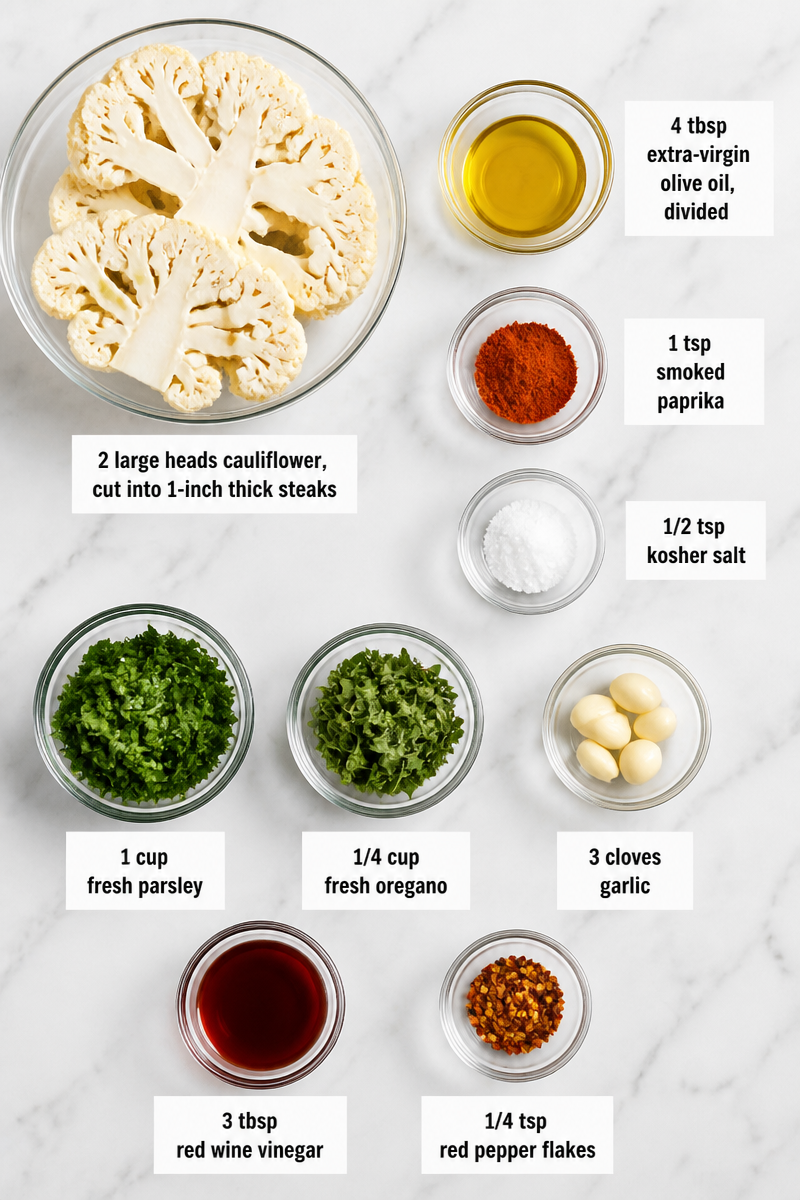
At the heart of this dish are 2 large heads cauliflower, outer leaves removed, cut into 1-inch thick steaks, plus 4 tbsp extra-virgin olive oil, divided, 1 tsp smoked paprika, and 1/2 tsp kosher salt. Then comes the chimichurri, made with 1 cup fresh parsley, 1/4 cup fresh oregano, 3 cloves garlic, 3 tbsp red wine vinegar, and 1/4 tsp red pepper flakes. Together, you get a dish that is savory, herby, tangy, and lightly spicy, with a warm roasted flavor that feels both hearty and fresh.
The method is simple and friendly for home cooks. First, you cut the cauliflower into thick steaks, then brush them with oil and seasoning. After that, you roast them at 425°F for 25 to 30 minutes while you make the chimichurri in a food processor. In all, the recipe takes 15 minutes of prep, 30 minutes of cooking, and 45 minutes total, which makes it a smart choice when you want something filling without spending all evening in the kitchen. Each serving comes in around 220 kcal, and the recipe makes 4 servings.
This is the kind of meal that works well on chilly nights, busy Sundays, or anytime you want a meatless main that still feels substantial. It also looks lovely on the plate, so it is great for dinner with friends, holiday meals, or potlucks where you want to bring something a little different.
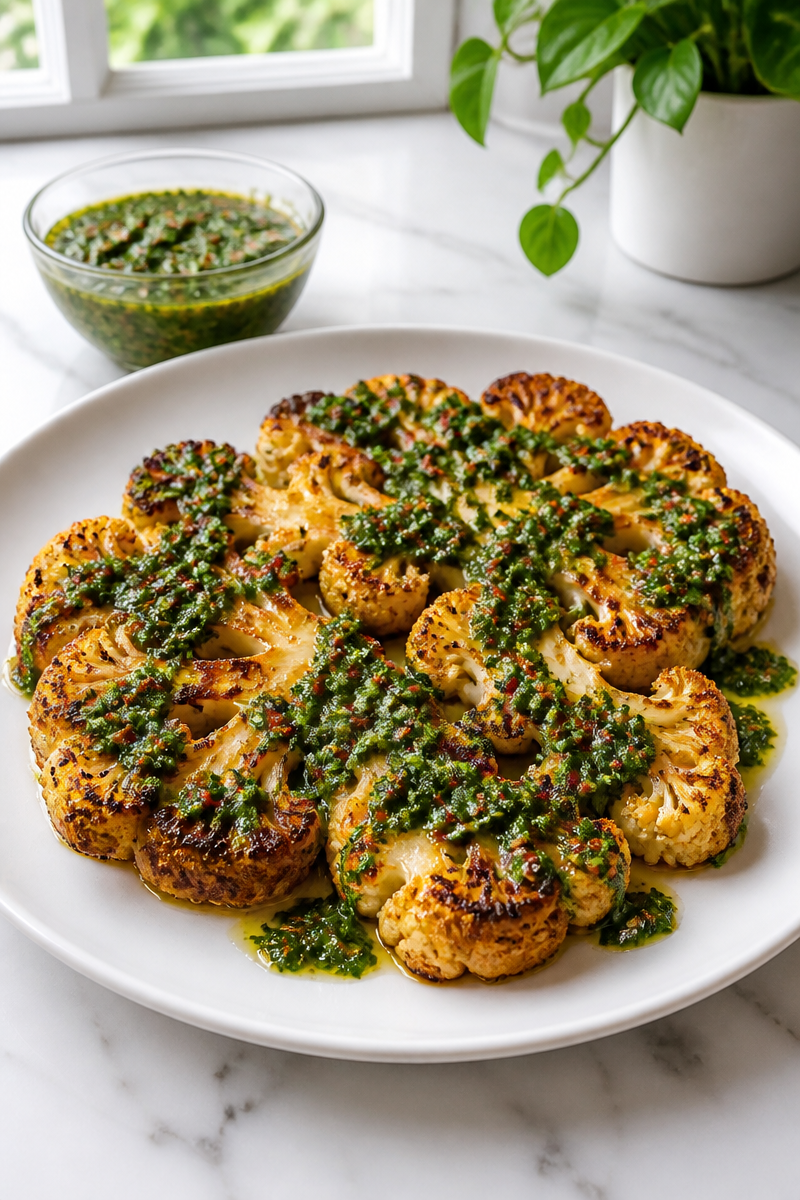
Why You’ll Love This Roasted Cauliflower Steak Chimichurri Sauce
- It is simple and fast, so you can make it even on a weeknight.
- It uses basic ingredients that are easy to find in most grocery stores.
- The flavor is bold and balanced, with roasted, tangy, and herby notes in every bite.
- It is a great vegetarian main dish, but it also works as a side.
- It is budget-friendly and wholesome, which makes it a smart choice for everyday cooking.
Cauliflower Tips
Cauliflower is the star here, so it helps to start with firm, heavy heads that feel dense for their size. The florets should look tight and creamy white, with very little browning. Since you are cutting 1-inch thick steaks, choose large heads that are solid through the center. That gives you a better chance of getting two or three good steaks from each one. Also, do not worry if some florets break off. You can roast them on the side, toss them into soup, or save them for another meal. When cutting, use a sharp knife and work slowly so the core stays intact. That core is what helps the steaks hold together in the oven.
Options for Substitutions
- Swap parsley for cilantro if you want a brighter, more citrus-like chimichurri.
- Use apple cider vinegar instead of red wine vinegar for a softer tang.
- Replace oregano with fresh basil or a mix of basil and parsley for a sweeter herb flavor.
- Use avocado oil instead of olive oil if that is what you have on hand.
- Add lemon juice for part of the vinegar if you want extra freshness.
- Omit or reduce the red pepper flakes if you prefer a milder sauce.
Watch Out for These Mistakes
One common mistake is cutting the cauliflower steaks too thin. If the slices are too skinny, they can break apart before they finish roasting. For the best results, keep them close to 1 inch thick and cut straight through the core. That gives the steaks more support and helps them roast evenly.
Another issue is overcrowding the pan. Cauliflower needs space so it can brown well. If the steaks sit too close together, they may steam instead of roast. So, arrange them in a single layer and use two pans if needed. That small step makes a big difference in texture.
It is also easy to rush the chimichurri. You want it finely chopped, not turned into a smooth puree. Because of that, pulse the herbs in short bursts. Then drizzle in the oil slowly. This keeps the sauce lively and textured, which is part of what makes roasted cauliflower steak chimichurri sauce taste so good.
Finally, do not overcook the cauliflower. It should be tender when pierced with a knife, but still hold its shape. If it goes too far, the edges can dry out and the steaks may fall apart when you serve them. Keep an eye on the last few minutes, since oven heat can vary.
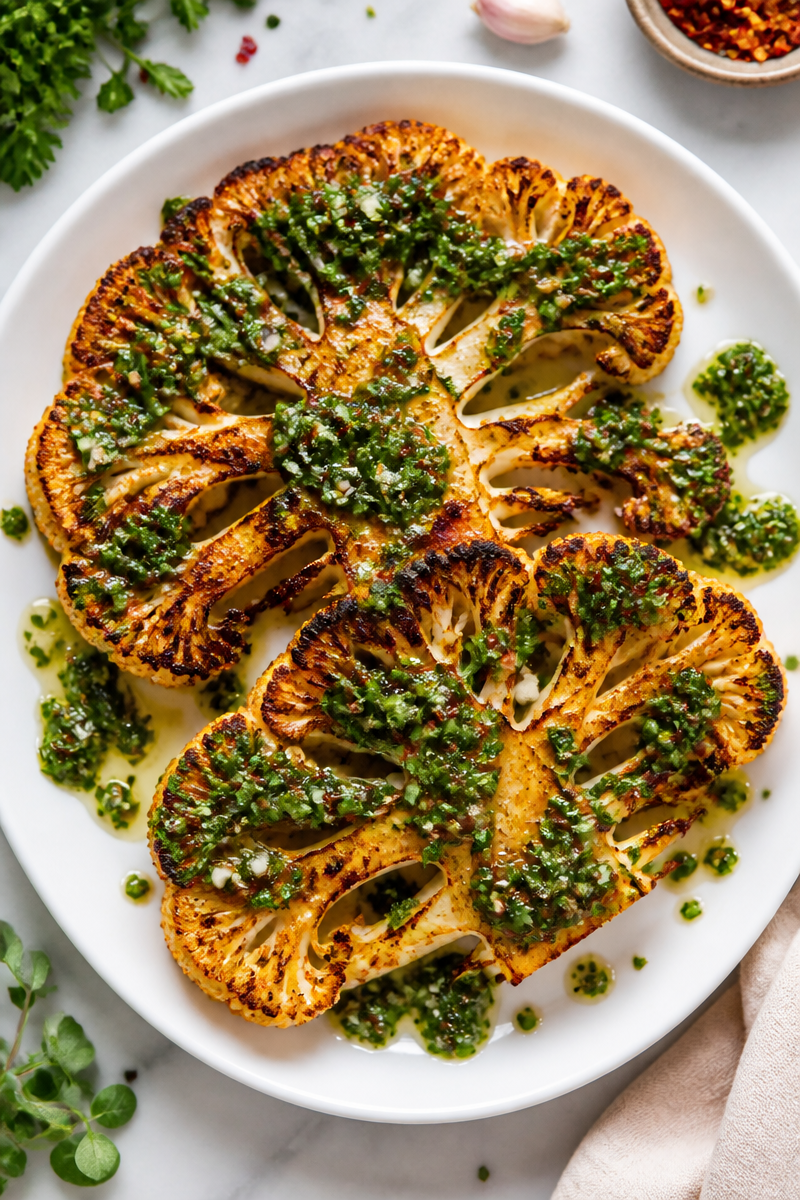
What to Serve With Roasted Cauliflower Steak Chimichurri Sauce?
This roasted cauliflower steak chimichurri sauce pairs well with simple sides that do not overpower the fresh herbs. I like serving it with fluffy rice, roasted potatoes, or warm crusty bread to soak up the extra sauce. Also, a light salad with lemon dressing adds a fresh touch, while a side of beans or lentils can make the meal even more filling. If you want a more complete dinner, try it with quinoa, couscous, or a bowl of tomato soup on the side.
Storage Instructions
Store: Place leftover cauliflower steaks in an airtight container and refrigerate for up to 3 days. Keep the chimichurri in a separate sealed container in the fridge for up to 1 week.
Freeze: The roasted cauliflower can be frozen for up to 2 months, although the texture will be softer after thawing. Chimichurri does not freeze as well, so it is best made fresh or kept in the refrigerator.
Reheat: For the stovetop, warm the cauliflower in a covered skillet over medium-low heat until heated through. For the microwave, heat in short bursts so it does not dry out. If possible, add the chimichurri after reheating so the sauce stays bright and fresh.
Recipe Info
Preparation Time: 15 minutes
Cooking Time: 30 minutes
Total Time: 45 minutes
Difficulty: Easy
Servings: 4 servings
Estimated Nutrition
Estimated nutrition for the whole recipe (without optional ingredients):
Calories: about 200 to 240 kcal
Protein: about 8 to 12 g
Fat: about 16 to 20 g
Carbohydrates: about 18 to 26 g
Ingredients
- 2 large heads cauliflower, outer leaves removed, cut into 1-inch thick steaks
- 4 tbsp extra-virgin olive oil, divided
- 1 tsp smoked paprika
- 1/2 tsp kosher salt
- chimichurri: 1 cup fresh parsley, 1/4 cup fresh oregano, 3 cloves garlic, 3 tbsp red wine vinegar, 1/4 tsp red pepper flakes
Step-by-Step Instructions
Step 1: Prep and Cut the Cauliflower
Start by removing the outer leaves from the cauliflower heads. Then, slice each head vertically through the core into 1-inch thick slabs. You should get about 2 to 3 usable center steaks per head. The loose outer florets can be saved for another use, so nothing goes to waste.
Step 2: Season and Preheat
Next, preheat the oven to 425°F. Brush both sides of the cauliflower steaks with 2 tablespoons of the olive oil. Then season them with smoked paprika and kosher salt. This helps the cauliflower brown well and brings out its natural flavor.
Step 3: Roast Until Tender and Charred
Arrange the cauliflower steaks in a single layer on a baking sheet. Roast them for 25 to 30 minutes, and carefully flip them once halfway through with a wide spatula. Keep roasting until the cauliflower is tender when pierced with a knife and the edges look deeply charred. That contrast of soft center and crisp edges is what makes the dish so good.
Step 4: Make the Chimichurri
While the cauliflower roasts, add the parsley, oregano, garlic, red wine vinegar, and red pepper flakes to a food processor. Pulse for 15 to 20 seconds, just until finely chopped. Do not puree it. With the processor running, slowly drizzle in the remaining 2 tablespoons of olive oil until the sauce comes together. Then season with salt to taste.
Step 5: Serve Warm
When the cauliflower is done, transfer the steaks to serving plates. Spoon the chimichurri generously over the top while everything is still warm. The fresh sauce will soak slightly into the cauliflower, and that makes every bite more flavorful and satisfying.
Conclusion
Roasted cauliflower steak chimichurri sauce is a simple way to make vegetables feel special. The cauliflower roasts up tender and rich, while the chimichurri adds a bright, herb-filled finish that wakes up the whole plate. Best of all, the recipe is easy, dependable, and friendly for cooks of many skill levels.
If you try this recipe, I hope it earns a regular place at your table. Please share your thoughts, leave feedback, or explore more easy vegetarian recipes for your next meal.
