The first time I tasted a German springerle cookie, I understood why so many families save this bake for special days. It is delicate, fragrant, and a little old-fashioned in the best way. In fact, a batch of Classic German Springerle Christmas Cookie feels like pure comfort on a winter table, especially when the room smells like anise and warm sugar.
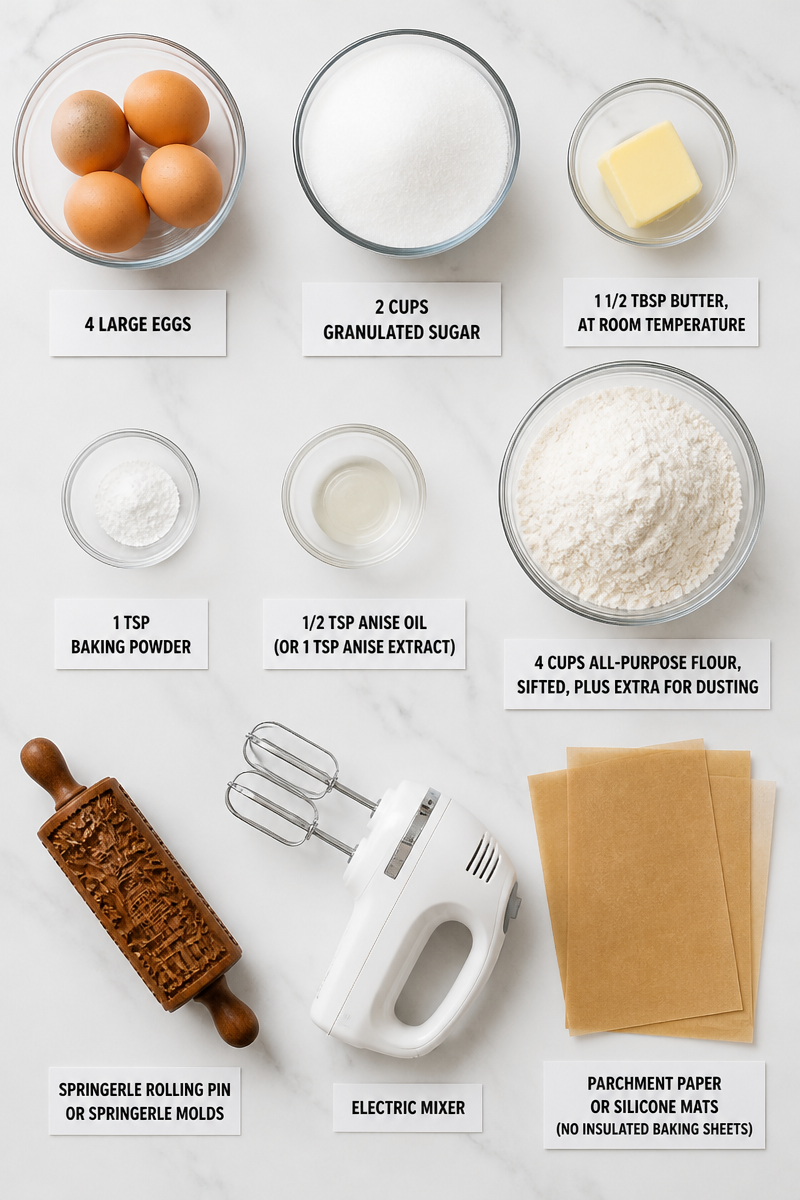
What makes this recipe special is how simple the base really is. You only need 4 large eggs, 2 cups granulated sugar, 1 1/2 tbsp butter, at room temperature, 1 tsp baking powder, 1/2 tsp anise oil or 1 tsp anise extract, and 4 cups all-purpose flour, sifted, plus extra for dusting. Then you use a Springerle rolling pin or springerle molds, an electric mixer, and parchment paper or silicone mats. As a result, the cookies turn out crisp on the outside, tender inside, and gently sweet with a soft licorice-like flavor from the anise.
The method takes a little patience, but it is not hard. First, you whip the eggs and sugar until thick and pale. Then you mix in the flavoring and flour, roll the dough to the right thickness, press in the design, and let the cookies dry before baking. That drying time is important, because it helps create the classic springerle “feet” and keeps the design sharp. In other words, the process is easy to follow if you give it time.
These cookies are wonderful for holiday trays, cookie exchanges, and family visits. They also make a lovely make-ahead treat for chilly nights, since the flavor deepens as they sit. So, if you want a Christmas cookie that looks beautiful, tastes elegant, and feels traditional, this Classic German Springerle Christmas Cookie is a smart choice.
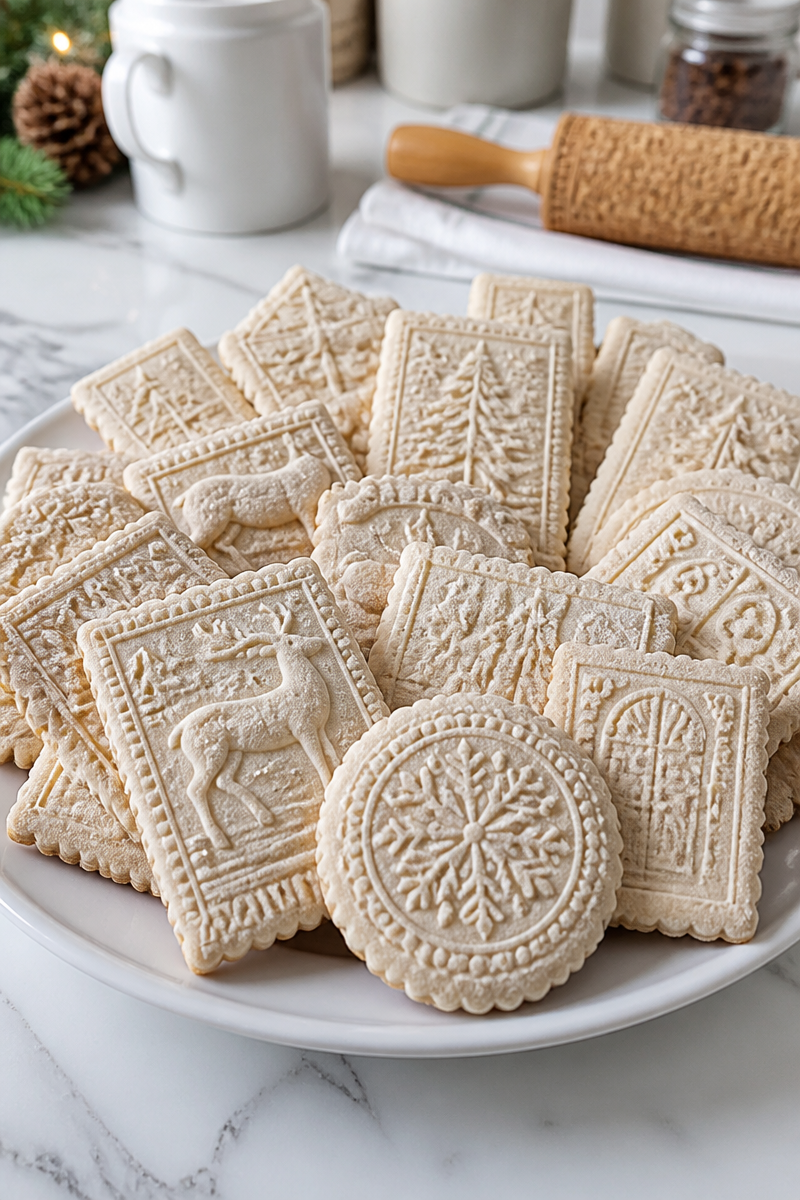
Why You’ll Love This Classic German Springerle Christmas Cookie
- The ingredient list is short, simple, and easy to shop for.
- The flavor is classic and cozy, thanks to the gentle anise note.
- The molded designs make the cookies look festive without extra decorating.
- They keep well, so you can bake ahead for the holidays.
- They are a true old-world cookie, which makes them special for sharing.
Eggs Tips
Eggs are the heart of springerle dough, so fresh ones work best. Since the recipe relies on beating the eggs until light and fluffy, room-temperature eggs will give you more volume and help the dough rise better. Also, if your eggs are very small, the dough may feel a bit dry, while extra-large eggs can make it softer. For the best result, use standard large eggs and beat them well before adding the sugar.
Options for Substitutions
- Use anise extract instead of anise oil if that is easier to find.
- Swap part of the granulated sugar with superfine sugar for a smoother batter.
- Replace the butter with an equal amount of neutral oil for a dairy-free version, though the texture will change a bit.
- Use 1 teaspoon baking powder as written, but if needed, a fresh double-acting baking powder works best.
- If you do not have a springerle pin, use a springerle mold or even a decorative cookie stamp.
- If you prefer a lighter spice note, try a small amount of vanilla extract along with the anise.
Watch Out for These Mistakes
One common mistake is skipping the long beating time. The eggs, sugar, butter, and baking powder need the full 15 minutes to become thick and pale. If you rush this step, the dough may not have enough lift, and the cookies can turn out dense. So, keep the mixer going and scrape the bowl now and then.
Another issue is adding too much flour too soon. The dough should be stiff, but it should still come together smoothly. If you add extra flour in a hurry, the cookies can become dry and hard. Instead, mix the flour in gradually, then use only a little more for dusting the board and the mold.
Drying time matters too. Do not skip the long rest before baking, even if the dough looks ready. When the cookies dry uncovered for at least 12 hours, the pattern sets and the classic springerle feet form in the oven. Without this step, the design may blur, and the cookies may spread too much.
Finally, watch the baking closely. Springerle should stay pale on top, with only a slight golden color on the bottoms. If you bake them too long, they lose their delicate look and may taste overly hard. Therefore, check them near the 10-minute mark and rotate the sheet once for even baking.
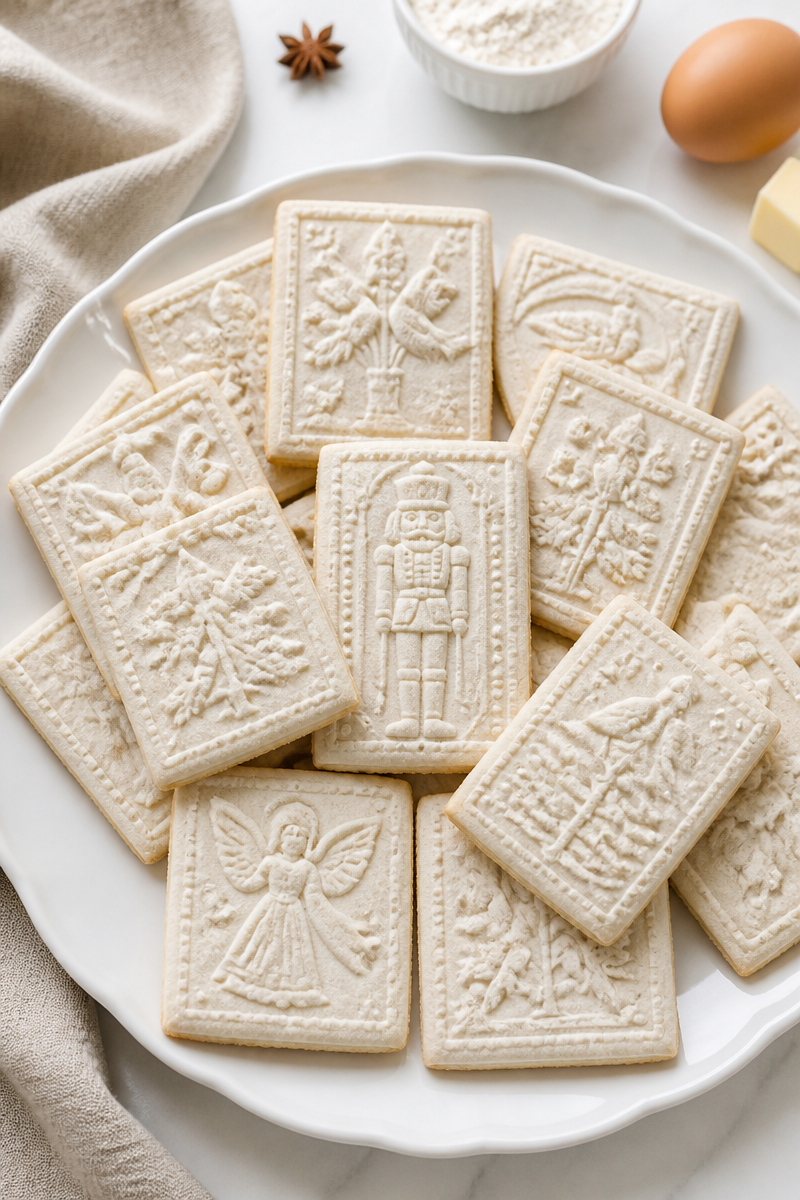
What to Serve With Classic German Springerle Christmas Cookie?
Classic German Springerle Christmas Cookie pairs beautifully with hot drinks and simple sweets. Try it with coffee, black tea, mulled cider, or hot chocolate for a cozy dessert plate. In addition, a bowl of fresh fruit, a few shortbread cookies, or a slice of stollen makes a lovely holiday spread. Because springerle have such a gentle anise flavor, they also work well with creamy desserts like vanilla pudding or whipped cream.
Storage Instructions
Store: Keep the cookies in an airtight container at room temperature for 2 to 3 weeks. In fact, they often taste better after a day or two, because the anise flavor deepens and the texture softens a little.
Freeze: Freeze the baked cookies for up to 3 months. Place them in a freezer-safe container with parchment between layers, so they do not stick together.
Reheat: For the stovetop, warm them gently in a covered pan over very low heat for a minute or two, just until they lose the chill. For the microwave, use short bursts of 5 to 8 seconds only, because springerle can dry out fast.
Recipe Info
Preparation Time: 45 minutes plus 12 hours drying
Cooking Time: 10 minutes
Total Time: 12 hours 55 minutes
Level of Difficulty: Easy to medium
Servings: 36 servings
Estimated Nutrition
Estimated nutrition for the whole recipe (without optional ingredients):
- Calories: 3,600 to 3,900
- Protein: 70 to 90 g
- Fat: 35 to 50 g
- Carbohydrates: 780 to 840 g
Ingredients
- 4 large eggs
- 2 cups granulated sugar
- 1 1/2 tbsp butter, at room temperature
- 1 tsp baking powder
- 1/2 tsp anise oil (or 1 tsp anise extract)
- 4 cups all-purpose flour, sifted, plus extra for dusting
- Springerle rolling pin or springerle molds
- Electric mixer
- Parchment paper or silicone mats (no insulated baking sheets)
Step-by-Step Instructions
Step 1: Prep the Baking Sheets
Line your cookie sheets with parchment paper or silicone mats. Do not use insulated baking sheets, because they can cause the cookies to brown too much on the bottom. This simple step helps the springerle stay pale and delicate.
Step 2: Whip the Eggs Mixture
Beat the eggs on high speed until they look light and fluffy. Then add the sugar, butter, and baking powder, and keep beating for about 15 minutes, scraping the bowl now and then. The mixture should turn thick, pale, and airy.
Step 3: Add Flavor and Flour
Beat in the anise oil or anise extract first. After that, add the sifted flour little by little until a stiff dough forms. The dough should be firm, but it should still come together without feeling dry and crumbly.
Step 4: Roll and Imprint the Dough
Lightly flour your springerle pin or mold so the dough will not stick. Knead the dough a few times on a floured board, then roll it into a rectangle about 1/2 inch thick. Keep it thick, since rolling it too thin can ruin the design. Next, press the floured pin or mold firmly into the dough to create the pattern.
Step 5: Cut, Dry, and Bake
Use a sharp knife to cut the cookies apart, trim the edges, and place them on the prepared sheets. Then let them sit uncovered at room temperature for at least 12 hours, or up to 36 hours, so the design sets. After that, bake one sheet at a time at 350°F for about 10 minutes, rotating once. Finally, cool the cookies on a wire rack and let them dry overnight before storing.
Conclusion
Classic German Springerle Christmas Cookie is a beautiful holiday bake with a gentle anise flavor, a crisp look, and a long, lovely tradition. Because the dough is simple and the design does most of the work, these cookies feel special without being fussy. Just remember to beat the eggs well, roll the dough at the right thickness, and give the cookies time to dry before baking.
If you make this recipe, I would love to hear how it turned out. Share your results, leave a comment, or try another traditional Christmas cookie recipe next.
Classic German Springerle Christmas Cookie
Ingredients
Method
- Line your cookie sheets with parchment paper or silicone mats. Avoid using insulated baking sheets.
- Beat the eggs on high speed until light and fluffy. Add the sugar, butter, and baking powder and continue beating for about 15 minutes.
- Mix in the anise oil or extract, then gradually add the sifted flour until a stiff dough forms.
- Knead the dough briefly, then roll it into 1/2 inch thick rectangle. Lightly flour the springerle pin or mold and press it firmly into the dough.
- Cut the cookies apart and place them on the prepared sheets. Let them rest uncovered for at least 12 hours.
- Bake at 350°F for about 10 minutes, rotating once, until the bottoms are slightly golden.
- Cool on a wire rack and let them dry overnight before storing.
