This Classic Southern Sally Lunn Bread Loaf is pure comfort. It is soft, rich, and a little sweet, with a tender crumb that feels right at home on a family table. I love recipes like this because they bring back that old-fashioned, made-with-care feeling. Also, the loaf looks beautiful when it comes out of the pan, so it feels special without being fussy.
What makes this bread so memorable is the simple mix of whole milk, vegetable shortening, water, all-purpose flour, granulated sugar, kosher salt, active dry yeast, and eggs. The milk and shortening give it a soft, rich texture. Meanwhile, the sugar adds a gentle sweetness, and the salt keeps the flavor balanced. The result is a loaf that tastes buttery, mellow, and just slightly sweet. Then, when you serve it with softened butter, it becomes even more comforting.
The method is easy to follow, too. First, you warm the milk, shortening, and water to about 120°F. Then, you mix part of the flour with the sugar, salt, and yeast before adding the warm liquid. After that, you beat in the rest of the flour and the eggs until you have a very soft batter-like dough. Since it is too soft to knead, you simply let it rise, spoon it into a tube pan or Bundt pan, rise again, and bake until golden brown.
This Classic Southern Sally Lunn Bread Loaf is perfect for Sunday supper, holiday breakfasts, potlucks, and chilly evenings when you want something warm and homey. It also works well for guests because it makes a lovely presentation and serves a crowd. So if you enjoy old-fashioned breads with a soft crumb and gentle sweetness, this one is worth keeping close.
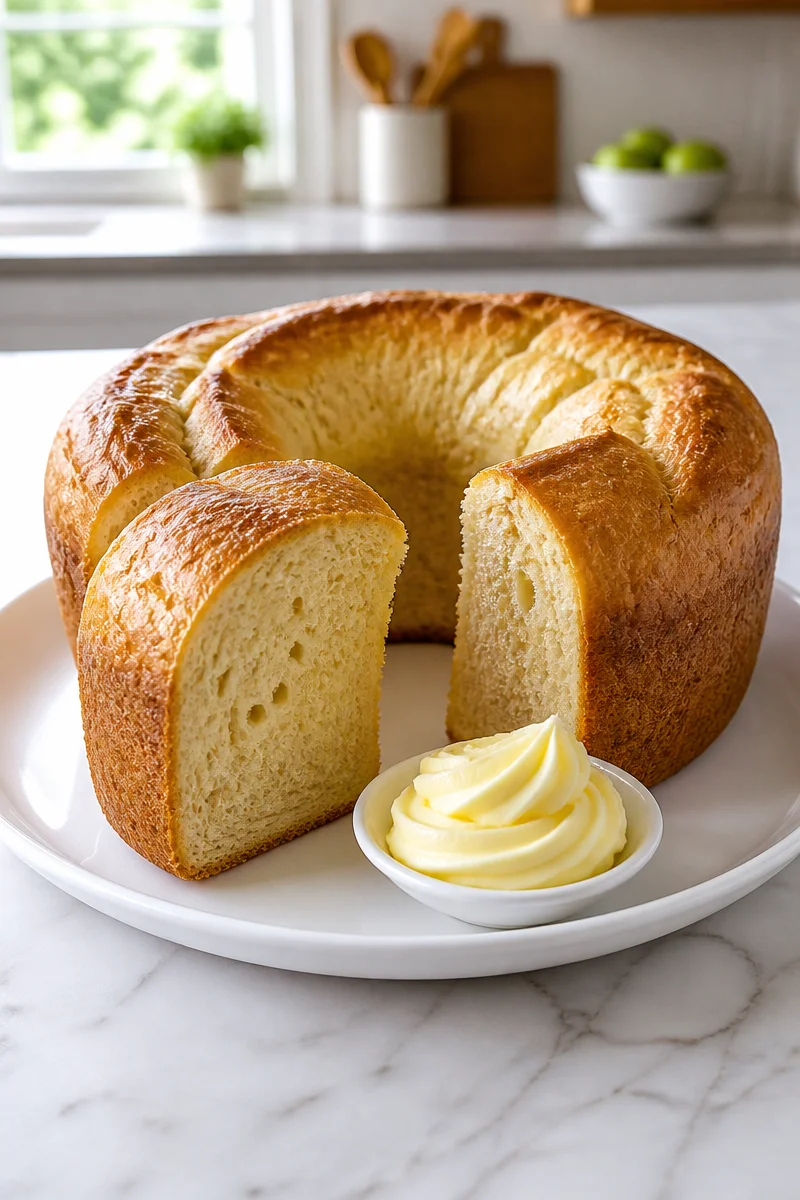
Why You’ll Love This Classic Southern Sally Lunn Bread Loaf
- It uses simple pantry ingredients that are easy to find.
- The texture is soft, tender, and slightly rich.
- It has a mild sweetness that pairs with many meals.
- The dough is easy to mix because you do not knead it.
- It is a comforting bread that feels both old-fashioned and special.
Eggs Tips
The eggs are important in this Sally Lunn Bread Loaf because they help create the bread’s soft, rich texture. For the best results, use large eggs at room temperature, just as the recipe says. Room-temperature eggs blend into the batter more smoothly, and they help the dough rise more evenly. Also, if your eggs are cold from the fridge, you can set them in warm water for a few minutes before using them. That small step can make the dough easier to mix and help the loaf bake up light and tender.
Options for Substitutions
- Use whole milk with 2% milk if you want a slightly lighter loaf.
- Swap vegetable shortening for unsalted butter if you want a more buttery flavor.
- Replace part of the water with additional milk for a richer dough.
- Use bread flour instead of all-purpose flour for a slightly chewier texture.
- Reduce the sugar a little if you prefer a less sweet bread.
- Use butter instead of shortening for greasing the pan and serving.
Watch Out for These Mistakes
One common mistake is overheating the milk mixture. The liquid should reach about 120°F, but it should not get hotter. If it does, it can damage the yeast and keep the bread from rising well. So, if you are using a thermometer, check the temperature carefully before mixing.
Another issue is adding too much flour too soon. This dough should be soft and batter-like, not firm like a standard kneaded bread dough. Because of that, it is better to mix until smooth and stop there. If the dough feels too stiff, the loaf may bake up dry or heavy.
Also, do not rush the rising time. The dough needs enough time to double in the first rise and puff up again in the pan. If you bake it too early, the loaf may turn out dense. On the other hand, if you let it rise too much, it may lose structure and sink.
Finally, watch the baking time closely. The top should be deep golden brown, and the center should reach 190°F. That is the best sign that the loaf is done. If you slice it too soon, the crumb may seem gummy, so give it at least a short cooling time before cutting.
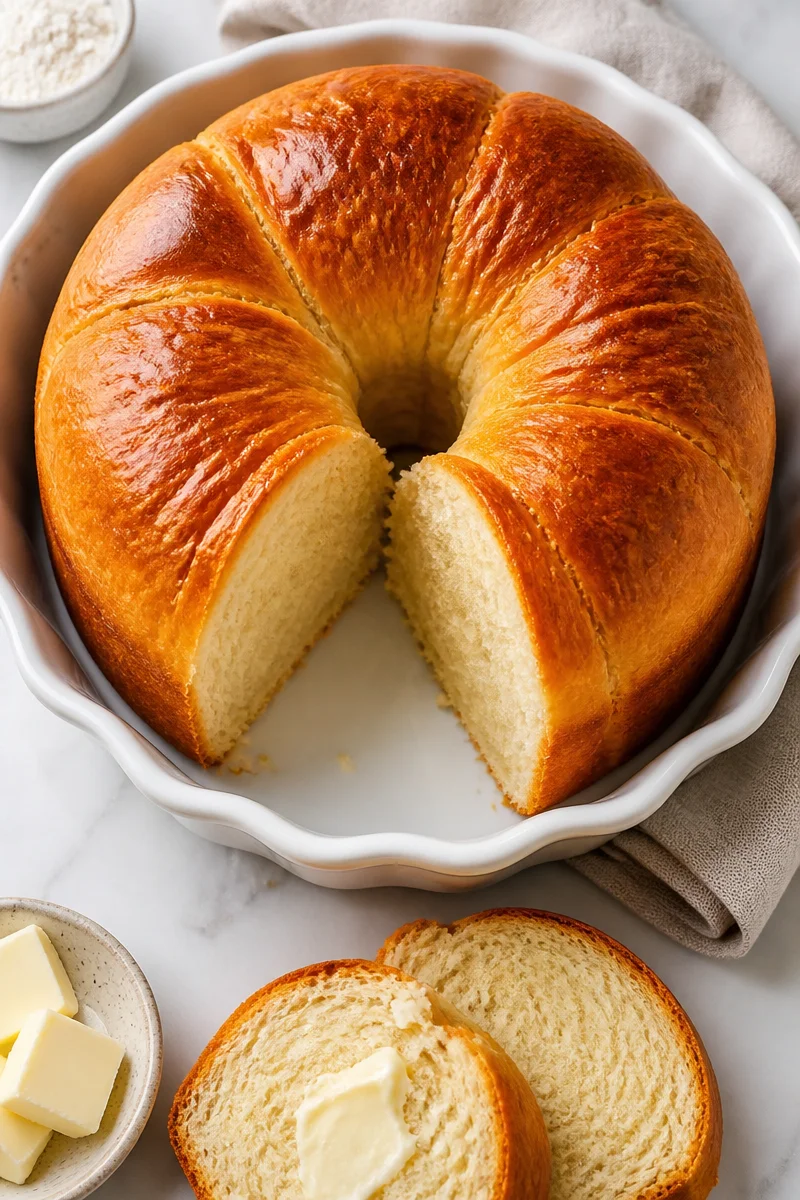
What to Serve With Classic Southern Sally Lunn Bread Loaf?
This bread goes beautifully with a bowl of soup, a plate of ham, or a simple chicken salad. In addition, it pairs well with scrambled eggs at breakfast, roasted vegetables at dinner, or a little fruit preserves for tea time. Because it has a soft, gently sweet flavor, it works with both savory and sweet foods. You can also serve it with soup beans, baked chicken, or a holiday spread, and it will still fit right in.
Storage Instructions
Store: Wrap the cooled loaf tightly and keep it at room temperature for up to 3 days. If your kitchen is very warm, you may prefer to refrigerate it, but room temperature usually gives the best texture for the first few days.
Freeze: Wrap slices or the whole loaf well and freeze for up to 2 months. For easier use, freeze individual slices so you can take out only what you need.
Reheat: For the stovetop, warm slices in a skillet over low heat for about 1 minute per side. For the microwave, heat a slice for 10 to 15 seconds at a time until just warm. If the bread is day-old, toasting brings back a lovely texture.
Recipe Info
Preparation Time: 2 hours 10 minutes, including rising time
Cooking Time: 40 minutes
Total Time: 2 hours 40 minutes
Level of Difficulty: Easy
Servings: 12 servings
Estimated Nutrition
Estimated nutrition for the whole recipe (without optional ingredients):
Calories: about 3,200 to 3,500 total
Protein: about 70 to 80 g total
Fat: about 130 to 150 g total
Carbohydrates: about 400 to 440 g total
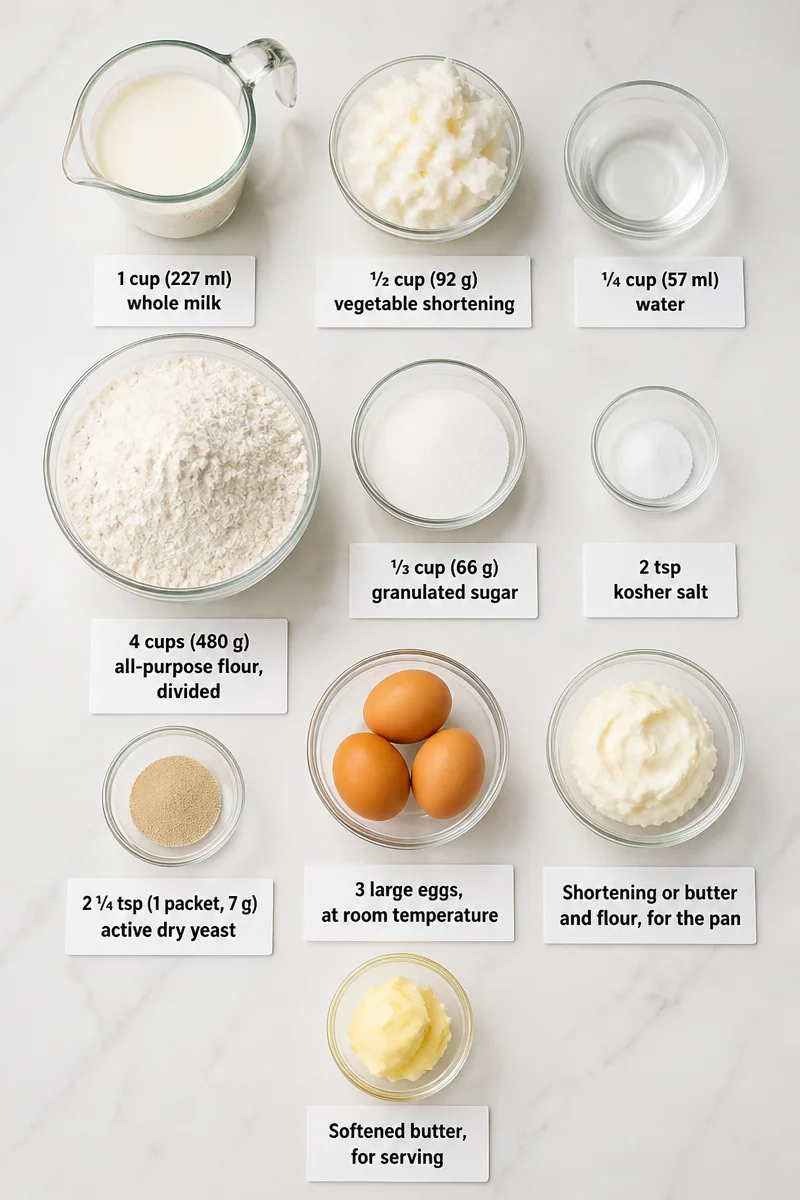
Ingredients
- 1 cup (227 ml) whole milk
- 1/2 cup (92 g) vegetable shortening
- 1/4 cup (57 ml) water
- 4 cups (480 g) all-purpose flour, divided
- 1/3 cup (66 g) granulated sugar
- 2 tsp kosher salt
- 2 1/4 tsp (1 packet, 7 g) active dry yeast
- 3 large eggs, at room temperature
- Shortening or butter and flour, for the pan
- Softened butter, for serving
Step-by-Step Instructions
Step 1: Warm the Milk Mixture
In a small saucepan, heat the milk, shortening, and water until the mixture reaches 120°F and the shortening is mostly melted. Be careful not to let it get hotter, because very warm liquid can harm the yeast and affect the rise.
Step 2: Make the Starter
In a large mixing bowl, stir together 1 1/2 cups of the flour, the sugar, salt, and yeast. Then pour in the warm liquid and beat with an electric mixer for about 2 minutes, until the mixture looks smooth.
Step 3: Add the Remaining Flour and Eggs
Add the remaining 2 1/2 cups flour and the eggs. Beat until the dough becomes thick, smooth, and very soft, almost like a batter. At this stage, it will be too soft to knead, and that is exactly right.
Step 4: Let the Dough Rise
Cover the bowl and place it in a warm spot for about 1 hour, or until the dough has doubled in size. Meanwhile, prepare your pan so it is ready when the dough is finished rising.
Step 5: Prepare, Bake, and Cool
Grease and flour a 10-inch tube pan or large Bundt pan. Stir the risen dough down gently, then spoon it into the pan. Cover and let it rise again for about 30 minutes, until it puffs near the top of the pan. While it rises, heat the oven to 350°F. Bake for about 40 minutes, until deeply golden brown and the center reaches 190°F. After baking, cool the loaf in the pan for 10 minutes, then turn it out onto a wire rack and cool for at least 20 minutes before slicing.
Step 6: Serve and Store
Slice the bread and serve it warm with softened butter. If you have leftovers, wrap them well and store them properly so the bread stays soft and ready for another meal.
Conclusion
This Classic Southern Sally Lunn Bread Loaf is soft, rich, and wonderfully comforting. Because it uses simple ingredients and a very easy mixing method, it is a great bread recipe for home cooks of many skill levels. In addition, the gentle sweetness and tender crumb make it perfect for breakfast, dinner, or an afternoon treat. If you try this loaf, I hope it brings warmth to your table. Share your results, leave a note about how it turned out, or explore more homemade bread recipes for your next baking day.
Classic Southern Sally Lunn Bread Loaf
Ingredients
Method
- In a small saucepan, heat the milk, shortening, and water until the mixture reaches 120°F and the shortening is mostly melted.
- In a large mixing bowl, stir together 1 1/2 cups of the flour, the sugar, salt, and yeast. Then pour in the warm liquid and beat with an electric mixer for about 2 minutes, until the mixture looks smooth.
- Add the remaining 2 1/2 cups flour and the eggs. Beat until the dough becomes thick, smooth, and very soft, almost like a batter.
- Cover the bowl and place it in a warm spot for about 1 hour, or until the dough has doubled in size.
- Grease and flour a 10-inch tube pan or large Bundt pan. Stir the risen dough down gently, then spoon it into the pan.
- Cover and let the dough rise again for about 30 minutes, until it puffs near the top of the pan.
- While it rises, heat the oven to 350°F. Bake for about 40 minutes, until deeply golden brown and the center reaches 190°F.
- After baking, cool the loaf in the pan for 10 minutes, then turn it out onto a wire rack and cool for at least 20 minutes before slicing.
- Slice the bread and serve it warm with softened butter.
- Store any leftovers wrapped tightly to keep it soft.
