This Easy Selkirk Bannock Scottish Fruit Bread is pure comfort. It feels homey, old-fashioned, and just right for sharing with family. Because it is soft, lightly sweet, and full of fruit, it brings a cozy feel to the table without being fussy. In fact, it is the kind of bake that makes a kitchen smell warm and inviting.
What makes this Selkirk bannock so special is the simple mix of strong white bread flour, a pinch of salt, instant dried yeast, brown sugar, warm whole milk, butter, and plenty of mixed dried fruit. The dough bakes into a tender loaf with a gentle sweetness and rich flavor. As a result, every slice has that lovely balance of soft bread and juicy fruit, with just a hint of buttery richness.
The method is easy to follow, too. First, you mix the dry ingredients, then stir in the warm milk and melted butter to make a dough. After that, you knead it briefly, let it rise, shape it, and bake until golden. Since the dough is handled in a simple way, this recipe feels very manageable, even if you do not bake bread often.
This easy Selkirk bannock Scottish fruit bread is perfect for slow mornings, afternoon tea, holiday trays, or chilly evenings when you want something warm from the oven. Also, it makes a nice bake for potlucks, family visits, and weekend brunch. Because it keeps well, it is a smart make-ahead bread for busy days, too.
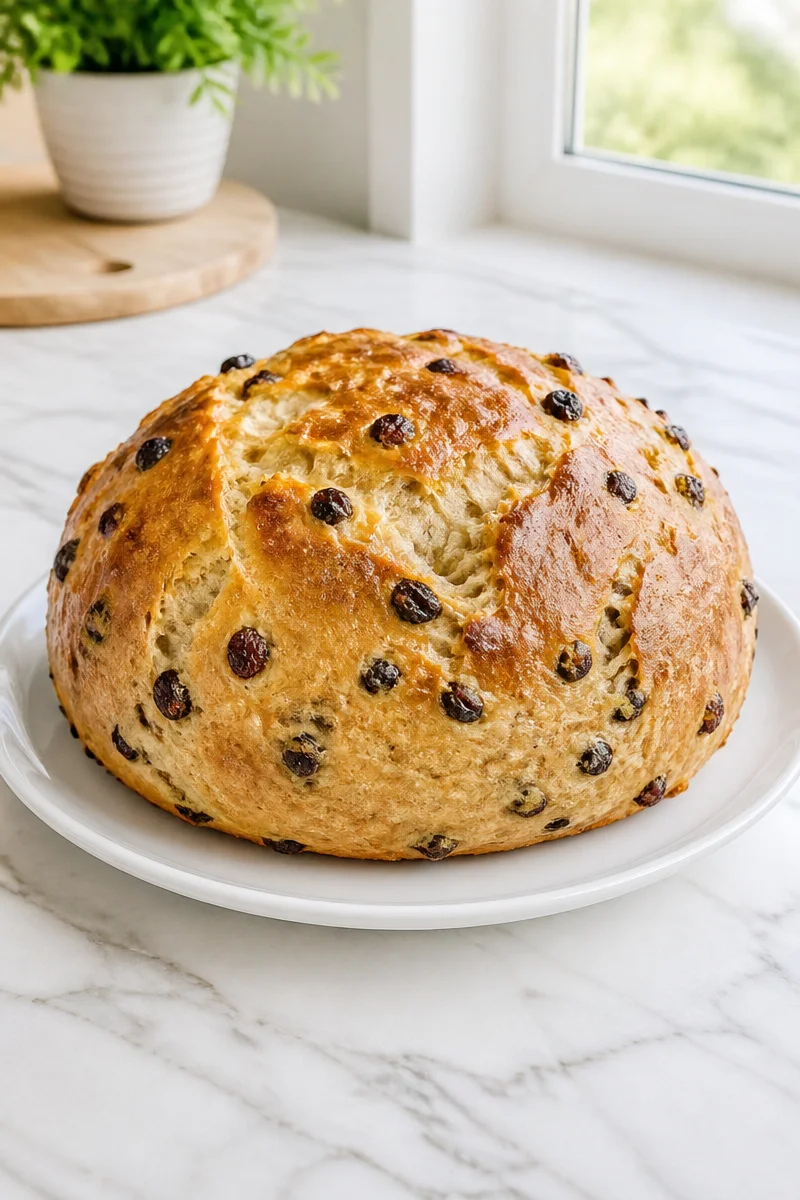
Why You’ll Love This Easy Selkirk Bannock Scottish Fruit Bread
- It uses simple pantry ingredients, so you may already have most of what you need.
- The dough is straightforward, and therefore it is friendly for beginner bread bakers.
- The fruit gives each slice a sweet, cozy flavor, while the butter keeps the crumb soft.
- It is delicious fresh, but it is even better the next day, so planning ahead pays off.
- You can serve it for breakfast, tea time, dessert, or a snack, which makes it very versatile.
Mixed Dried Fruit Tips
The star of this easy Selkirk bannock Scottish fruit bread is the mixed dried fruit. Use good-quality sultanas and raisins for the best texture, and if you like a little extra brightness, add a small amount of mixed peel. Also, choose fruit that feels soft and plump rather than dry and hard, since that helps the bread stay moist. If your fruit seems very dry, you can soak it briefly in warm water, then drain it well before mixing. That way, the fruit bakes up tender and flavorful instead of chewy.
Options for Substitutions
- Swap whole milk for 2% milk if you want a slightly lighter loaf.
- Use plant-based milk, such as oat milk, if you need a dairy-free option.
- Replace butter with a dairy-free baking spread for a similar soft crumb.
- Use light brown sugar instead of dark brown sugar if that is what you have on hand.
- Try a different dried fruit mix, such as currants, cranberries, or chopped dried apricots.
- If you do not have mixed peel, simply leave it out and add a few extra raisins instead.
Watch Out for These Mistakes
One common mistake is adding too much flour. This dough should feel soft and a little tacky, so do not keep dusting in flour unless you truly need to. If you add too much, the bread can turn dry and dense. Instead, knead it first, then add only a spoonful at a time if the dough is very sticky.
Also, be careful with the milk and butter mixture. It should be warm, not hot, because very hot liquid can slow or damage the yeast. A good target is about 100°F, which feels warm to the touch but not uncomfortable. So, if the liquid is steaming, let it cool a little before mixing it in.
Another problem is rushing the rise. Bread needs time to double, and this easy Selkirk bannock Scottish fruit bread is no different. If the room is cool, it may need longer than the recipe says. Therefore, watch the dough, not just the clock. When it has doubled in size, it is ready.
Finally, do not overbake it. Since fruit bread can brown early, keep an eye on the top as it bakes. If it darkens too fast, loosely cover it with foil. Then check for a hollow sound when tapped, which is a simple sign that it is done.
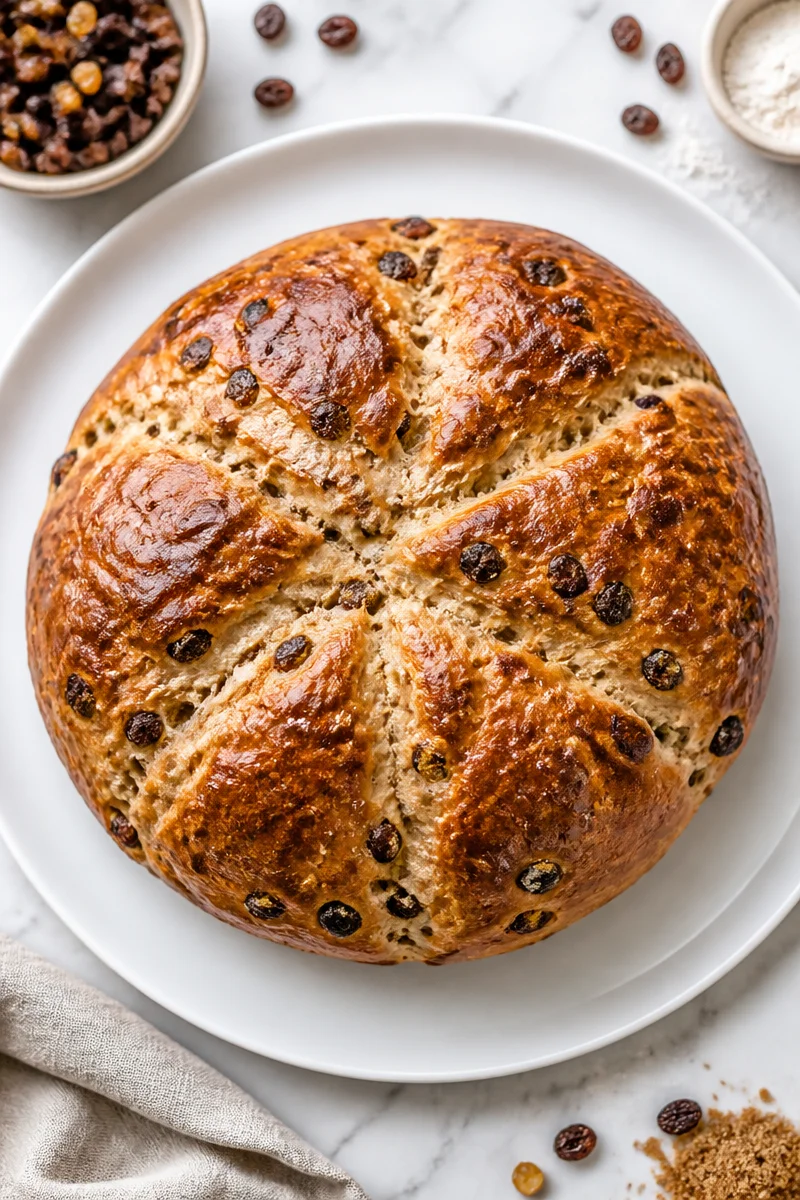
What to Serve With Easy Selkirk Bannock Scottish Fruit Bread?
This easy Selkirk bannock Scottish fruit bread pairs beautifully with butter, marmalade, strawberry jam, or a little honey. In addition, it tastes lovely with a cup of tea, coffee, or warm milk. For a fuller spread, serve it alongside fresh fruit, yogurt, or a mild cheese such as cream cheese. Because the bread is lightly sweet, it works well with both simple breakfast foods and afternoon tea favorites.
Storage Instructions
Store: Keep the bread wrapped at room temperature for up to 3 days. If your kitchen is warm or humid, refrigerate it for up to 5 days instead, but the texture may firm up a bit.
Freeze: Wrap the loaf or individual slices tightly, then freeze for up to 3 months. For best results, place the wrapped bread in a freezer bag to protect it from freezer burn.
Reheat: For the stovetop, warm slices in a dry skillet over low heat for 1 to 2 minutes per side. For the microwave, heat one slice at a time for about 10 to 15 seconds. Toasting also works well and brings back the best flavor.
Recipe Info
Preparation Time: 15 minutes
Rising Time: 2 hours
Cooking Time: 45 minutes
Total Time: 3 hours
Difficulty Level: Easy
Servings: 20
Calories: 224 kcal per serving
Estimated Nutrition
Estimated nutrition for the whole recipe (without optional ingredients):
Calories: 4,300 to 4,700
Protein: 90 to 110 g
Fat: 95 to 125 g
Carbohydrates: 780 to 860 g
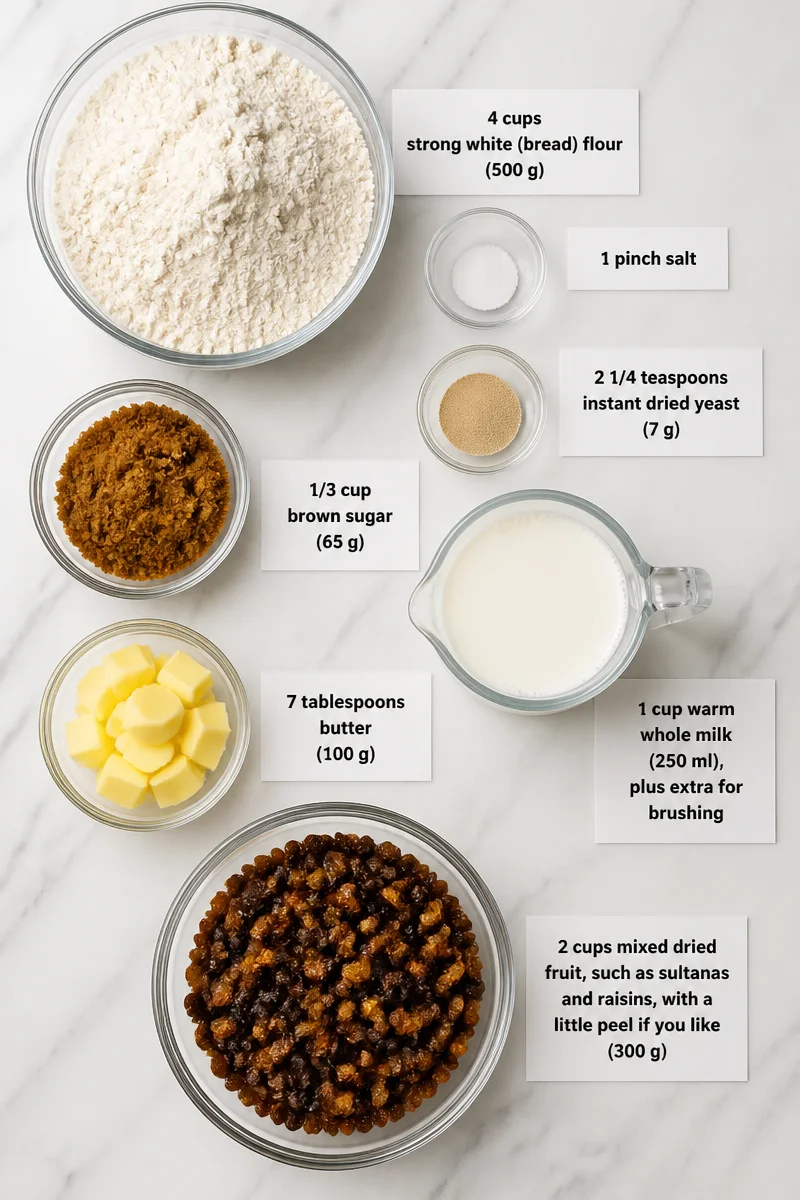
Ingredients
- 4 cups strong white (bread) flour (500 g)
- 1 pinch salt
- 2 1/4 teaspoons instant dried yeast (7 g)
- 1/3 cup brown sugar (65 g)
- 1 cup warm whole milk (250 ml), plus extra for brushing
- 7 tablespoons butter (100 g)
- 2 cups mixed dried fruit, such as sultanas and raisins, with a little peel if you like (300 g)
Step-by-Step Instructions
Step 1: Mix the Dry Ingredients
In a large bowl, combine the flour, brown sugar, salt, yeast, and dried fruit. Stir them together well so the yeast and fruit are spread evenly through the flour. This helps the dough rise evenly later.
Step 2: Warm the Milk and Butter
Melt the butter gently in a saucepan, then whisk in the milk. Keep the mixture warm, around 100°F, but do not let it boil. If it gets too hot, let it cool slightly before you add it to the dry ingredients.
Step 3: Form the Dough
Slowly stir the warm liquid into the flour mixture with a wooden spoon. Keep mixing until a dough starts to form. At this stage, the dough should look shaggy but should hold together.
Step 4: Knead Briefly
Turn the dough out and knead it by hand for about 5 minutes, just until everything is combined. If the dough feels very sticky, add flour a spoonful at a time, but do not add much. You want a soft dough, not a stiff one.
Step 5: First Rise
Cover the bowl and set it somewhere warm. Let the dough rise until doubled in size, about 1 hour. During this time, the dough will become fuller and lighter, which helps the bread bake up soft.
Step 6: Shape and Second Rise
Knock back the dough by kneading it gently for about 2 minutes. Then shape it into a round. Return it to the bowl, cover it again, and let it rise until doubled, about 45 to 60 minutes. Meanwhile, line a baking tray with parchment and heat the oven to 320°F fan or about 350°F if your oven is not fan-assisted.
Step 7: Bake and Cool
Place the dough on the tray and brush the top with milk. Bake for 40 to 50 minutes, checking at 35 minutes. If the top browns too quickly, cover it loosely with foil. When it sounds hollow when tapped, it is done. Finally, cool the bread before slicing. It tastes even better the next day and is lovely toasted with butter.
Conclusion
This easy Selkirk bannock Scottish fruit bread is a warm, simple bake with soft texture, sweet fruit, and gentle buttery flavor. Because it uses basic ingredients and a clear method, it is a great choice for home bakers of many skill levels. Also, it is the kind of bread that feels special without being difficult.
If you try this recipe, I would love to hear how it turned out. Share your thoughts, leave a comment, or save this post for your next baking day. And if you enjoy classic homemade breads, keep browsing for more cozy recipes that fit right into your kitchen routine.
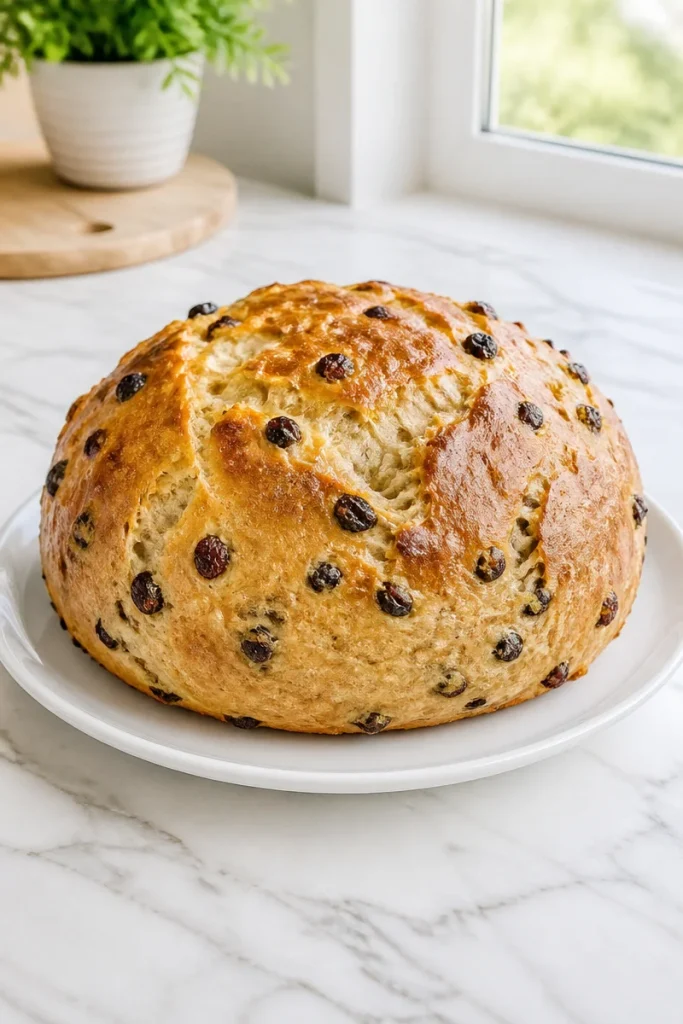
Selkirk Bannock
Ingredients
Method
- In a large bowl, combine the flour, brown sugar, salt, yeast, and dried fruit. Stir them together well so the yeast and fruit are spread evenly through the flour.
- Melt the butter gently in a saucepan, then whisk in the milk, keeping the mixture warm around 100°F, but do not let it boil.
- Slowly stir the warm liquid into the flour mixture with a wooden spoon until a shaggy dough starts to form.
- Turn the dough out and knead by hand for about 5 minutes until combined. Add flour a spoonful at a time if the dough is too sticky.
- Cover the bowl and let the dough rise in a warm area until doubled in size, about 1 hour.
- Gently knead the dough again for about 2 minutes, shape it into a round, and return it to the bowl to rise until doubled, about 45-60 minutes.
- Preheat the oven to 320°F fan or 350°F if your oven is not fan-assisted.
- Place the dough on a lined baking tray and brush the top with milk. Bake for 40-50 minutes, checking at 35 minutes. If it browns too quickly, cover with foil.
- Once done (should sound hollow when tapped), cool the bread before slicing.
