This Filipino Pancit Bihon Noodle Stir Fry is pure comfort in a bowl. It is the kind of dish that feels right at home on a busy weeknight, yet it still looks special enough for guests. The noodles are soft, the vegetables stay bright, and every bite has that cozy, savory taste people love.
What makes pancit bihon so good is the balance. You get thin rice noodles, pork, boneless chicken breast, snow peas, carrot, cabbage, celery leaves, onion, and garlic, all brought together with chicken bouillon powder and soy sauce. Then, if you like, a squeeze of lemon or calamansi wakes everything up. Also, you can add Chinese sausage for a deeper, sweeter flavor. So, you get a dish that is salty, light, a little earthy, and very satisfying.
The method is simple, too. First, you soak the noodles until they are pliable. Then, you sauté the garlic and onion, cook the pork, add the cooked chicken, and build a light broth. After that, you simmer the vegetables, remove them, season the broth, and cook the noodles right in the wok until they soak up all that flavor. Finally, you toss everything back together and serve it hot. Because the steps are clear and the timing is easy to follow, this is a very manageable recipe for home cooks of all ages.
This Filipino Pancit Bihon Noodle Stir Fry is perfect for family dinners, potlucks, birthdays, and holiday tables. It also works well on chilly nights when you want something warm without making a heavy meal. Plus, the leftovers taste great the next day, so it is a smart choice when you want a dish that stretches well.
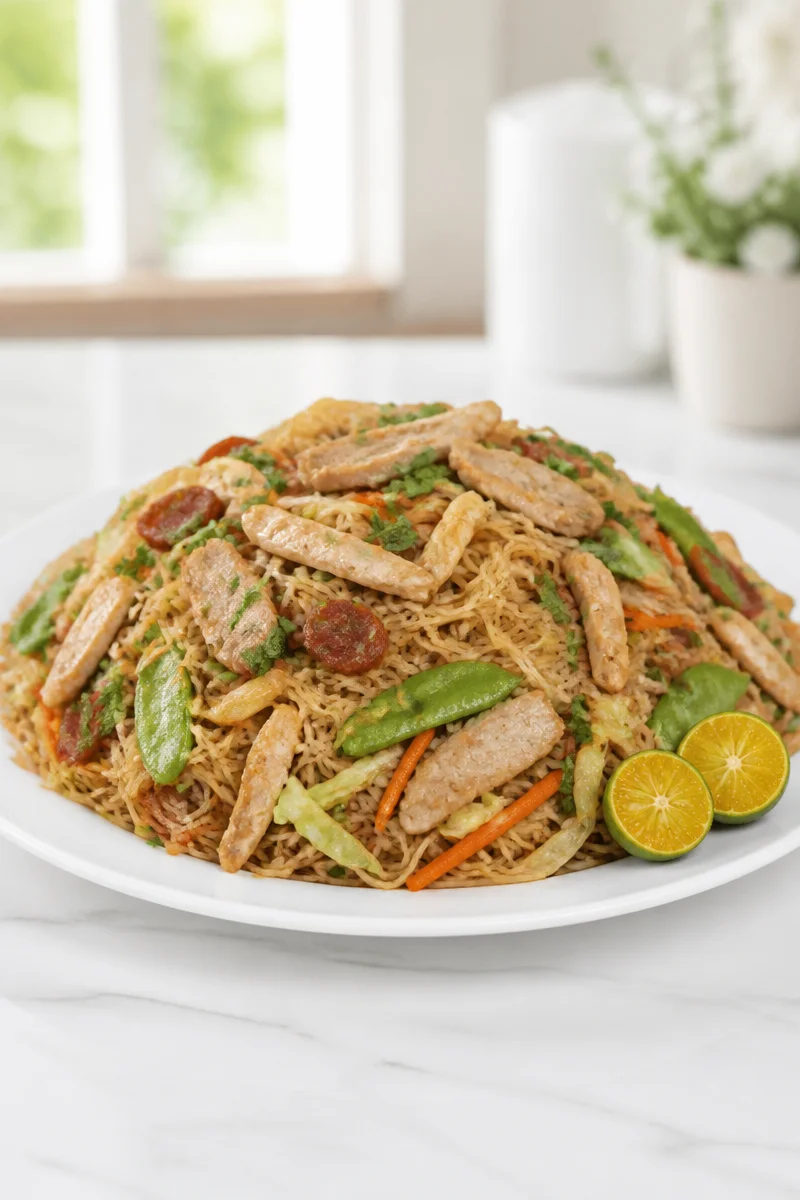
Why You’ll Love This Filipino Pancit Bihon Noodle Stir Fry
- It is comforting and familiar. The soft rice noodles, savory meat, and tender vegetables make every bite feel warm and satisfying.
- It uses simple ingredients. You do not need anything fancy, and most items are easy to find in a regular grocery store.
- It feeds a crowd. Since this recipe makes 8 servings, it is great for family meals, gatherings, and special events.
- It has a balanced flavor. The soy sauce, bouillon, and citrus create a nice mix of salty, bright, and savory notes.
- It is flexible. You can add Chinese sausage, swap vegetables, or adjust the seasoning to fit your taste.
Pork Tips
For this Filipino Pancit Bihon Noodle Stir Fry, the pork should be thinly sliced so it cooks fast and stays tender. If you can, choose pork shoulder or pork loin with a little fat for better flavor. Also, slice it across the grain, because that helps keep each piece soft. If you want to save time, ask the butcher to slice it for you. Then, when you cook it, make sure it is no longer pink before you move on to the chicken and broth.
Options for Substitutions
- Use shrimp instead of pork or chicken for a lighter seafood version.
- Swap bok choy or napa cabbage for the cabbage if that is what you have.
- Replace snow peas with green beans, bell pepper strips, or broccoli florets.
- Use fish sauce in place of some of the soy sauce for a different savory note.
- Replace chicken bouillon powder with vegetable bouillon if you want a milder taste.
- Use low-sodium soy sauce if you want to reduce the salt level a bit.
Watch Out for These Mistakes
One common mistake is soaking the noodles too long. You only need to soak the pancit bihon until it is pliable, about 10 minutes. If you leave it in water too long, it can get too soft and break apart later in the wok. So, drain it as soon as it bends easily.
Another issue is overcooking the vegetables. The carrots, snow peas, cabbage, and celery leaves should stay crisp-tender. Therefore, cook them just long enough to soften a little. If they go too far, the pancit will lose its fresh texture and become mushy.
It is also important not to add too much liquid at once. Start with the 3 cups of water, and then add the extra cup only if the noodles need it. Otherwise, the dish can turn soupy instead of stir-fried. Pancit bihon should be moist, but the liquid should cook off in the end.
Finally, do not forget to season at the right time. The soy sauce goes into the broth before the noodles, so the noodles can absorb the flavor as they cook. If you wait until the end, the taste may sit on the surface instead of blending through the dish. So, season carefully and taste as you go.
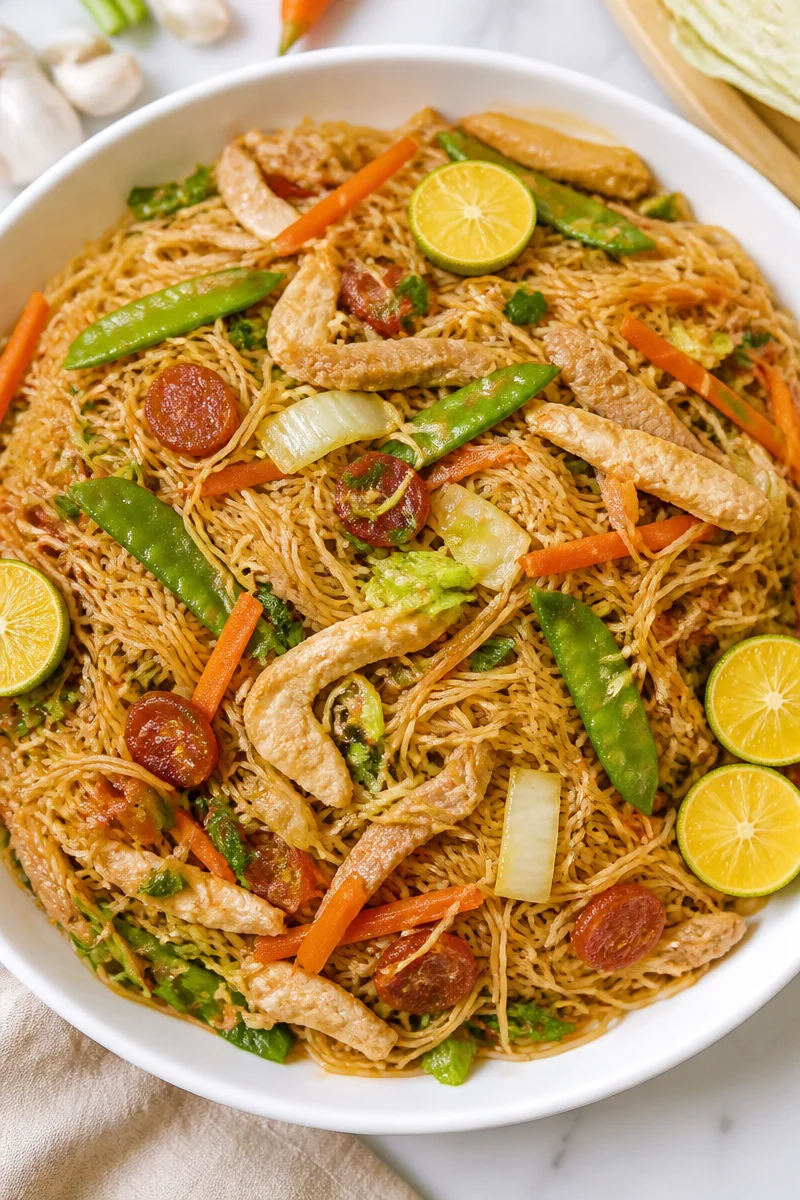
What to Serve With Filipino Pancit Bihon Noodle Stir Fry?
Filipino Pancit Bihon Noodle Stir Fry pairs well with simple sides that round out the meal without stealing the spotlight. For a classic spread, serve it with lumpia, fried chicken, or lumpiang shanghai. You could also add steamed rice if you want a more filling plate, although the pancit is already hearty on its own. For a fresh finish, a light fruit salad or sliced melon works nicely, especially for holidays and family gatherings.
Storage Instructions
Store: Place leftovers in an airtight container and refrigerate for up to 3 days. For best texture, cool the pancit before storing it.
Freeze: You can freeze pancit bihon for up to 2 months, but the noodles may soften a bit after thawing. If possible, freeze in smaller portions so reheating is easier.
Reheat: For the stovetop, warm the noodles in a skillet over medium heat with a small splash of water. Stir gently until hot. For the microwave, cover loosely and heat in short bursts, stirring between each round so the noodles heat evenly.
Recipe Info
Preparation Time: 15 minutes
Cooking Time: 40 minutes
Total Time: 55 minutes
Level of Difficulty: Easy
Servings: 8
Calories: 340 kcal per serving
Estimated Nutrition
Estimated nutrition for the whole recipe (without optional ingredients):
- Calories: about 2,500 to 2,800
- Protein: about 130 to 150 grams
- Fat: about 70 to 90 grams
- Carbohydrates: about 280 to 330 grams
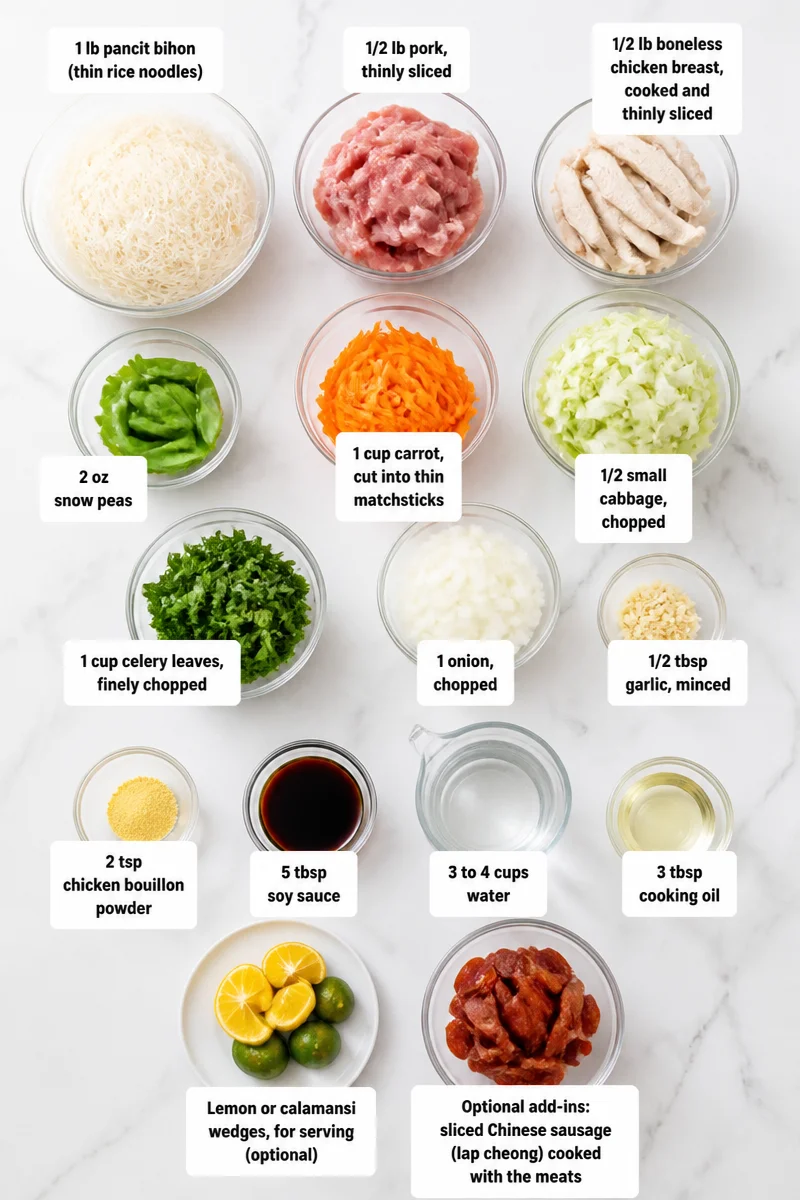
Ingredients
- 1 lb pancit bihon (thin rice noodles)
- 1/2 lb pork, thinly sliced
- 1/2 lb boneless chicken breast, cooked and thinly sliced
- 2 oz snow peas
- 1 cup carrot, cut into thin matchsticks
- 1/2 small cabbage, chopped
- 1 cup celery leaves, finely chopped
- 1 onion, chopped
- 1/2 tbsp garlic, minced
- 2 tsp chicken bouillon powder
- 5 tbsp soy sauce
- 3 to 4 cups water
- 3 tbsp cooking oil
- Lemon or calamansi wedges, for serving (optional)
- Optional add-ins: sliced Chinese sausage (lap cheong) cooked with the meats
Step-by-Step Instructions
Step 1: Soak the Noodles
Start by placing the rice noodles in a large bowl of water. Let them soak for about 10 minutes, or until they are soft enough to bend without breaking. Then drain them well and set them aside. This step helps the noodles cook evenly later, so do not skip it.
Step 2: Sauté the Aromatics
Next, heat the cooking oil in a large wok over medium-high heat. Add the garlic and onion, then cook them until they smell fragrant and look softened. This creates the base flavor for the pancit bihon, so give it a little time and let the aromatics do their job.
Step 3: Cook the Pork and Chicken
After that, add the pork to the wok and cook it briefly until it is no longer pink. Then add the sliced cooked chicken. Stir everything together so the meat picks up the flavor from the garlic and onion. If you are using Chinese sausage, you can add it here as well.
Step 4: Build the Broth and Cook the Vegetables
Stir in the chicken bouillon powder and 3 cups of water. Bring the mixture to a simmer and let it cook for about 15 minutes. Then add the carrots, snow peas, cabbage, and celery leaves. Cook for a few minutes more until the vegetables are crisp-tender. After that, use a slotted spoon to lift out the vegetables and meats, and set them aside while you keep the broth in the wok.
Step 5: Season, Cook the Noodles, and Finish
Stir the soy sauce into the broth. Then add the soaked noodles and toss them gently. If the pan looks dry before the noodles are tender, add up to 1 more cup of water. Keep tossing until the noodles are cooked and the liquid has fully evaporated. Finally, return the vegetables and meats to the wok, toss for 1 to 2 minutes until everything is hot, and serve at once with lemon or calamansi wedges.
Conclusion
Filipino Pancit Bihon Noodle Stir Fry is a simple dish, yet it brings a lot of comfort to the table. It has soft rice noodles, savory pork and chicken, fresh vegetables, and a bright finish from lemon or calamansi. Because the steps are easy and the ingredients are familiar, this is a great recipe for both new cooks and experienced home cooks.
If you are looking for a meal that is cozy, family-friendly, and good for sharing, this pancit bihon is a wonderful choice. Try it soon, then let me know how it turned out for you. Also, if you enjoy this kind of easy noodle dish, be sure to explore more classic Filipino recipes and weeknight dinners on the blog.
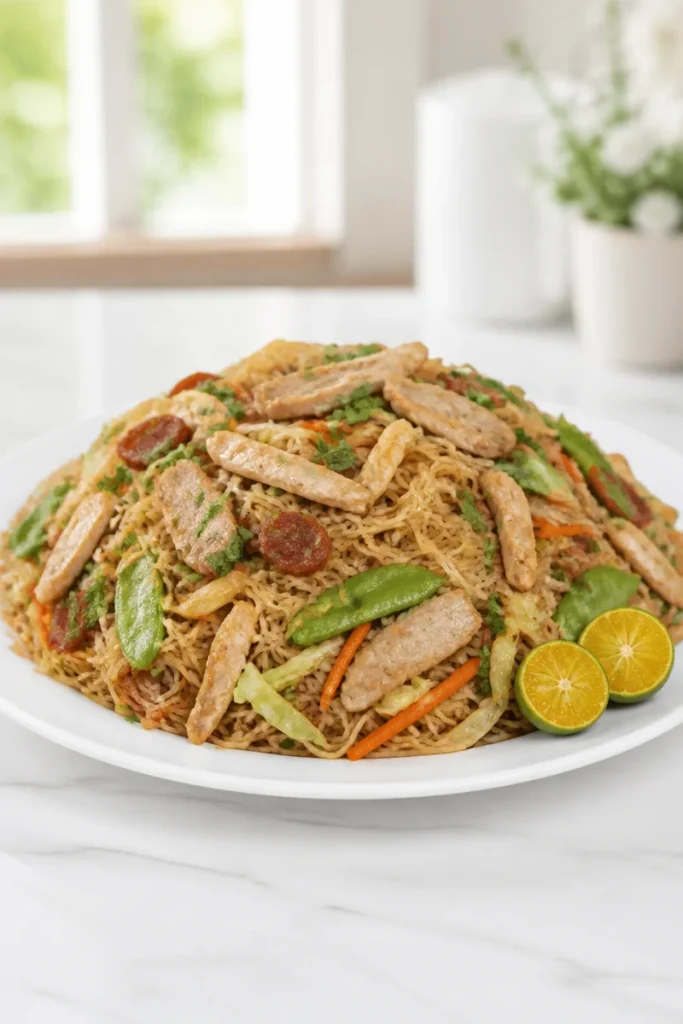
Pancit Bihon
Ingredients
Method
- Soak the rice noodles in a large bowl of water for about 10 minutes, or until they are pliable. Drain and set aside.
- Heat the cooking oil in a large wok over medium-high heat.
- Add the garlic and onion to the wok and sauté until fragrant and softened.
- Add the pork and cook until no longer pink, then add the cooked chicken, stirring well.
- Stir in the chicken bouillon powder and 3 cups of water. Bring to a simmer and cook for about 15 minutes.
- Add the carrots, snow peas, cabbage, and celery leaves. Cook until vegetables are crisp-tender. Remove them from the wok and set aside.
- Stir the soy sauce into the broth, then add the soaked noodles. Toss gently, adding more water if the pan looks dry.
- Once the noodles are cooked and the liquid has evaporated, return the vegetables and meats to the wok. Toss everything for 1 to 2 minutes until heated through.
- Serve hot with lemon or calamansi wedges.
