Fresh Chimichurri Sauce for Christmas Roast

Affiliate disclosure: This post may contain affiliate links. I may earn a small commission at no extra cost to you. See our Privacy Policy for details HERE.
There is something especially comforting about a bright, fresh sauce beside a rich Christmas roast. This chimichurri is one of my favorite ways to bring a little color and lively flavor to a holiday table. It takes just minutes to make, yet it can make a simple plate of roast beef or vegetables feel special.
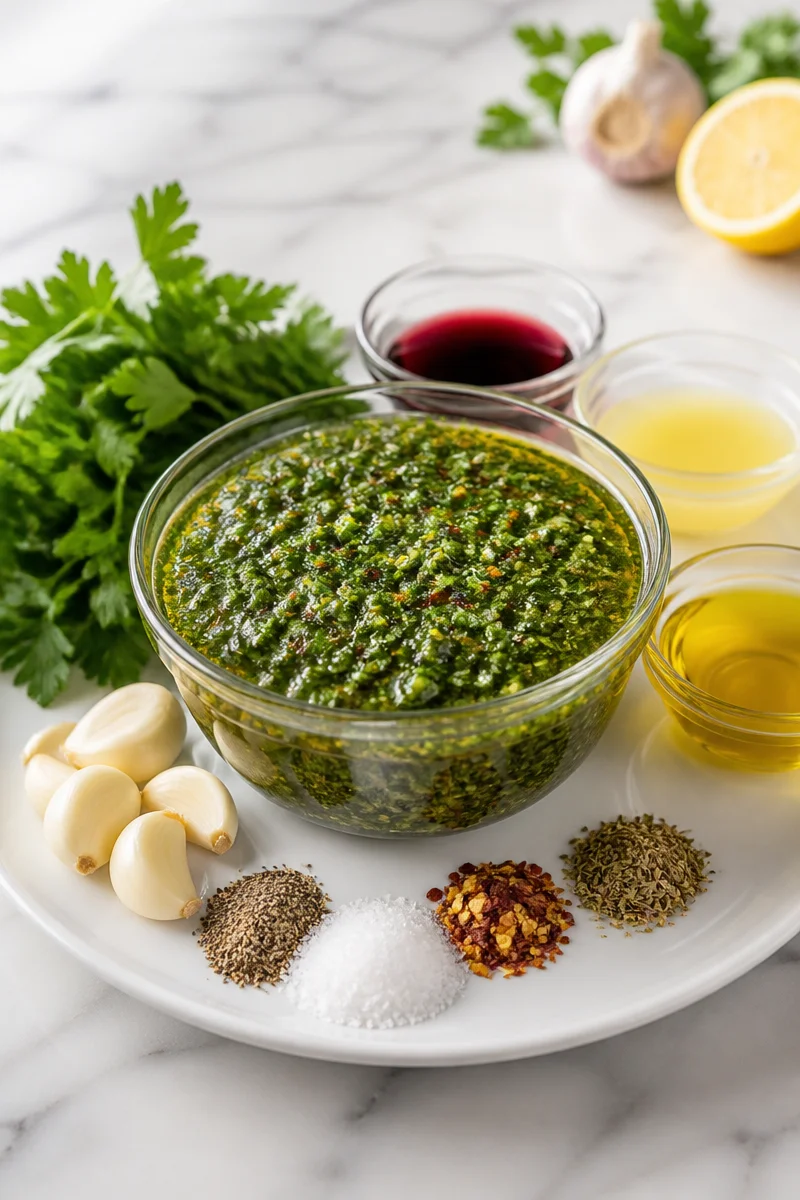
Fresh parsley gives the sauce its green, herbal base. Garlic adds a savory bite, while extra virgin olive oil makes it smooth and rich. Red wine vinegar and lemon juice bring a lively tang, and dried oregano, black pepper, and crushed red pepper flakes add warmth and gentle heat. Together, these ingredients create a fresh, bold sauce that balances rich roasted foods.
The method is wonderfully simple: add the parsley, garlic, seasonings, olive oil, red wine vinegar, and lemon juice to a food processor, then pulse until pureed. Transfer the sauce to an airtight container and refrigerate it. There is no cooking involved, so the recipe takes about 5 minutes from start to finish and makes 8 servings.
Serve this fresh chimichurri sauce with Christmas roast at a holiday dinner, Sunday supper, or winter potluck. It also adds a welcome burst of flavor to leftovers the next day. Because it is made ahead and served cool or at room temperature, it can make holiday cooking a little easier.
Why You’ll Love This Fresh Chimichurri Sauce for Christmas Roast
- It is quick: This fresh chimichurri sauce takes only 5 minutes to prepare, with no stove or oven required.
- It uses simple ingredients: Fresh parsley, garlic, oil, vinegar, lemon, and a few seasonings create plenty of flavor.
- It balances rich dishes: The herbs and citrusy tang cut through the richness of roast beef, lamb, and other hearty mains.
- It is easy to adjust: Add more lemon for brightness or reduce the red pepper flakes for a milder sauce.
- It works beyond Christmas: Spoon it over grilled vegetables, potatoes, sandwiches, and next-day roast leftovers.
Parsley Tips
Choose parsley with fresh-looking, deep green leaves and crisp stems. Avoid bunches with yellow, wilted, or slimy leaves, since they can affect the sauce’s fresh taste. Before measuring, rinse the parsley well and dry it thoroughly. Extra water can thin the chimichurri and soften its flavor. For the cleanest texture, use mostly leaves and tender stems, and remove any thick, woody stems before adding the parsley to the food processor.
Options for Substitutions
- Parsley: Replace part of the parsley with fresh cilantro for a different herbal flavor. Keep some parsley in the mix so the sauce stays close to classic chimichurri.
- Garlic: Use fewer garlic cloves for a gentler taste. You can also use a small amount of granulated garlic, though fresh garlic gives the brightest flavor.
- Salt: If you use a fine salt instead of a coarser one, start with less and taste before adding more. Salt crystals vary in size, so equal spoonfuls may not taste the same.
- Black pepper: Use white pepper if you want a softer-looking sauce, or leave out the pepper if you prefer less heat.
- Crushed red pepper flakes: Reduce or omit them for a mild sauce. For more heat, add a little extra, then taste before serving.
- Red wine vinegar: Use sherry vinegar or a mild white wine vinegar instead. The flavor will change slightly, so taste the sauce before serving and adjust the lemon juice if needed.
Watch Out for These Mistakes
First, do not add wet parsley straight to the food processor. Water clinging to the leaves can make the sauce runny and mute its bright flavor. Dry the parsley well with a clean towel or salad spinner before you begin.
Next, avoid running the food processor for too long. The goal is a well-mixed, pureed sauce, but extended processing can make the parsley look dull and overly smooth. Pulse until the ingredients come together, then stop and check the texture.
Also, taste before adding extra salt or lemon juice. The sauce already includes salt, red wine vinegar, and lemon, and their intensity can vary. Start with the listed amounts, then make small adjustments if you want a sharper or more savory flavor.
Finally, use an airtight container when refrigerating the chimichurri. The recipe does not provide a tested storage life or freezing guidance, so do not assume it will keep for a set number of days or months. Follow the storage advice in the section below, and discard it if it develops an unusual smell, appearance, or texture.
What to Serve With Fresh Chimichurri Sauce for Christmas Roast?
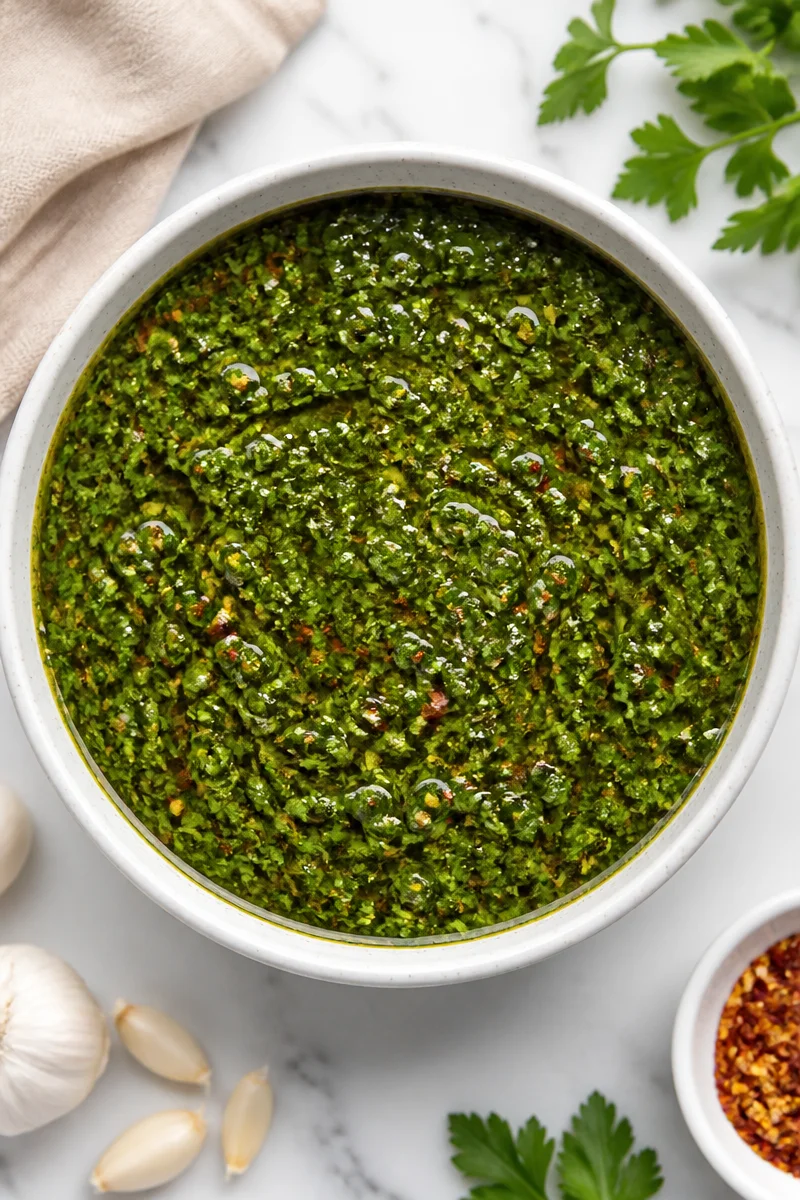
Serve this fresh chimichurri sauce with roast beef, then round out the meal with crispy roasted potatoes, green beans, and a simple winter salad. It also pairs nicely with roasted carrots or Brussels sprouts, whose natural sweetness complements the sauce’s tangy herbs. For a holiday spread, place the chimichurri in a small bowl beside the roast so guests can add as much as they like.
Storage Instructions
Store: Transfer the sauce to a clean, airtight container and refrigerate it promptly. The original recipe does not give a tested number of storage days, so no specific shelf life can be confirmed. For best quality and food safety, follow current food-storage guidance, keep the container chilled, and discard the sauce if it looks or smells unusual.
Freeze: The recipe does not provide tested freezing instructions. Since the sauce includes fresh herbs and oil, freezing may change its texture and color. If you choose to freeze it, use a freezer-safe container, leave a little room for expansion, and label it with the date. Thaw it in the refrigerator and stir well before serving. No tested freezer storage duration is available for this recipe.
Reheat: Chimichurri is usually served cool or brought to room temperature, not reheated. If it has been refrigerated, stir it and let it sit briefly at room temperature before serving. Do not heat it on the stovetop or in the microwave, as heat can dull the fresh herbs and alter the flavor.
Recipe Info
- Preparation Time: 5 minutes
- Cooking Time: 0 minutes
- Total Time: 5 minutes
- Level of Difficulty: Easy
- Servings: 8 servings
Estimated Nutrition
Estimated nutrition for the whole recipe (without optional ingredients):
- Calories: About 900 to 1,100
- Protein: About 5 to 8 grams
- Fat: About 95 to 110 grams
- Carbohydrates: About 15 to 22 grams
These are broad estimates based on the listed ingredients. Actual values vary with the size of the parsley bunch, the exact products used, and serving size. The provided recipe lists 125 kcal per serving.
Ingredients
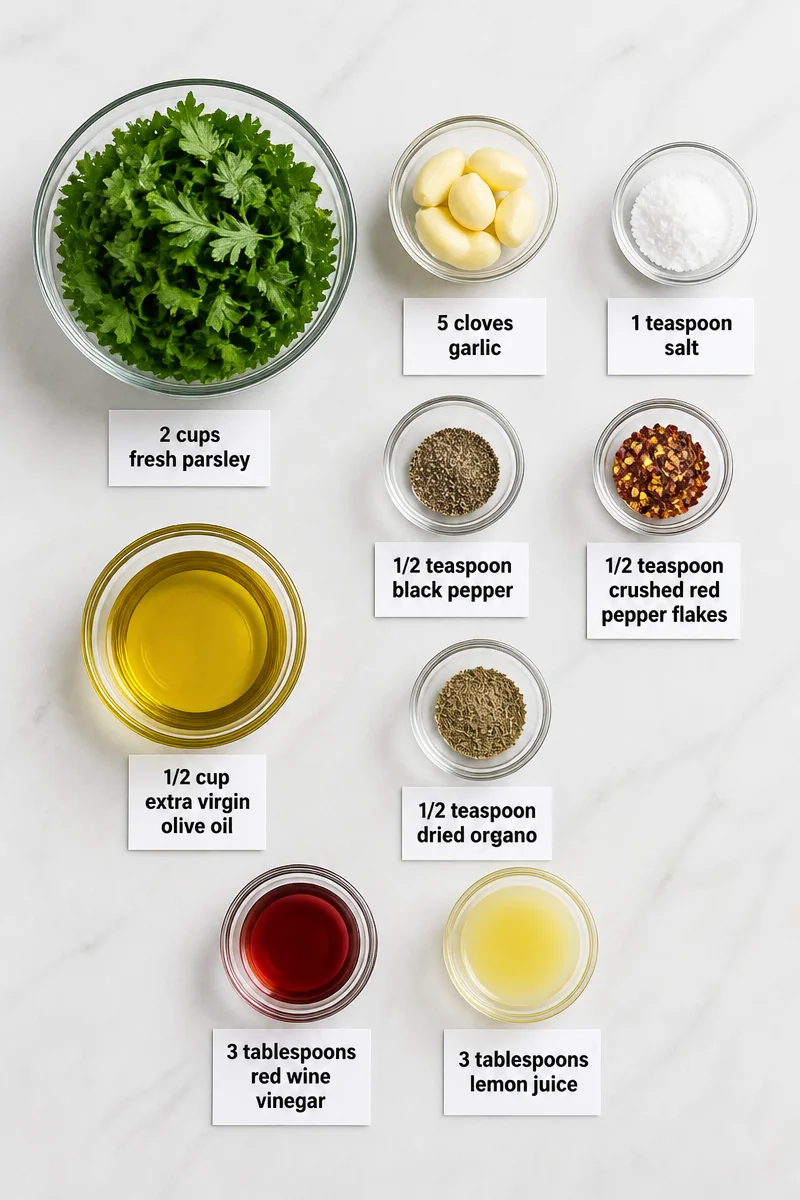
- 2 cups fresh parsley
- 5 cloves garlic
- 1 teaspoon salt
- 1/2 teaspoon black pepper
- 1/2 teaspoon crushed red pepper flakes
- 1/2 teaspoon dried oregano
- 1/2 cup extra virgin olive oil
- 3 tablespoons red wine vinegar
- 3 tablespoons lemon juice
Step-by-Step Instructions
Step 1: Prepare the Parsley
Rinse the parsley well and dry it thoroughly. Remove any thick, woody stems, then measure out 2 cups of fresh parsley. Dry leaves help the sauce keep a bright flavor and prevent excess water from thinning it.
Step 2: Add the Ingredients to the Food Processor
Place the parsley leaves, garlic, salt, black pepper, crushed red pepper flakes, dried oregano, extra virgin olive oil, red wine vinegar, and lemon juice in a food processor. Make sure the lid is secure before you begin.
Step 3: Pulse Until Pureed
Pulse the mixture on high until it is pureed and the ingredients are well combined. Stop once or twice to scrape down the sides if needed. Avoid processing longer than necessary, since the herbs can lose some of their fresh appearance.
Step 4: Taste and Adjust
Taste a small spoonful. If you want a brighter sauce, add a little more lemon juice. For more heat, add a pinch of red pepper flakes. Adjust slowly, then pulse briefly to blend any additions.
Step 5: Transfer and Refrigerate
Spoon the chimichurri into an airtight container and refrigerate it until serving. Stir before using, since the oil may settle or separate. Serve it cool or let it sit briefly at room temperature for easier spooning.
Conclusion
This fresh chimichurri sauce for Christmas roast brings parsley, garlic, olive oil, vinegar, lemon, and gentle spice together in a quick, no-cook recipe. It takes only 5 minutes, makes 8 servings, and pairs especially well with roast beef, potatoes, and winter vegetables. Try it with your holiday roast, then share how you served it or explore more easy sauces for your next family meal.
Chimichurri Sauce
Ingredients
Method
- Rinse the parsley well and dry it thoroughly. Remove any thick, woody stems, then measure out 2 cups of fresh parsley.
- Place the parsley leaves, garlic, salt, black pepper, crushed red pepper flakes, dried oregano, extra virgin olive oil, red wine vinegar, and lemon juice in a food processor.
- Pulse the mixture on high until it is pureed and the ingredients are well combined, stopping once or twice to scrape down the sides.
- Taste a small spoonful and adjust flavors as necessary. Add more lemon juice for brightness or more red pepper flakes for heat.
- Spoon the chimichurri into an airtight container and refrigerate it until serving.
- Stir before using, since the oil may settle or separate. Serve it cool or let it sit briefly at room temperature.
