Garlic Herb Prime Rib Roast Recipe
Affiliate disclosure: This post may contain affiliate links. I may earn a small commission at no extra cost to you. See our Privacy Policy for details HERE.
A standing rib roast is the centerpiece you serve when you want the table to go quiet. It is also less difficult than its price tag suggests. What this recipe asks of you is a handful of fresh herbs, a food processor and a meat thermometer. The oven does the rest.
Buying the roast
This version uses a four-pound bone-in rib roast, which feeds eight. A good rule from the recipe is one rib for every two to three guests, so a two-rib roast suits a small dinner and a larger group needs more.
Ask your butcher to cut the bones off and tie them back on. The roast keeps the flavor of the bones, and you can carve it in minutes by snipping the string. If your butcher is busy, this is a favor worth asking in advance, and at Christmas you should order the roast a week or more ahead.
Look for a roast with a generous fat cap and good marbling, those thin white lines through the meat. They melt as the roast cooks and keep every slice juicy. If you are buying a larger roast, the same method works, but the time will be longer, so rely on your thermometer more than on any chart.
The garlic and herb paste
The flavor comes from a paste, not just a sprinkle of seasoning. In a food processor, pulse one large shallot, coarsely chopped, six quartered garlic cloves, three tablespoons of minced fresh rosemary, two tablespoons each of oregano, thyme and sage until everything is finely chopped. Then add two tablespoons of olive oil, three teaspoons of pepper and one teaspoon of salt, and blend into a paste.
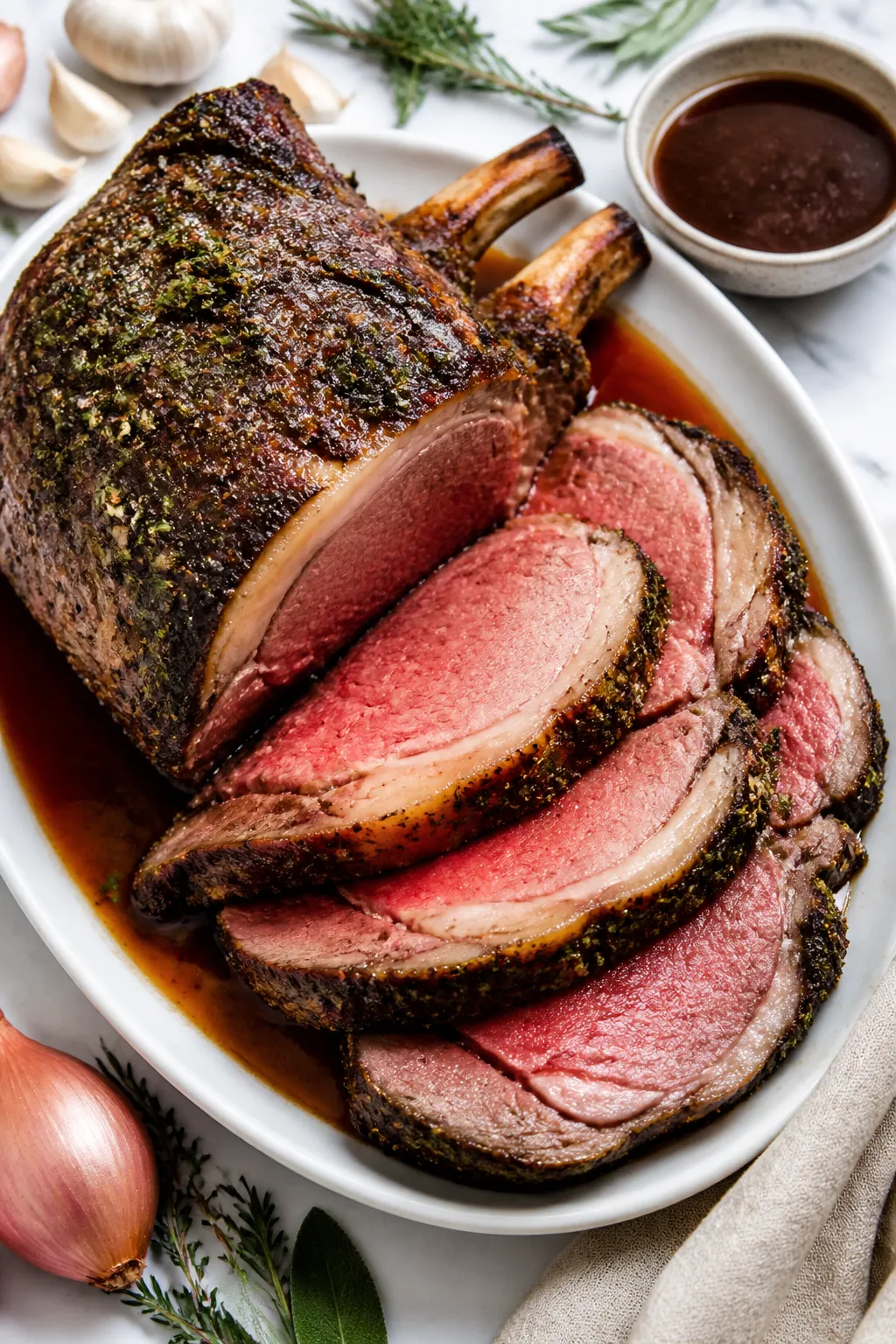
Fresh herbs are best here. If you must use dried, the recipe gives the swap: one tablespoon of dried rosemary, and two teaspoons each of dried oregano, thyme and rubbed sage. Dried herbs are stronger, so do not use the fresh amounts.
Chop the shallot and garlic in the processor until they look like coarse sand, then add the herbs and oil so the paste comes together as a thick, spreadable mixture. If your processor is small, work in two batches. If you have no processor, mince everything by hand, and stir the oil in at the end.
Rub the paste over the whole roast, pressing it into the fat cap and the sides. Set the roast fat side up on a rack in a large roasting pan, so hot air can circulate underneath it. If you have no rack, the recipe suggests a 13×9 inch dish with a bed of chopped onion, carrot and celery under the roast.
The roast should stand at room temperature for thirty minutes to an hour before it goes in the oven. A roast that begins ice cold takes longer and cooks unevenly, with a gray band around the outside.
Use this waiting time well. Heat the oven, set up the rack, prepare your side dishes and make sure you have a reliable instant-read or probe thermometer. Many people also tie a sprig of rosemary onto the roast for looks. A roasting pan with low sides is best, since tall sides block the hot air from circling the meat.
Roasting by temperature, not by the clock
Heat the oven to 350 F and roast the meat uncovered. A four-pound roast needs about two hours, but the recipe gives a range of one and three-quarters to two and a quarter hours, and the thermometer is the only thing you can trust.
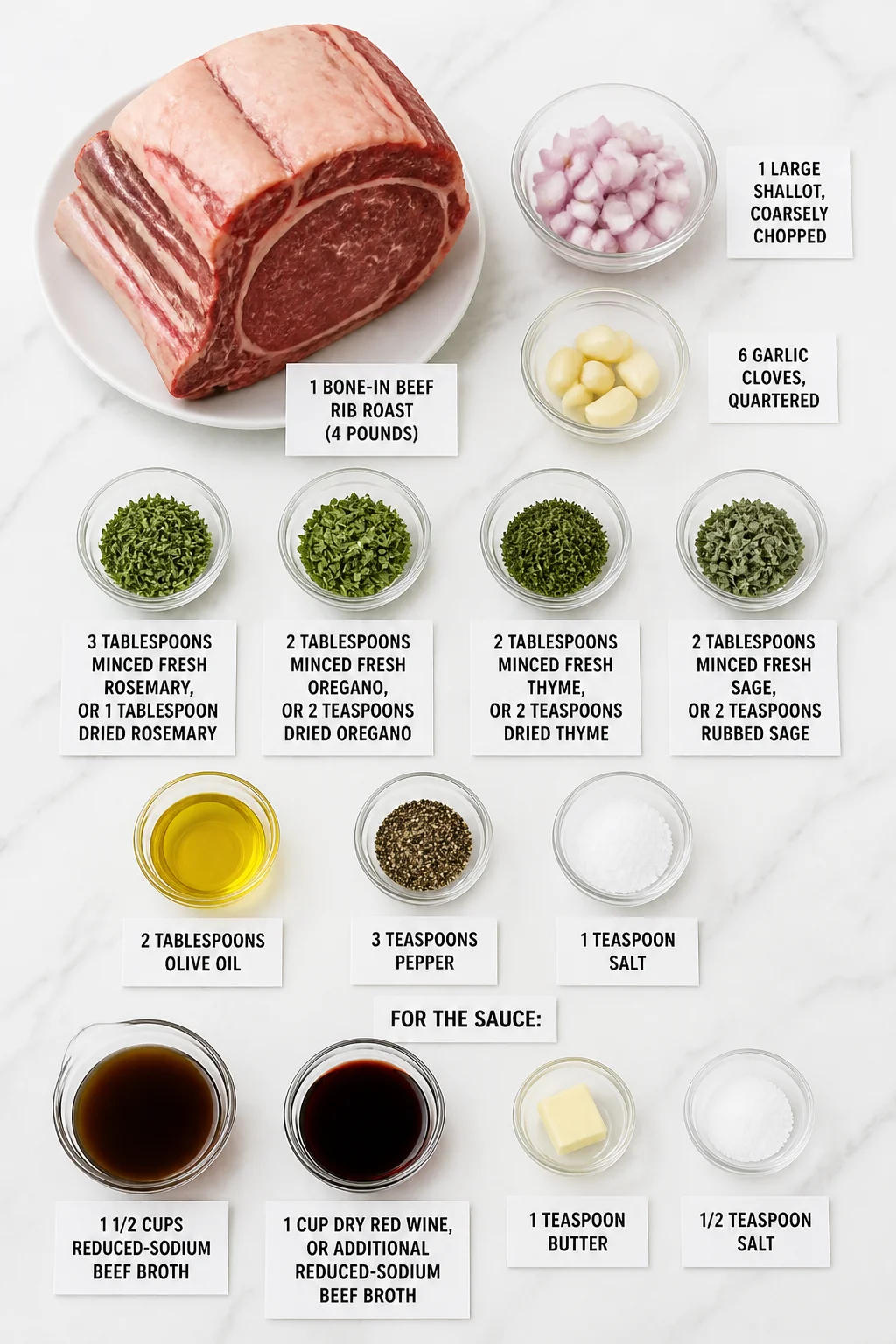
Target 135 F for medium-rare, 140 F for medium and 145 F for medium-well. Pull the roast out when it is about ten degrees short of that, because the temperature climbs while it rests. Slide the probe into the thickest part of the meat, not touching the bone, which runs hotter and will fool you.
A point about carving: the roast keeps cooking from the inside while it rests, so slices from the center will be the pinkest and the end pieces will be closer to medium. That is useful, because it means people with different tastes can each find the slice they like. If someone wants theirs more done, slip a slice into a warm pan with a little of the sauce for a minute.
Move it to a platter and tent it loosely with foil. Let it stand at least fifteen minutes. That time gives the juices a chance to settle back into the meat, instead of running onto the board when you cut.
A quick red wine sauce
While the roast rests, make the sauce. Boil one and a half cups of reduced-sodium beef broth with a cup of dry red wine in a small saucepan until it reduces to one cup. Take it off the heat and stir in a teaspoon of butter and half a teaspoon of salt. If you have pan drippings, a spoonful makes it even deeper.
No wine in the house? Use more broth. The sauce will be a little less complex, but it still lifts the meat.
Carving and serving
Slice the roast across the grain, about three-quarters of an inch thick, and serve it with the sauce spooned over each portion. Roasted potatoes, creamed spinach, green beans and Yorkshire pudding all suit it.
To carve the roast with the bones, slide a long knife between the meat and the bones, following the curve of the ribs, and lift the bones away in one piece. Set the meat flat on the board and slice it against the grain, so each slice is tender. Use a sharp carving knife and long, smooth strokes instead of sawing. Keep the bones, because many guests like to nibble on them in the kitchen.
Leftovers keep four days in the refrigerator and four months in the freezer. Reheat slices gently in a little broth so they stay tender and pink, or enjoy them cold in sandwiches with horseradish.
Before you cook it
What if my roast is smaller or larger?
Time changes, but the temperature goals stay the same. Start checking an hour and a half in for a four-pound roast, and sooner for a smaller one.
Do I need the bones?
The bone-in roast gives more flavor and acts as its own rack. A boneless roast cooks faster, so watch the thermometer.
Can I make the paste ahead?
Yes. Keep it covered in the refrigerator for a day or two, then rub it on the roast before cooking.
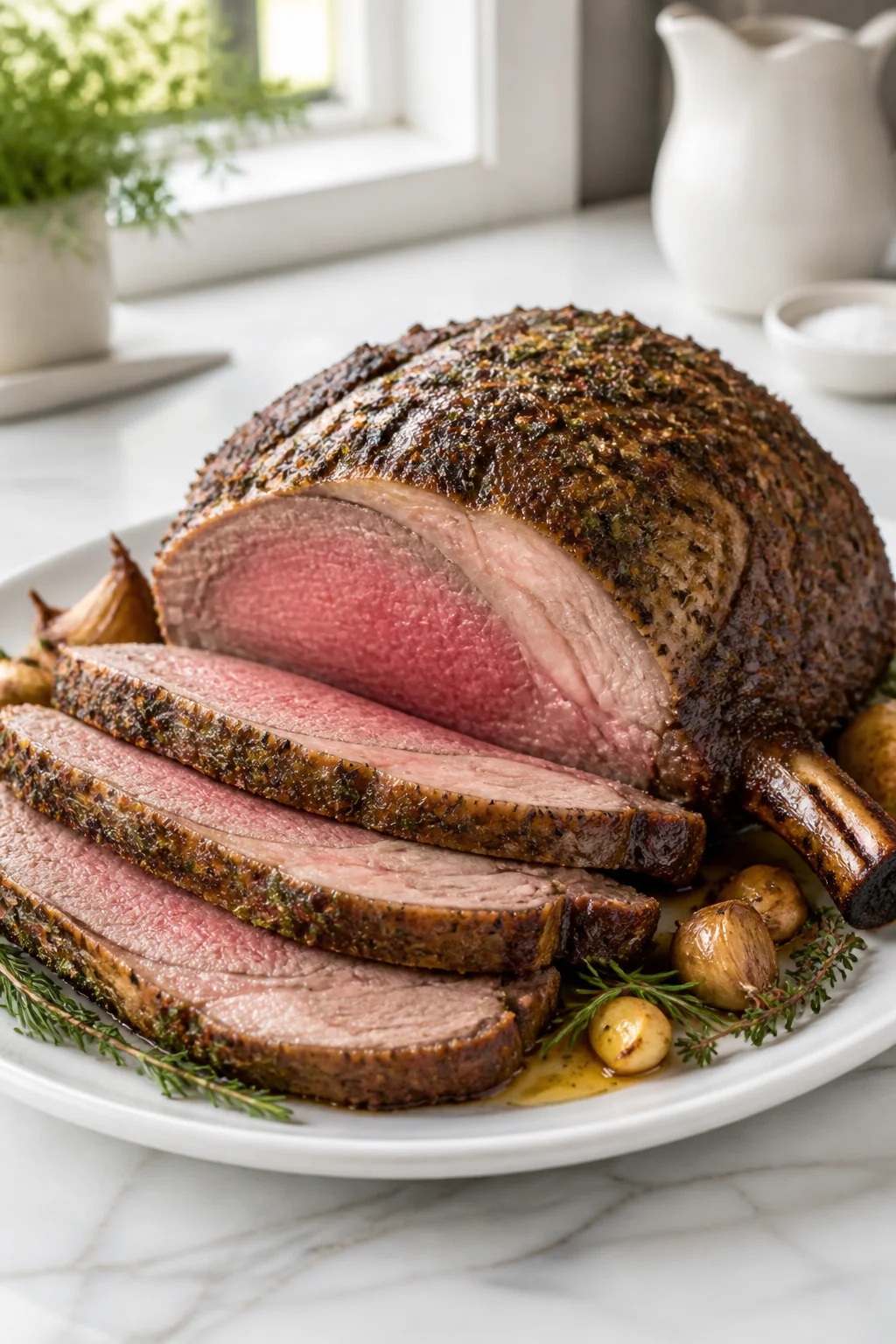
Garlic Herb Prime Rib Roast Recipe
Ingredients
Method
- Heat the oven to 350 F.
- Put the shallot, garlic, rosemary, oregano, thyme and sage in a food processor and pulse until finely chopped. Add the olive oil, pepper and salt and process until a paste forms.
- Rub the paste all over the roast. Set the roast on a rack in a large roasting pan, fat side up. If you have time, let the rubbed roast stand at room temperature for 30 minutes to 1 hour so it browns and cooks evenly.
- Roast uncovered until a thermometer in the thickest part reads 135 F for medium-rare, 140 F for medium or 145 F for medium-well. This takes 1 3/4 to 2 1/4 hours. Pull the roast when it is about 10 degrees below your target, because it keeps rising as it rests.
- Move the roast to a platter, tent it loosely with foil and let it stand for at least 15 minutes before slicing.
- While it rests, boil the beef broth and the red wine in a small saucepan until reduced to 1 cup. Take it off the heat and stir in the butter and the salt. Pan drippings can be added to the sauce.
- Slice the roast and serve with the sauce. Plan on about one rib for every 2 to 3 guests.
- Refrigerate leftovers for up to 4 days, or freeze them for up to 4 months.
- For Adults 21+ Only: the sauce contains red wine and is intended for guests of legal drinking age. Use extra beef broth in place of the wine if you prefer.
