Honey Glazed Christmas Ham Recipe
Affiliate disclosure: This post may contain affiliate links. I may earn a small commission at no extra cost to you. See our Privacy Policy for details HERE.
There is a reason ham has been on holiday tables for so long. It is already cooked, it feeds a crowd and it asks very little of the cook, as long as you do not dry it out. This recipe is the simplest route I know to a glossy, sticky, deeply flavored ham, and it has only six ingredients.
Picking the ham
You want a fully cooked, boneless ham portion weighing five to seven pounds. The recipe recommends one that is not spiral-cut, because a whole piece stays moister than slices that can dry out between the cuts. Check the label to make sure it says fully cooked, because that tells you all you are doing is warming it.
The source suggests this recipe serves four to six, but a five to seven pound ham often feeds more when it is part of a big meal with several sides. Plan generously if you want leftovers, and you will. Ham sandwiches the next day are a tradition of their own.
The simplest way to keep a ham juicy is to avoid overheating it. Because the meat is cooked already, you only need to bring it to a pleasant serving temperature, so the low oven and the foil tent do exactly the right job. If you have a meat thermometer, a reading of about 140 F in the center means the ham is hot all the way through.
Also let the ham sit out of the refrigerator for about thirty minutes before it goes into the oven. A slightly less cold ham heats more evenly and the outside is less likely to dry before the middle is warm.
The glaze: honey, ginger ale, mustard and vinegar
A cup of honey, one 12-ounce can of ginger ale, a quarter cup of grainy brown mustard and a tablespoon of apple cider vinegar are all you need. The honey brings the sweetness, the ginger ale loosens it and adds a gentle spice, the mustard supplies a sharp, savory edge, and the vinegar keeps everything from tasting syrupy.
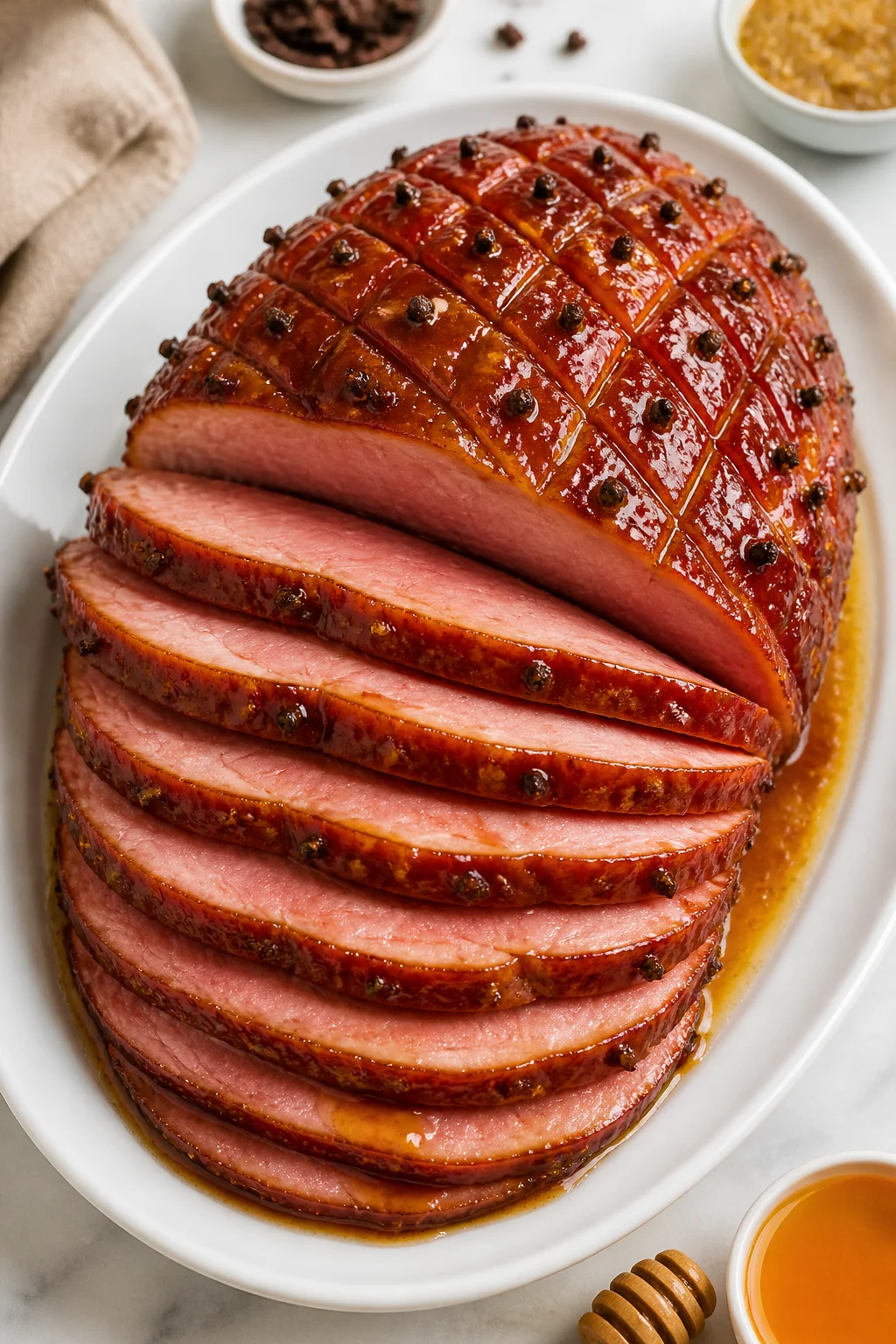
A small trick from the recipe: spray the measuring cup with nonstick spray before you measure the honey, and it will slide out without sticking. It is a tiny detail that saves a lot of scraping.
Put everything in a small saucepan and heat until it bubbles, then let it cook ten to fifteen minutes. It will reduce and thicken into a glaze that coats a spoon. If you want a stronger ginger flavor, ginger beer can replace the ginger ale.
Watch the glaze as it simmers, because honey can foam up and boil over. Use a saucepan that is larger than you think you need, keep the heat at medium and stir now and then. It is ready when it coats the back of a spoon and drips off slowly. If it gets too thick while it waits, warm it for a moment and it will loosen.
You can make the glaze a day ahead and keep it in a jar in the refrigerator. Warm it gently before brushing it on.
Scoring and studding
Cut shallow lines across the surface of the ham in a diamond pattern, only about an eighth of an inch deep. These cuts let the glaze run into the meat and give you the classic look. Then press whole cloves into the top, two tablespoons in all. They perfume the meat as it bakes, so remember to tell guests to take them out before eating.
A sharp paring knife works best for scoring. Cut lines about an inch apart in one direction, then cross them in the other direction to make diamonds. Keep the cuts shallow. Cutting deep lets the juices escape, and you want the ham to stay moist. Cloves are strong, so a couple of tablespoons for a ham this size is plenty, and some cooks put one in each diamond and others scatter them.
Low heat first, glaze later
Set the ham on a rack in a roasting pan, cover it loosely with foil and bake at 325 F for an hour. The foil traps steam and keeps the meat from drying while it warms.
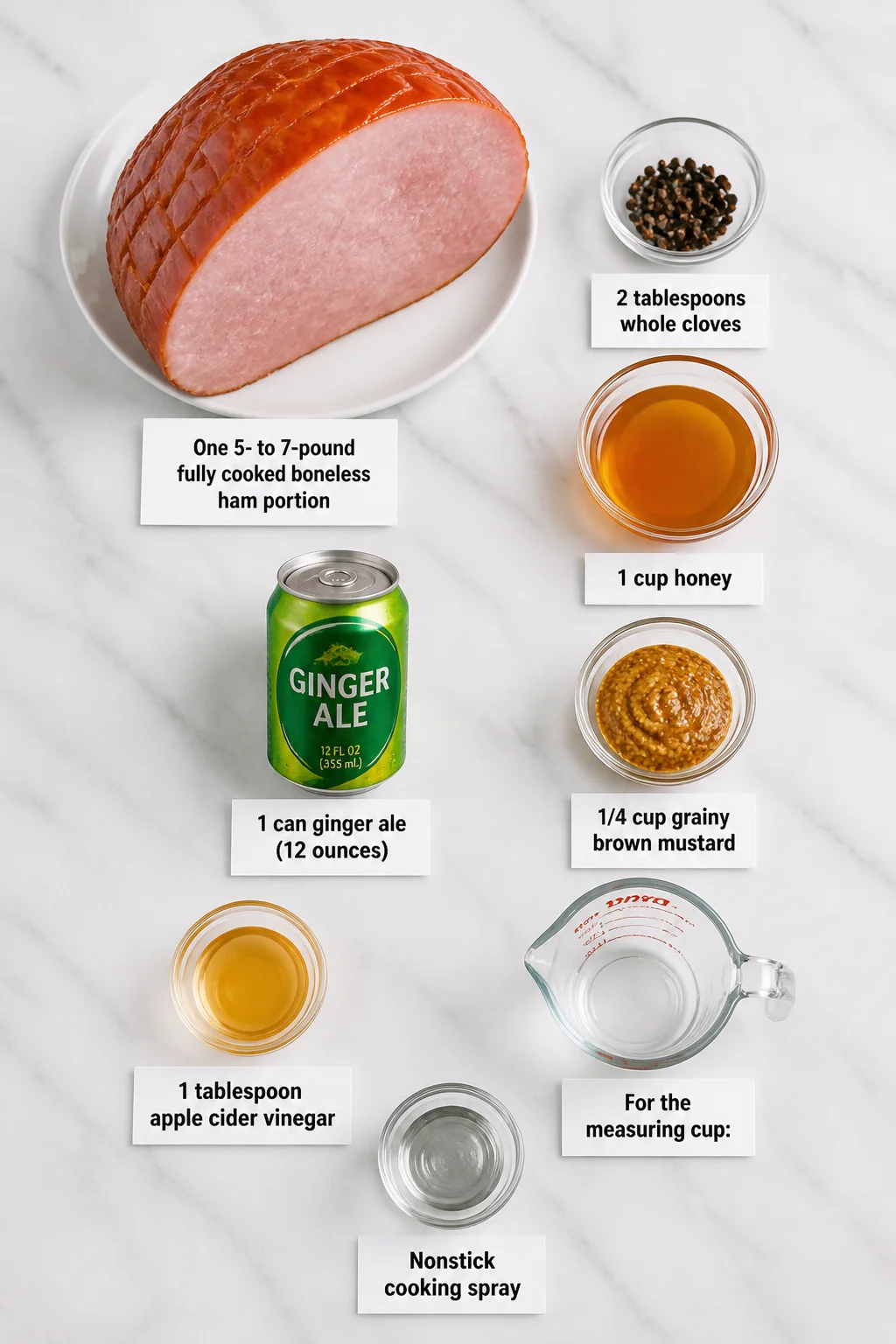
The glaze goes on only after the first hour. Sugar burns quickly, and if you brush it on at the beginning, it will blacken long before the ham is hot. After the hour, take off the foil, brush on a generous coat and bake fifteen minutes. Then brush again and bake another fifteen minutes. Each layer sets into a lacquered, deep amber shell.
Let the ham rest for a few minutes when it comes out. That keeps the juices in the meat rather than on your cutting board.
If the glaze looks dark but the ham is not yet hot, tent the pan loosely with foil and keep baking. If the glaze looks pale, brush on another coat and give it a few more minutes. Each oven browns differently, and the look of the glaze is a better guide than the clock. Pour any glaze left in the pan into a small bowl and use it as a sauce.
Serving and using leftovers
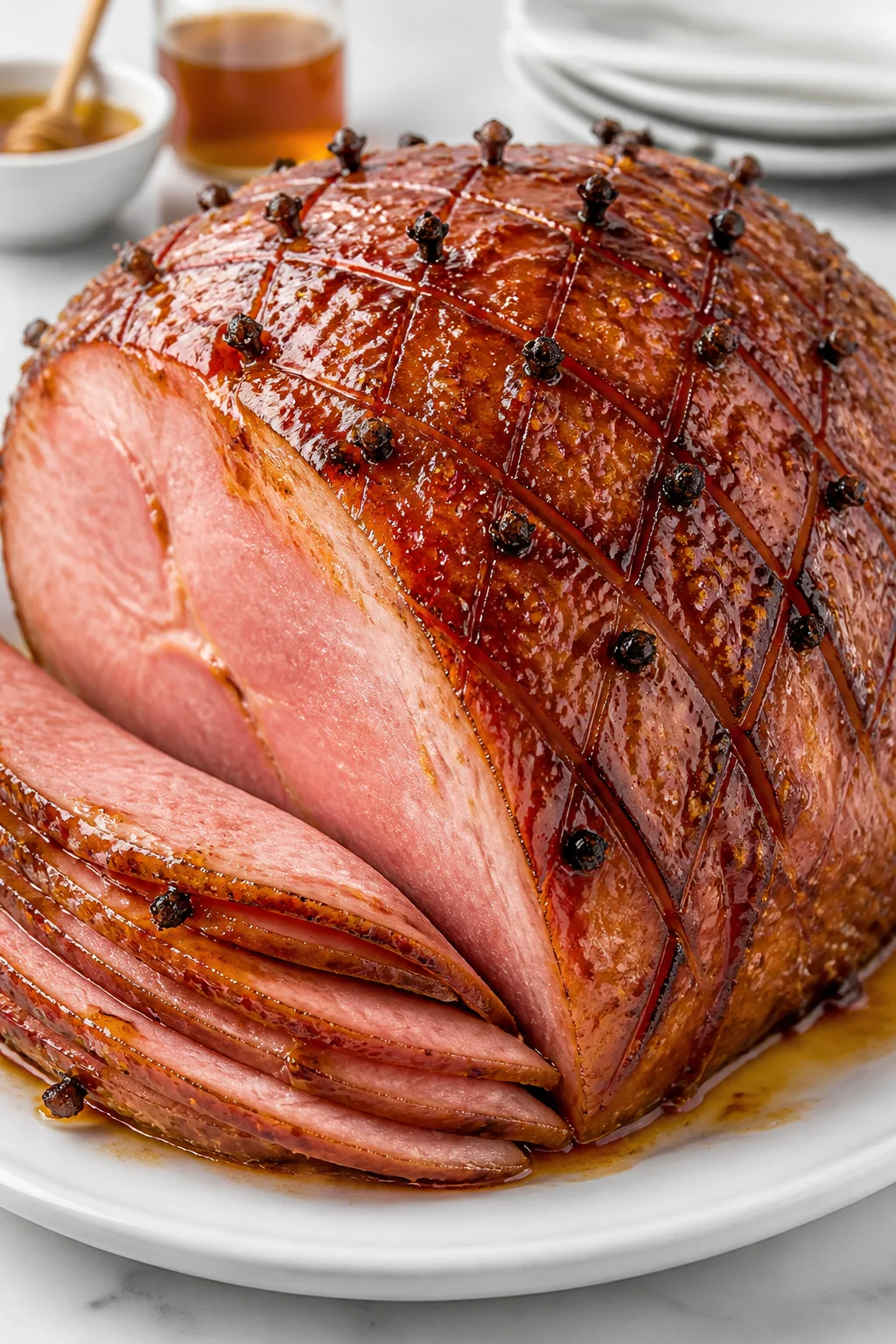
Slice the ham thinly across the grain and fan it on a platter. Spoon over any leftover glaze, or serve it in a small bowl on the side. Scalloped potatoes, green beans, rolls and a crisp salad round out the table.
Ham is salty, so the best partners are things that are mild or a little sweet or tangy: buttery mashed potatoes, a sweet potato dish, a crunchy slaw, pickled vegetables or a bowl of cranberry sauce. A mustard sauce on the side is a classic as well.
When you plan the meal, remember that the ham can rest on the counter while you finish the sides and the oven is free for rolls or casseroles. That is part of why so many people choose it for a big dinner.
Leftovers keep for up to three days in the refrigerator. To reheat, cover the ham with foil and warm it at 325 F for about thirteen minutes per pound. Cold slices are lovely in sandwiches with mustard, folded into omelets or stirred into soups and casseroles.
Small things worth knowing
Why does the glaze go on late?
Because it is full of sugar. Brushed on early, it would burn before the ham finished warming.
Can I use a spiral-cut ham?
The recipe recommends a boneless ham that is not spiral-cut, because it stays moister. A spiral ham will work, but it dries out easily, so watch it closely.
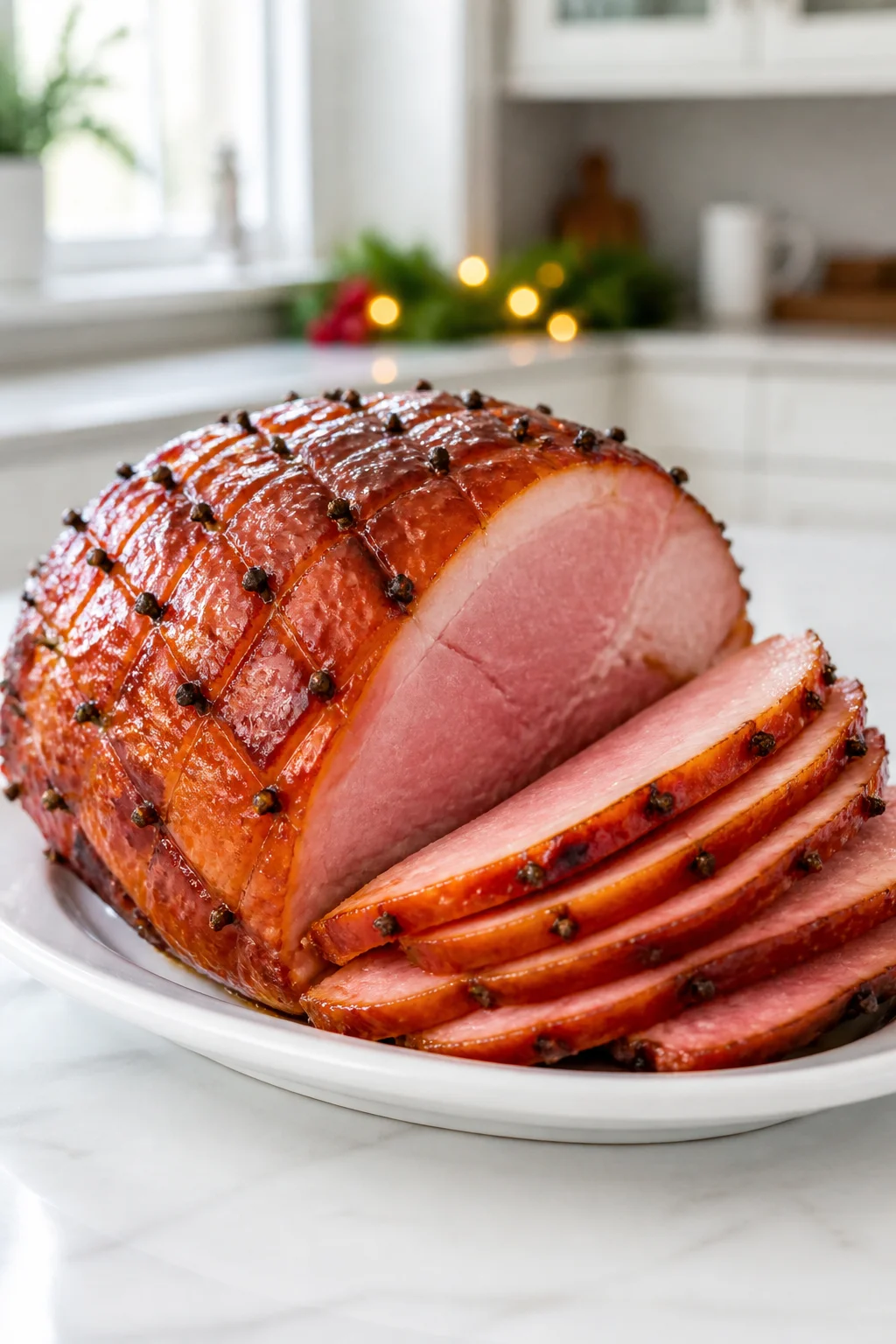
Honey Glazed Christmas Ham Recipe
Ingredients
Method
- Heat the oven to 325 F.
- Score the surface of the ham in a diamond pattern, cutting about 1/8 inch deep. Press whole cloves into the top, one at each diamond if you like.
- Set the ham on a rack in a roasting pan, tent it with foil and bake for 1 hour. The ham is already cooked, so you are only warming it through.
- While it bakes, make the glaze. Spray a measuring cup with nonstick spray so the honey slides out easily. Combine the honey, ginger ale, mustard and vinegar in a small saucepan and heat until bubbling. Cook for 10 to 15 minutes, until reduced and a little thicker.
- After the first hour, take off the foil and brush the glaze generously over the ham. Bake for 15 minutes.
- Brush on more glaze and bake for another 15 minutes, until the surface is glossy and caramelized.
- Let the ham rest for a few minutes so the juices settle before slicing.
- Refrigerate leftovers for up to 3 days. To reheat, cover with foil and warm at 325 F for about 13 minutes per pound.
