Overnight Sausage Egg Christmas Breakfast Casserole

Affiliate disclosure: This post may contain affiliate links. I may earn a small commission at no extra cost to you. See our Privacy Policy for details HERE.
Christmas morning has a rhythm of its own. Someone is awake far too early, wrapping paper is flying and the coffee is not ready yet. The last thing anyone wants is a skillet of scrambled eggs on the stove for a crowd.
This casserole solves that. You put it together the night before, slide it into the refrigerator and forget about it. In the morning you set the oven, take a shower and wait for the smell of sausage and cheese to drift through the house.
What goes in the dish
The list is short and you probably have most of it already: a pound of bulk pork sausage, six large eggs, two cups of 2% milk, a teaspoon of salt, a teaspoon of ground mustard, six slices of white bread and a cup of shredded cheddar. It fills an 11×7 inch baking dish and serves eight.
The ground mustard is the quiet hero. You will not taste mustard in the finished dish, but it sharpens the egg and the cheese and makes the whole thing taste more savory. If you have none, a little Dijon whisked into the eggs does something similar.
Sausage first
Brown the sausage in a skillet until there is no pink left, crumbling it as it cooks, and drain off the fat. Raw sausage will not finish cooking inside the casserole, and it can leave the dish greasy. If you are using fully cooked sausage, you can skip the browning step.
Sage sausage gives a classic breakfast flavor, a spicy variety wakes the dish up, and a maple-flavored one leans sweet. Choose what your family likes. If you buy sausage in links, slit the casings and crumble the meat, which works just as well as the bulk kind.
Which bread works best
A sturdy white sandwich bread is what the recipe calls for, cut into half-inch cubes. Very soft bread tends to collapse into mush after a night in the egg, so if yours is the fluffy kind, let the cubes dry out on the counter for an hour or toast them lightly first. Day-old bread is ideal. A French loaf, a sourdough or even leftover dinner rolls will also do the job.
Cut the cubes to about half an inch so they soak evenly. Tiny crumbs turn to paste, and huge chunks stay dry in the middle. A serrated knife makes quick work of a stack of slices. If you want a little more texture, leave the crusts on, since they hold their shape better than the soft center.
The night-before assembly
Grease the dish well. This is the step people skip, and it is the one they regret when the casserole sticks, because baked egg is a glue like no other. Do it even if the dish is nonstick.
In a large bowl, beat the eggs, then whisk in the milk, the salt and the mustard until the mixture is completely smooth. Stir in the bread cubes, the cheddar and the cooled sausage, and make sure each cube is wet. Tip everything into the dish.
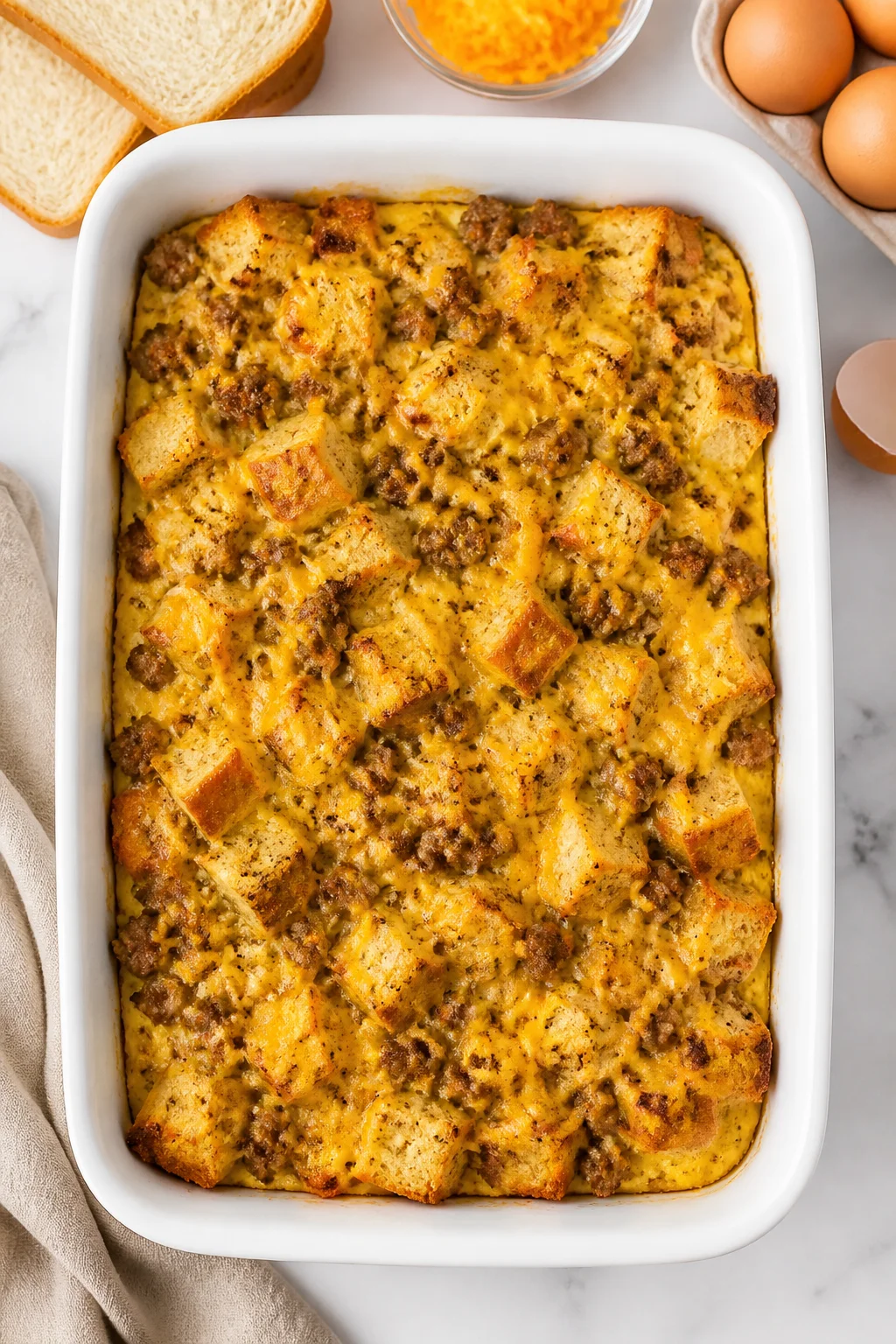
Cover the dish and put it in the refrigerator for at least eight hours. This is where the magic happens. Overnight, the bread drinks up the custard and swells, so the casserole bakes up puffy and tender rather than soggy at the bottom and dry on top.
A tight cover matters. Plastic wrap pressed lightly over the top, or a sheet of foil crimped around the rim, keeps the surface from drying out and stops the dish from soaking up refrigerator smells. If you are making it for a morning when guests are staying with you, set an alarm on your phone for the oven, since it is easy to forget the thirty-minute rest.
The dish can wait in the refrigerator for the full night, and a bit longer. Most people assemble it in the evening, between the dishes and the last-minute gift wrapping, which is when it is easiest to find ten spare minutes.
Morning: bake and relax
Take the dish out of the refrigerator about thirty minutes before you want to bake, and turn the oven to 350 F. A casserole that goes in ice cold can end up set at the edges and still runny in the center, so the resting time helps it bake evenly.
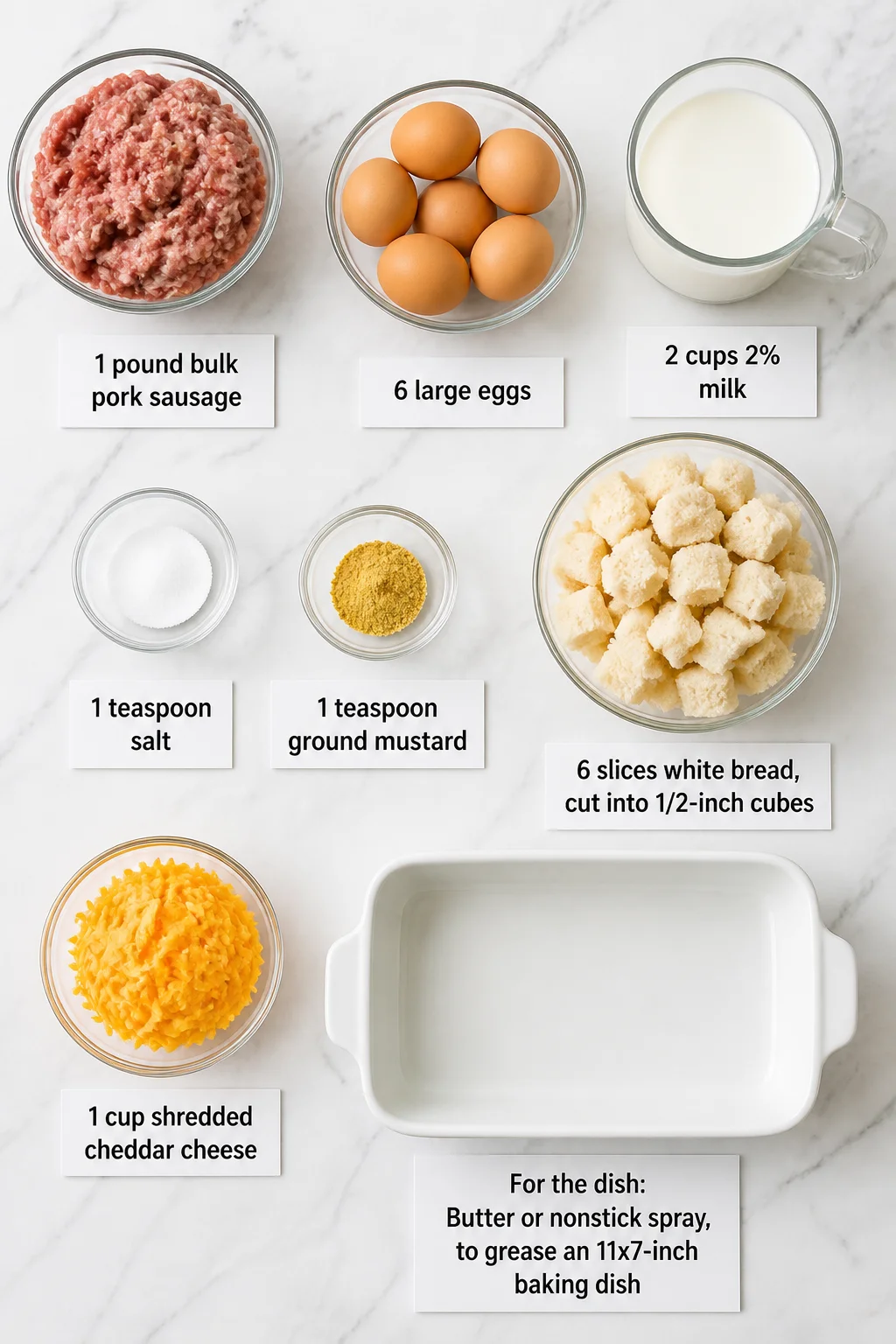
Bake it uncovered for forty minutes. You will know it is done when the center no longer jiggles and a knife slipped in the middle comes out clean, with no wet egg clinging to it. The top should be golden, and the edges slightly crisp.
Ovens run differently, so start checking at thirty-five minutes. If the top is browning faster than the center is setting, lay a piece of foil loosely over the dish. The knife test is the most reliable one: slip it into the middle, and if it comes out wet, give it five more minutes. Overbaking makes the eggs rubbery, so stop as soon as the center is set.
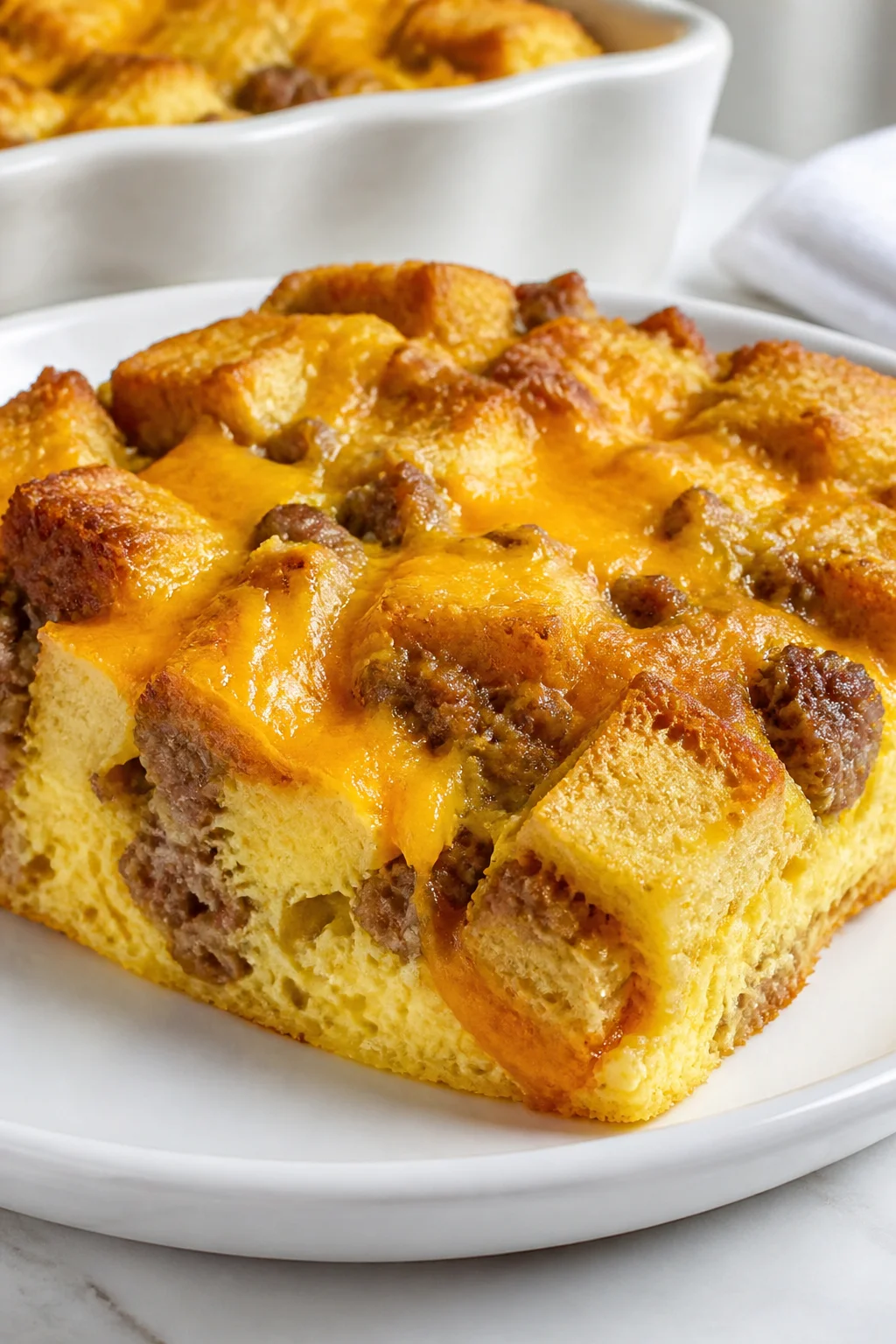
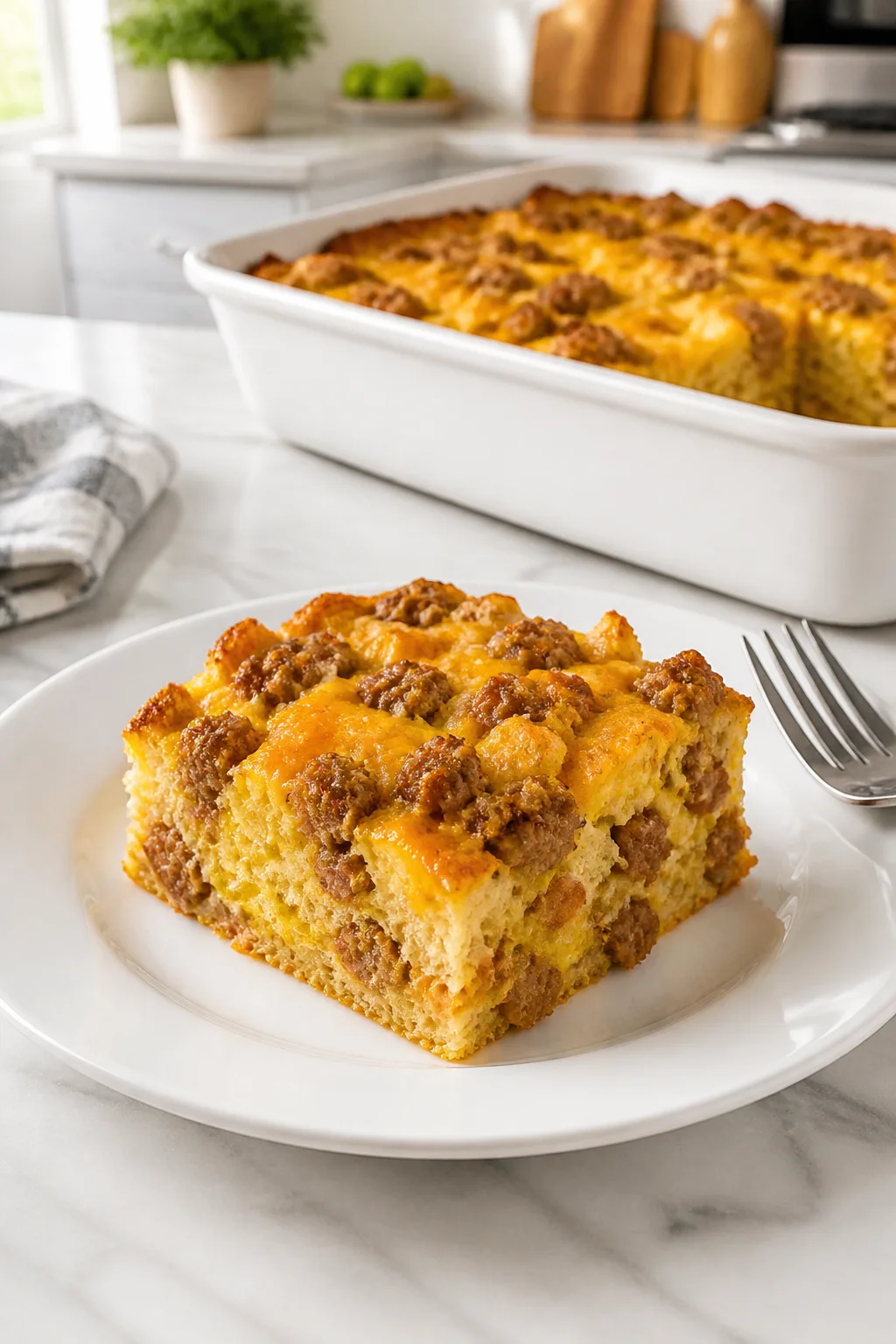
Let it stand for a few minutes, because it will firm up and slice more neatly. Cut it into squares, and serve it hot.
Making it your own
This is a flexible recipe, and the author of the original notes that you can swap in other sausage, chicken or bacon. If you add vegetables such as peppers, mushrooms or onions, cook them first and drain them well, because raw vegetables release water and the bake turns watery.
Leave out the bread and you have an egg bake that cooks faster but is less thick. Some families add a handful of diced ham, a spoonful of hot sauce or a different cheese, such as pepper Jack or Swiss. Try one change at a time so you know what you like.
If you need to feed a larger group, double the recipe in a 9×13 inch pan and add ten to fifteen minutes to the baking time, checking the center before you take it out.
For a brunch with other dishes on the table, a single 11×7 inch casserole is plenty. Add a fruit salad, warm cinnamon rolls or a basket of biscuits, and a tray of bacon if you like, and the menu is complete without anyone working at the stove.
Serving, keeping and freezing
Serve the squares with fresh fruit, something with a little tartness like orange slices or berries, and a pot of coffee. Hot sauce, salsa or a drizzle of maple syrup all have their fans at the table.
Leftovers keep in the refrigerator for three to four days. Reheat single portions in the microwave at reduced power so the eggs stay tender, or warm the dish in a 350 F oven. You can freeze the casserole, baked or unbaked, for up to three months. To bake from frozen, thaw it for a day and a half in the refrigerator, rest it for thirty minutes and bake uncovered at 350 F for fifty to sixty minutes, until a knife comes out clean.
What people ask me
Can I skip the overnight rest?
You can bake sooner, but the texture will be denser. If you are in a hurry, let it sit at least an hour so the bread can soak.
Why is my casserole watery?
Usually because uncooked vegetables went in, or because it was not baked long enough. Cook any extras first and bake until the center is set.
Can I use turkey sausage?
Yes. Leaner sausage can be a little drier, so add a spoonful of oil when you brown it.
Overnight Sausage Egg Christmas Breakfast Casserole
Ingredients
Method
- Grease an 11x7 inch baking dish, even if it is nonstick, because baked egg sticks.
- Brown the sausage in a skillet over medium heat, breaking it into crumbles, until no pink remains. Drain it well and let it cool slightly.
- In a large bowl, beat the eggs, then whisk in the milk, the salt and the ground mustard until smooth.
- Stir the bread cubes, the cheddar and the sausage into the egg mixture so every cube is coated.
- Pour everything into the greased dish. Cover it and refrigerate for 8 hours or overnight.
- In the morning, take the dish out of the refrigerator and let it stand for 30 minutes while the oven heats to 350 F.
- Bake uncovered for 40 minutes, until the center is set and a knife inserted in the middle comes out clean.
- Let it rest for a few minutes, then cut into squares. It serves 8.
- Refrigerate leftovers for 3 to 4 days and reheat in the microwave at reduced power or in a 350 F oven. The casserole freezes for up to 3 months, baked or unbaked.
