This Polish haluski fried cabbage and noodles recipe is pure comfort in a skillet. It is the kind of meal that feels warm, filling, and familiar from the very first bite. The cabbage turns soft and sweet, the noodles soak up the buttery flavor, and the bacon adds a smoky finish that makes the whole dish taste like home.
What makes this dish so satisfying is its simple balance. You get 4 oz bacon, 6 tbsp unsalted butter, and 2 cups diced yellow onion for a rich base. Then 1 1/2 lb green cabbage, 1 tsp kosher salt, 1/2 tsp freshly ground black pepper, and 6 oz dry egg noodles come together for a cozy mix of savory, tender, and lightly buttery flavors. It is humble food, but it tastes like something special.
The method is easy too. First, you cook the bacon until crisp, then keep a little of the fat for flavor. After that, you soften the onions, add the cabbage, and let everything simmer until tender. Meanwhile, you boil the noodles, drain them well, and stir them into the skillet at the end. It is simple, and yet the result is full of flavor.
This Polish haluski fried cabbage and noodles is perfect for chilly nights, busy weeknights, or any time you want a budget-friendly meal that still feels satisfying. It also works well for potlucks, family dinners, and meatless meal days when you want something hearty without a lot of fuss.
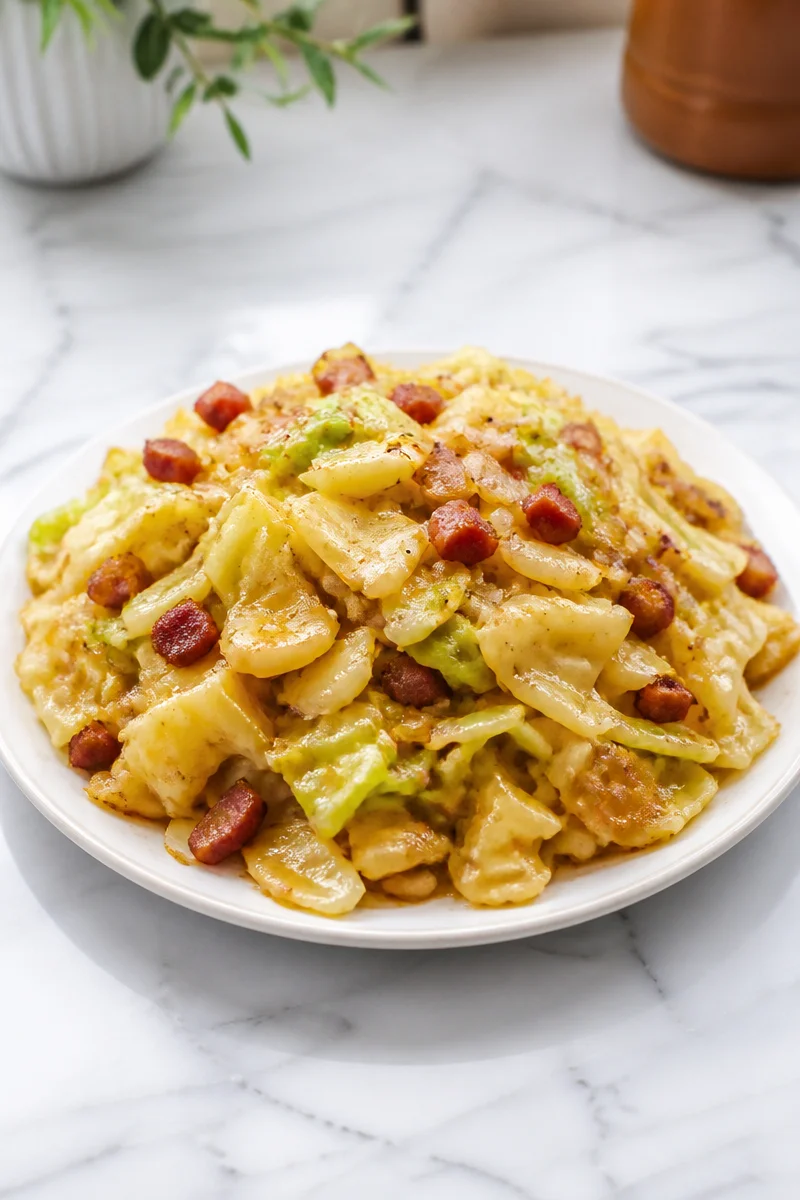
Why You’ll Love This Polish Haluski Fried Cabbage and Noodles
- It uses simple, affordable ingredients that are easy to find in most grocery stores.
- It comes together in about 35 minutes, so it works well on busy days.
- The flavor is rich and cozy, thanks to bacon, butter, onion, and cabbage.
- It makes a filling side dish, but it can also stand on its own as a light main dish.
- It reheats well for a second meal, which is always a nice bonus.
Cabbage Tips
Green cabbage is the star here, so choose a head that feels heavy for its size and looks fresh all the way through. The leaves should be firm, not limp, and the cut edges should look pale and moist, not dry or brown. Also, when you chop the cabbage, keep the pieces about the same size so they cook evenly. If the chunks are too large, they may stay firm in the middle. If they are too small, they can cook down too fast and lose their texture. For the best Polish haluski fried cabbage and noodles, give the cabbage enough time to soften, but do not cook it until it disappears.
Options for Substitutions
- Use turkey bacon instead of regular bacon if you want a lighter version.
- Swap unsalted butter for salted butter, but reduce the added salt a little.
- Replace yellow onion with sweet onion for a softer, milder flavor.
- Use savoy cabbage instead of green cabbage if that is what you have.
- Try wide buttered noodles or extra broad egg noodles if dumpling-style noodles are not available.
- For a meatless version, leave out the bacon and add a little extra butter for richness.
Watch Out for These Mistakes
One common mistake is overcooking the bacon. You want it crisp, but not dark and bitter. Since the bacon goes back into the skillet later, it will heat up again. So, if you cook it too long at the start, it can turn dry by the end.
Another issue is skipping the step where you keep a little bacon fat in the pan. That small amount adds flavor and helps the onions start well. If you pour off all of it, the dish can taste flatter, and the onions may not brown as nicely.
Also, be careful not to rush the cabbage. It should soften and wilt, but it still needs enough time to become tender. If you turn the heat too high, the outside may brown before the inside cooks through. On the other hand, if you do not cook it long enough, the dish can feel too firm.
Finally, watch the salt. Bacon brings saltiness, and the noodles also pick up flavor from the cooking water. So, taste near the end before adding more salt. That way, your Polish haluski fried cabbage and noodles stays balanced instead of too salty.
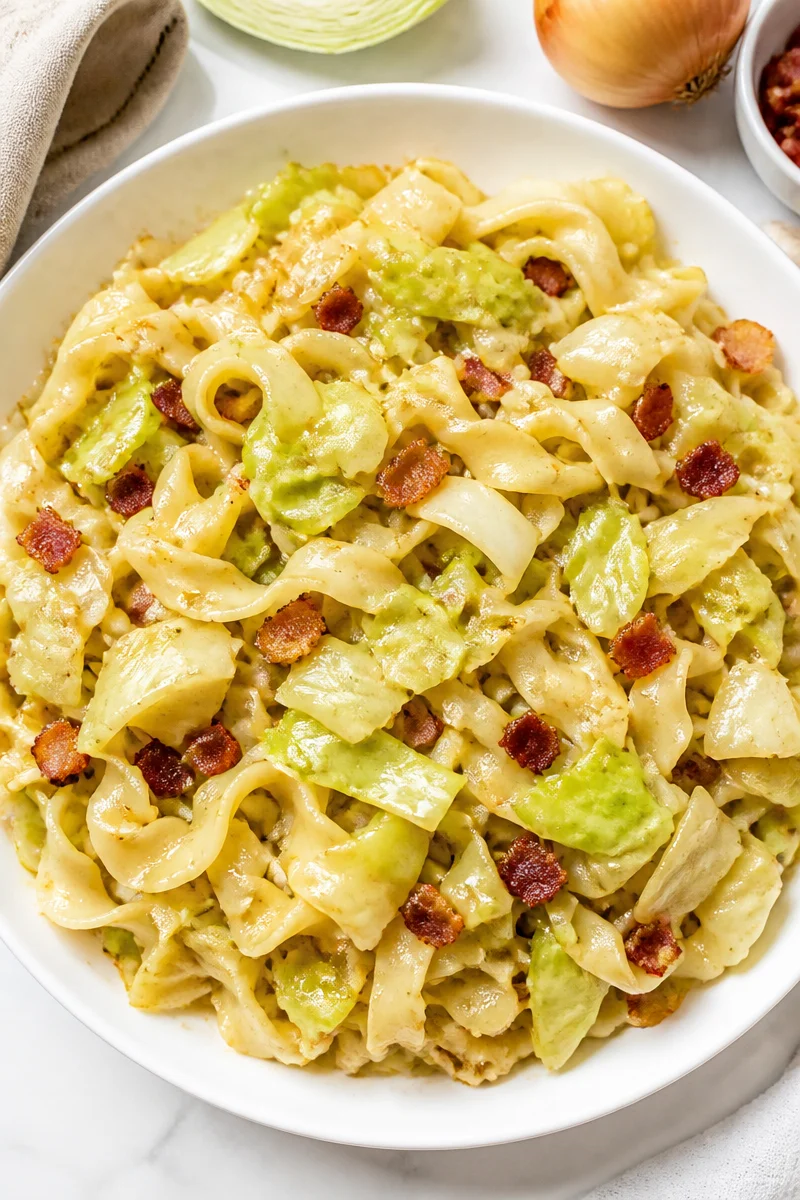
What to Serve With Polish Haluski Fried Cabbage and Noodles?
This dish pairs nicely with simple sides that do not compete with its rich flavor. For example, serve it with roasted kielbasa, baked chicken, or pork chops for a hearty dinner. If you want something lighter, a crisp green salad works well too. You could also add applesauce or warm rye bread on the side, which gives the meal a classic, cozy feel. Since Polish haluski fried cabbage and noodles is already filling, keep the extras simple and let the main dish shine.
Storage Instructions
Store: Keep leftovers in a covered container in the refrigerator for up to 3 days.
Freeze: Do not freeze the finished dish, because the noodles can become mushy. However, you can freeze the cabbage and onion mixture for up to 2 months, then add fresh noodles later.
Reheat: For the stovetop, warm the haluski in a skillet over medium-low heat with a small splash of water or a little butter if needed. Stir often until hot. For the microwave, heat in short bursts, stirring between each one so it warms evenly.
Recipe Info
Preparation Time: 10 minutes
Cooking Time: 25 minutes
Total Time: 35 minutes
Level of Difficulty: Easy
Servings: 4 servings
Estimated Nutrition
Estimated nutrition for the whole recipe (without optional ingredients):
- Calories: 430 to 490 kcal
- Protein: 13 to 18 g
- Fat: 22 to 30 g
- Carbohydrates: 40 to 50 g
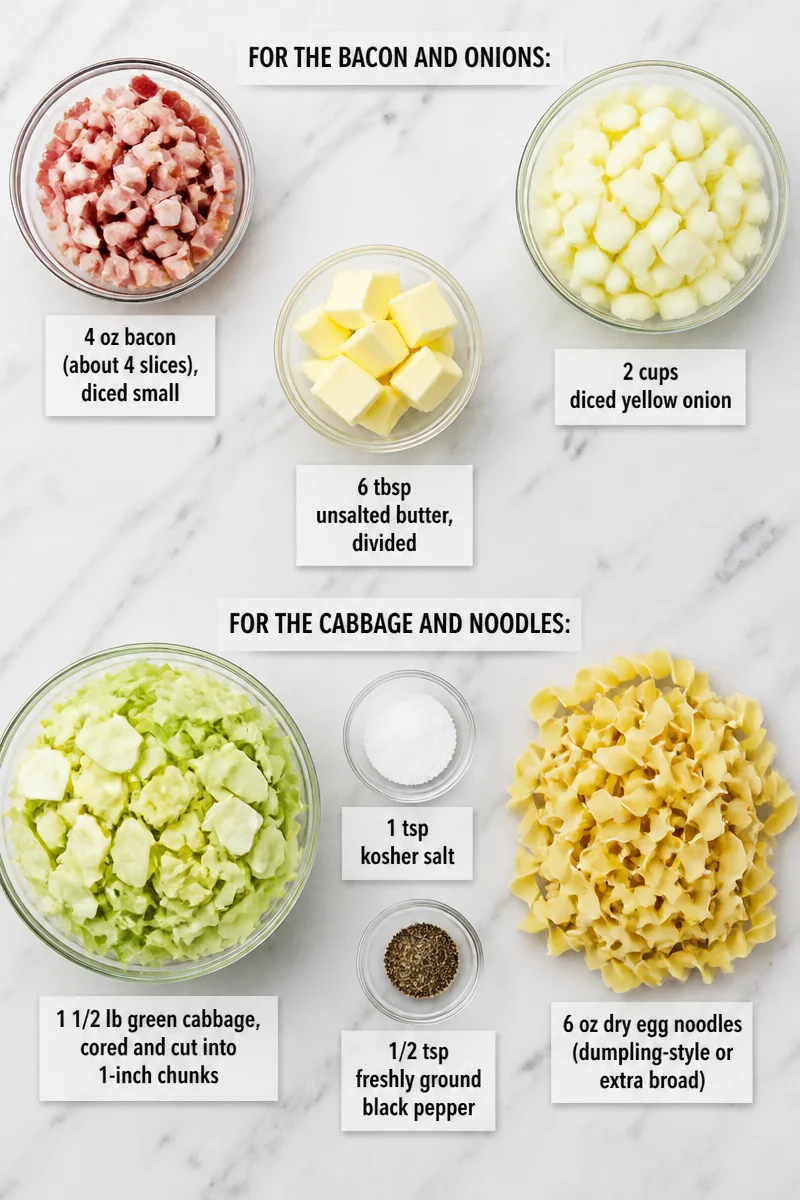
Ingredients
- 4 oz bacon (about 4 slices), diced small
- 6 tbsp unsalted butter, divided
- 2 cups diced yellow onion
- 1 1/2 lb green cabbage, cored and cut into 1-inch chunks
- 1 tsp kosher salt
- 1/2 tsp freshly ground black pepper
- 6 oz dry egg noodles (dumpling-style or extra broad)
Step-by-Step Instructions
Step 1: Cook the Bacon
In a large nonstick pot or deep skillet over medium heat, cook the diced bacon for 6 to 8 minutes, until crisp. Then lift it out with a slotted spoon and set it on a paper towel to drain.
Step 2: Keep a Little Bacon Fat
Carefully pour off all but 1 tablespoon of the bacon fat from the pan. This small amount will help build flavor for the onions and cabbage.
Step 3: Soften the Onions
Keep the heat at medium, then add 2 tablespoons of the butter and the diced onions. Cook for about 2 minutes, stirring often, until the onions begin to soften.
Step 4: Add the Cabbage
Add another 2 tablespoons of butter, then add the cabbage, salt, and pepper. Stir well so the cabbage starts to warm through and wilt. Next, return the bacon to the pan.
Step 5: Cover and Cook
Cover the skillet, reduce the heat to medium-low, and cook for about 10 minutes. Stir now and then so nothing sticks. The cabbage should become tender, and if you want deeper flavor, uncover it during the last few minutes so the onions and cabbage brown a little.
Step 6: Boil the Noodles
While the cabbage cooks, bring a pot of salted water to a boil. Cook the egg noodles according to the package directions, then drain them well. This keeps the final dish from becoming watery.
Step 7: Combine Everything
Stir the drained noodles and the last 2 tablespoons of butter into the cabbage mixture. Cook for 1 to 2 minutes, just until everything is hot. Taste and adjust the salt and pepper if needed.
Step 8: Serve Hot
Serve the Polish haluski fried cabbage and noodles right away as a side dish or as a simple meatless-style main. If you want a Christmas Eve meatless version, leave out the bacon and add a little extra butter for richness.
Conclusion
Polish haluski fried cabbage and noodles is the kind of recipe that proves simple food can still feel special. It is buttery, savory, tender, and very satisfying. Also, it uses basic ingredients, so it is easy to make on a normal weeknight without extra stress.
If you are looking for a warm, old-fashioned dish that your family will actually want again, this one is a great choice. Try it soon, then come back and share how it turned out. And if you enjoyed this recipe, be sure to explore more cozy cabbage recipes and easy comfort food dinners.
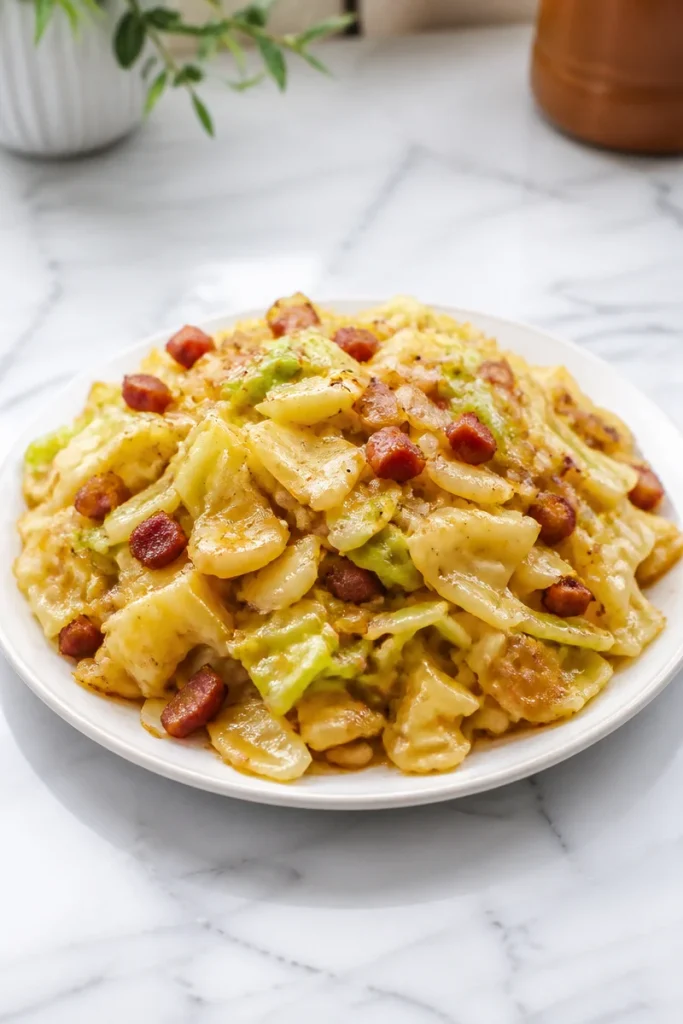
Polish Haluski Fried Cabbage and Noodles
Ingredients
Method
- In a large nonstick pot or deep skillet over medium heat, cook the diced bacon for 6 to 8 minutes, until crisp. Lift it out with a slotted spoon and set it on a paper towel to drain.
- Carefully pour off all but 1 tablespoon of the bacon fat from the pan.
- Add 2 tablespoons of the butter and the diced onions. Cook for about 2 minutes, stirring often, until the onions begin to soften.
- Add another 2 tablespoons of butter, then add the cabbage, salt, and pepper. Stir well so the cabbage starts to warm through and wilt. Return the bacon to the pan.
- Cover the skillet, reduce the heat to medium-low, and cook for about 10 minutes, stirring occasionally.
- Uncover during the last few minutes to allow the onions and cabbage to brown slightly.
- While the cabbage cooks, bring a pot of salted water to a boil. Cook the egg noodles according to the package directions, then drain them well.
- Stir the drained noodles and the last 2 tablespoons of butter into the cabbage mixture. Cook for 1 to 2 minutes, just until everything is hot.
- Taste and adjust the salt and pepper if needed.
- Serve the Polish haluski fried cabbage and noodles right away as a side dish or a simple meatless-style main.
