This Spanish Pisto Manchego vegetable stew is pure comfort in a bowl. It is warm, colorful, and full of slow-cooked flavor, so it feels like the kind of meal that brings everyone to the table. I love recipes like this because they are simple, hearty, and deeply satisfying without being heavy.
At the heart of this dish are olive oil, onions, red bell peppers, zucchini, eggplant, tomatoes, sugar, salt, and black pepper. Together, they create a soft, rich vegetable stew with a sweet-savory balance. The onions add a gentle base, the peppers bring sweetness, the zucchini turns tender, and the eggplant gives the stew body. Meanwhile, the tomatoes cook down into a thick sauce that tastes bright and rustic.
The method is easy to follow, and that is one reason home cooks love it. First, you soften the onions in olive oil, then add the peppers and zucchini. After that, the tomatoes and sugar simmer until the mixture thickens. At the same time, the eggplant cooks in a second skillet so it becomes tender without getting soggy. Finally, you bring everything together and let the flavors blend. With 15 minutes of prep time, 45 minutes of cooking time, and 1 hour total, this recipe gives you a lot of flavor for a very manageable effort. It makes 6 servings and comes in at about 321 calories per serving.
This Spanish pisto is a great choice for a cozy family dinner, and it is also a smart dish for meal prep. It works well on chilly nights, on meatless Mondays, or whenever you want a warm vegetable dish that feels special. Because it reheats well, it is also a fine option for lunches the next day.
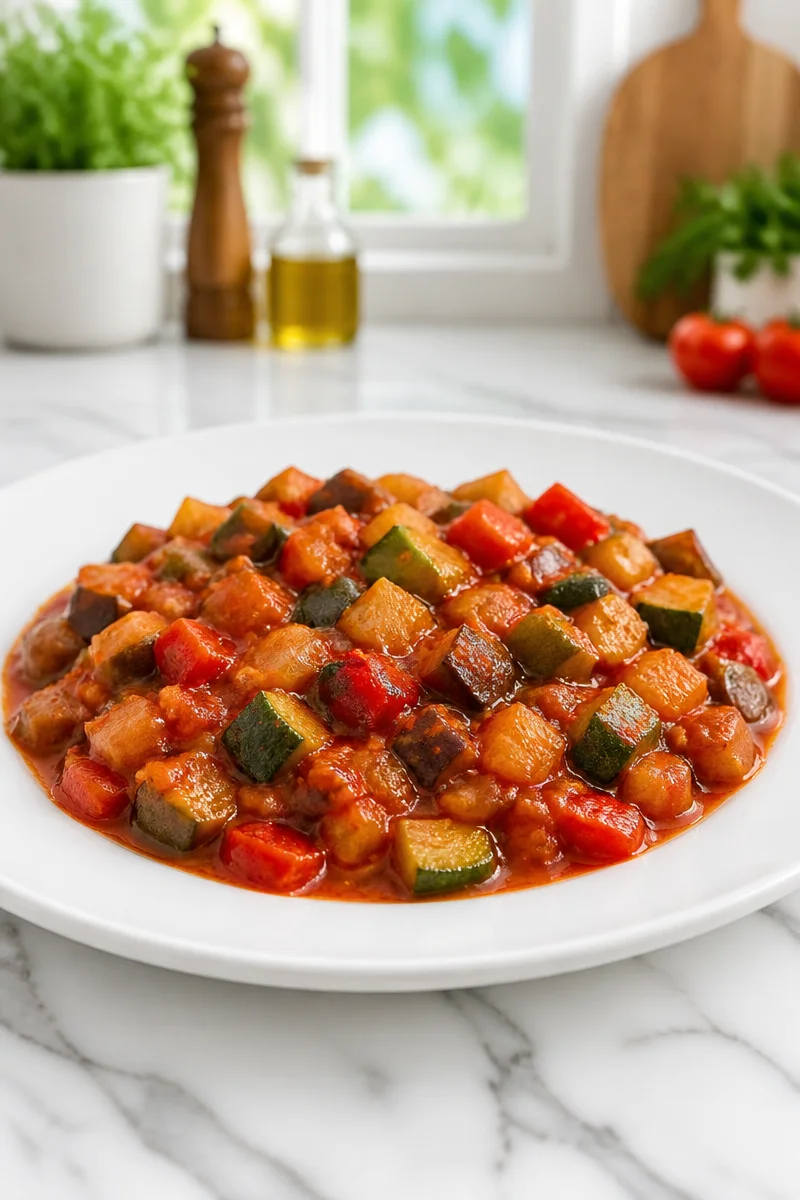
Why You’ll Love This Spanish Pisto Manchego Vegetable Stew
- It uses simple ingredients you may already have in your kitchen.
- It is full of soft, rich vegetable flavor, yet it still feels light.
- It is flexible, so you can serve it in many different ways.
- It makes a great make-ahead meal for busy weeks.
- It fits many menus, from vegetarian plates to side dishes for meat or fish.
Eggplant Tips
The eggplant is the key vegetable that gives this Spanish pisto its rich texture. For the best result, choose a firm eggplant with smooth, shiny skin and no soft spots. It should feel heavy for its size, which usually means it is fresh and meaty. If the skin looks dull or wrinkled, the eggplant may be older and less tender. Also, cut it into even cubes so it cooks at the same speed. Since eggplant absorbs oil quickly, cook it over medium heat and stir often so it turns soft without burning. If you want a milder taste, you can sprinkle the cubes with a little salt first, let them sit for a few minutes, and then pat them dry before cooking.
Options for Substitutions
- Use avocado oil or another mild oil instead of olive oil if that is what you have on hand.
- Swap yellow onions for the large onions for a slightly sweeter flavor.
- Replace red bell peppers with orange or yellow bell peppers for a similar sweet taste.
- Use summer squash in place of zucchini if needed.
- Try Italian eggplant or even Japanese eggplant for a softer texture.
- If fresh tomatoes are not available, use canned diced tomatoes, drained well, for a similar sauce.
Watch Out for These Mistakes
One common mistake is cooking the vegetables too fast. This Spanish pisto needs patience, because the onions, peppers, zucchini, and tomatoes should soften slowly. If the heat is too high, the vegetables can brown too much before they turn tender. As a result, the stew may taste sharp instead of mellow.
Another mistake is skipping the step where the tomato liquid cooks away. That part matters a lot. If you stop too soon, the dish can turn watery. Instead, keep cooking until the mixture looks thick and spoonable. That is what gives Spanish pisto its rich, rustic feel.
Also, do not forget to cook the eggplant separately. If you add it raw to the main pan, it may release too much moisture and throw off the texture. Cooking it in a second skillet helps it become soft on the outside and silky inside. Then it blends into the stew more evenly.
Finally, taste before serving. Since the ingredients are simple, salt and pepper matter more than you might think. So, season in stages and adjust at the end if needed. That little step can make the whole dish taste brighter and more balanced.
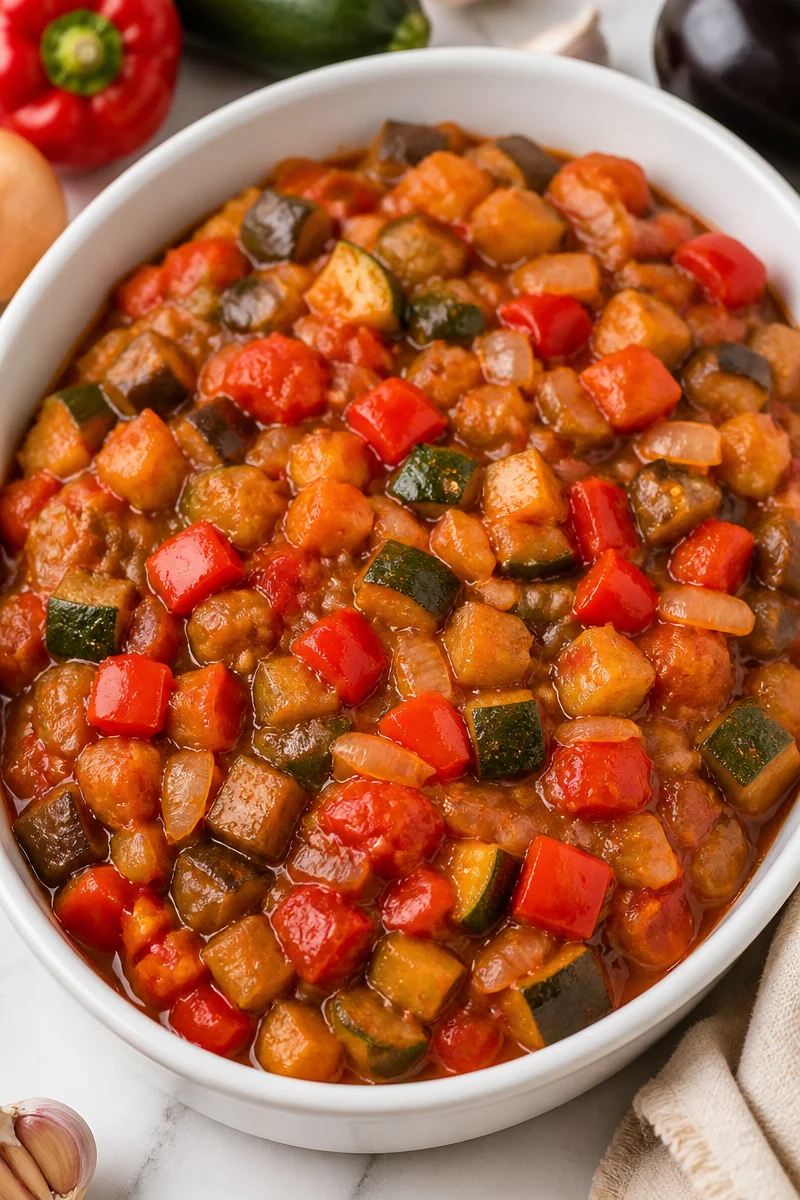
What to Serve With Spanish Pisto Manchego Vegetable Stew?
Spanish pisto is very versatile, so it pairs nicely with many foods. For a full meal, serve it with crusty bread to soak up the sauce, fried or poached eggs for a classic Spanish-style plate, grilled fish for a lighter dinner, or roasted chicken if you want something heartier. It also works well beside rice or potatoes if you want to stretch the meal a little further.
Storage Instructions
Store: Let the stew cool first, then place it in an airtight container. Refrigerate for 4 to 5 days.
Freeze: Freeze in freezer-safe containers for up to 3 months. For best texture, leave a little space at the top of the container because the stew may expand.
Reheat: For the stovetop, warm it over low to medium heat, stirring now and then until hot. For the microwave, heat in short bursts, stirring between rounds so it warms evenly. If it seems too thick, add a spoonful of water or broth.
Recipe Info
Preparation Time: 15 minutes
Cooking Time: 45 minutes
Total Time: 1 hour
Level of Difficulty: Easy
Servings: 6 servings
Estimated nutrition
Estimated nutrition for the whole recipe (without optional ingredients):
- Calories: 1,750 to 1,950
- Protein: 10 to 16 grams
- Fat: 160 to 180 grams
- Carbohydrates: 90 to 115 grams
Ingredients
- 2/3 cup olive oil, divided (1/3 cup per skillet)
- 2 large onions, coarsely chopped
- 3 red bell peppers, cored, seeded and cut into small cubes
- 3 zucchini, cut into small cubes
- 1 large eggplant, cut into small cubes
- 6 medium tomatoes, peeled and diced
- 1 1/2 teaspoons granulated sugar
- Salt and freshly ground black pepper, to taste
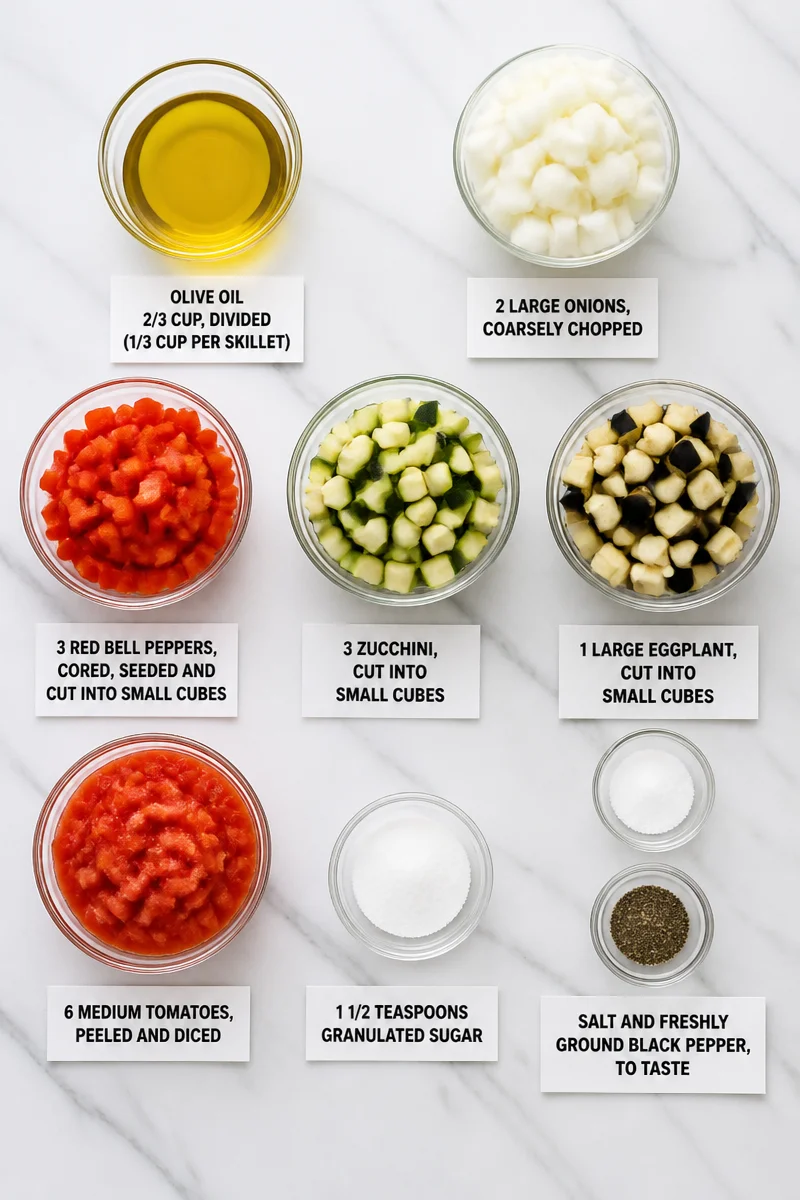
Step-by-Step Instructions
Step 1: Soften the Onions
Heat 1/3 cup of the olive oil in a large skillet over medium heat. Add the onions and cook, stirring often, until they begin to soften, which should take about 5 minutes. This first step builds the flavor base for the whole stew, so take your time.
Step 2: Add the Peppers and Zucchini
Next, add the bell peppers and cook them until they start to soften, about 5 minutes. Then add the zucchini, season with salt and pepper, and continue cooking until the vegetables become tender. Stir often so nothing sticks, and let the colors stay bright.
Step 3: Cook Down the Tomatoes
Stir in the tomatoes and sugar. Then cook, stirring now and then, until the liquid has evaporated and the mixture becomes thick. This step gives the Spanish pisto its rich, spoonable texture, so do not rush it.
Step 4: Cook the Eggplant Separately
While the other vegetables cook, heat the remaining 1/3 cup of olive oil in a second skillet over medium heat. Add the eggplant and cook, stirring and turning, until it softens. Then drain it on paper towels to remove extra oil. This keeps the stew from becoming greasy.
Step 5: Combine and Finish
Add the cooked eggplant to the main skillet. Cook for a few more minutes so the flavors blend together. At this point, the stew should look thick, glossy, and well balanced. Taste it, adjust the salt and pepper if needed, and serve warm.
Step 6: Serve and Enjoy
Serve the Spanish pisto warm with grilled fish or meat, or spoon it over fried eggs with toasted bread. It is also very nice on its own when you want a simple vegetable dinner. If you have leftovers, they will taste even better the next day.
Conclusion
Spanish Pisto Manchego is a wonderful example of how simple ingredients can make a deeply satisfying meal. With onions, peppers, zucchini, eggplant, and tomatoes cooked slowly in olive oil, this vegetable stew turns soft, rich, and full of flavor. It is easy enough for a weeknight, yet special enough for guests.
Because it stores well and reheats beautifully, it is also a smart recipe for meal prep. So, if you are looking for a warm, comforting dish that is easy to love, give this Spanish pisto a try. Then come back and share how you served it, or explore more cozy vegetable recipes for your next home-cooked meal.
Spanish Pisto Manchego Vegetable Stew
Ingredients
Method
- Heat 1/3 cup of the olive oil in a large skillet over medium heat. Add the onions and cook, stirring often, until they begin to soften, about 5 minutes.
- Add the bell peppers and cook until they start to soften, about 5 minutes. Then add the zucchini, season with salt and pepper, and continue cooking until the vegetables become tender.
- Stir in the tomatoes and sugar. Cook, stirring occasionally, until the liquid has evaporated and the mixture becomes thick.
- In a second skillet, heat the remaining 1/3 cup of olive oil over medium heat. Add the eggplant and cook until it softens; drain on paper towels to remove extra oil.
- Add the cooked eggplant to the main skillet and cook for a few more minutes to blend flavors.
- Taste and adjust seasoning if needed, then serve warm.
- Serve the Spanish pisto warm alongside grilled fish or meat, over fried eggs, or on its own with crusty bread.
