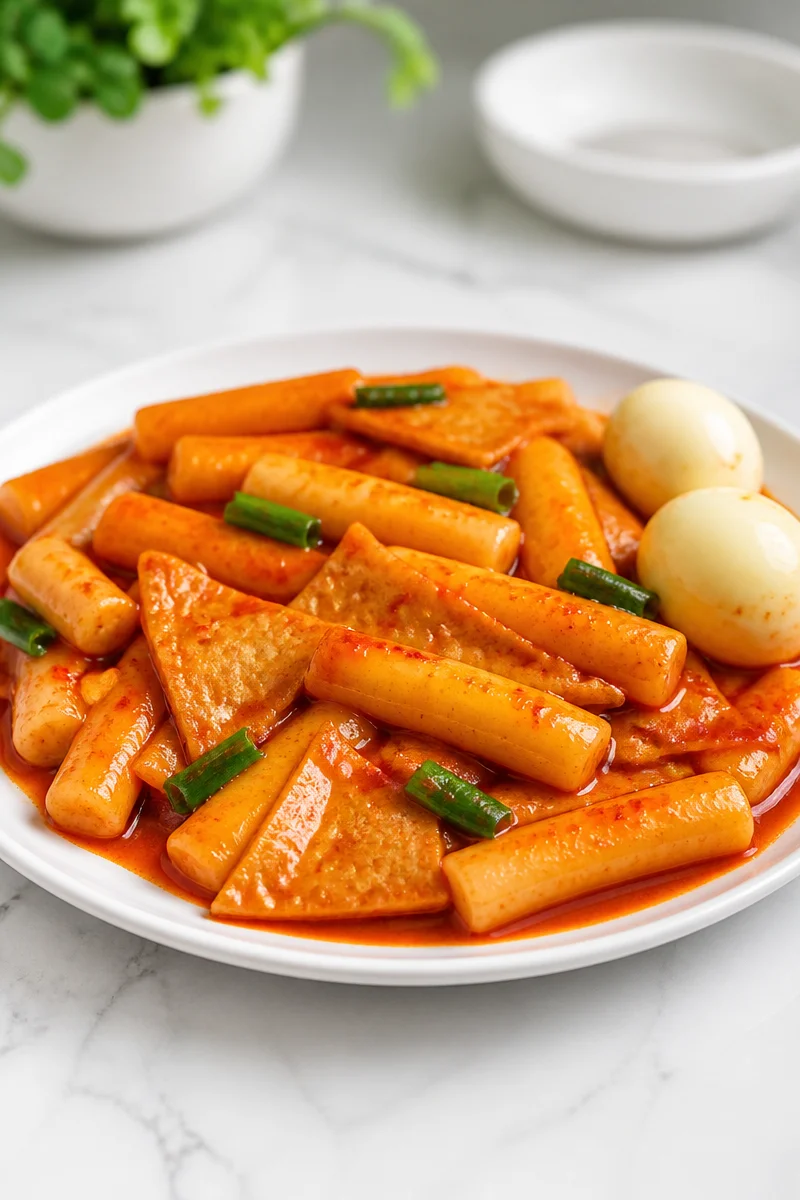
This spicy Korean tteokbokki rice cakes recipe is pure comfort in a bowl. It is warm, bold, and just a little fiery, so it feels like the kind of food that wakes up your taste buds and makes you slow down for a moment. I love it because it brings restaurant-style flavor to the home kitchen without feeling fussy.
At the heart of this dish are chewy cylinder-shaped Korean rice cakes, also called garaetteok, simmered in a rich sauce made with gochujang, gochugaru, and a touch of sugar. Then, the broth gets deep flavor from dried anchovies and dried kelp, which give the sauce that classic savory Korean taste. Green onions add freshness, while optional hard-boiled eggs and fish cakes make the dish even more filling.
The method is simple, and that is part of the charm. First, you soak the rice cakes if needed. Next, you make a light stock with anchovies and kelp, stir together the spice paste, and simmer everything until the sauce turns thick and glossy. In just 40 minutes total, you get a dish that feels special but is still easy enough for a weeknight.
This is the kind of meal that works well on cold evenings, busy weekends, or any time you want something cozy and satisfying. It is also a fun dish to share with family, since everyone can choose how spicy they want each bite to be.
Why You’ll Love This Spicy Korean Tteokbokki Rice Cakes
- It is fast and satisfying, with just 10 minutes of prep and a short simmer.
- The ingredient list is simple, yet the flavor tastes rich and layered.
- It has a perfect mix of chewy, spicy, sweet, and savory.
- It works well as a snack, a light meal, or a shared side dish.
- It is easy to adjust, so you can make it milder, richer, or more filling.
Tteokbokki Rice Cake Tips
The main ingredient here is Korean rice cakes, and the best results come from using fresh or properly thawed garaetteok. If they are frozen, let them thaw first, then soak them in cold water until they soften. If they are fresh but feel firm, a short soak helps too. This step matters because soft rice cakes absorb the sauce better and cook more evenly. Also, try to use rice cakes that are plump and cylinder-shaped, since they hold their chewy texture well in the spicy broth. If they are dried out, they may need a little extra soaking time before cooking.
Options for Substitutions
- Use vegetable stock instead of the anchovy-kelp broth if you want a seafood-free version.
- Swap the fish cakes for sliced mushrooms or tofu for a lighter dish.
- Use less gochugaru if you want a milder heat level.
- Add a little honey or brown sugar instead of white sugar for a softer sweetness.
- Replace green onions with a small amount of chives if that is what you have on hand.
- Use soft-boiled eggs instead of hard-boiled eggs if you want a richer yolk texture.
Watch Out for These Mistakes
One common mistake is skipping the soak for the rice cakes. If they are frozen or firm, they need time to soften first. Otherwise, they can stay too hard in the middle even after simmering. So, take that small step seriously, because it helps the final texture a lot.
Another issue is overcooking the sauce. Tteokbokki should be thick and glossy, but not dry or burnt. If the liquid cooks down too fast, add a splash of water and keep stirring gently. That way, the rice cakes stay coated and the sauce stays smooth.
Also, do not add the spice paste too early before the broth is ready. The stock should first be simmered with the anchovies and kelp, then the seasoning goes in. This order gives the dish deeper flavor and keeps the sauce from tasting flat.
Finally, be careful with the heat level. Gochujang and gochugaru can vary by brand, so taste as you go if you are sensitive to spice. If you want a family-friendly version, start with a little less chili paste, then add more at the end if needed.
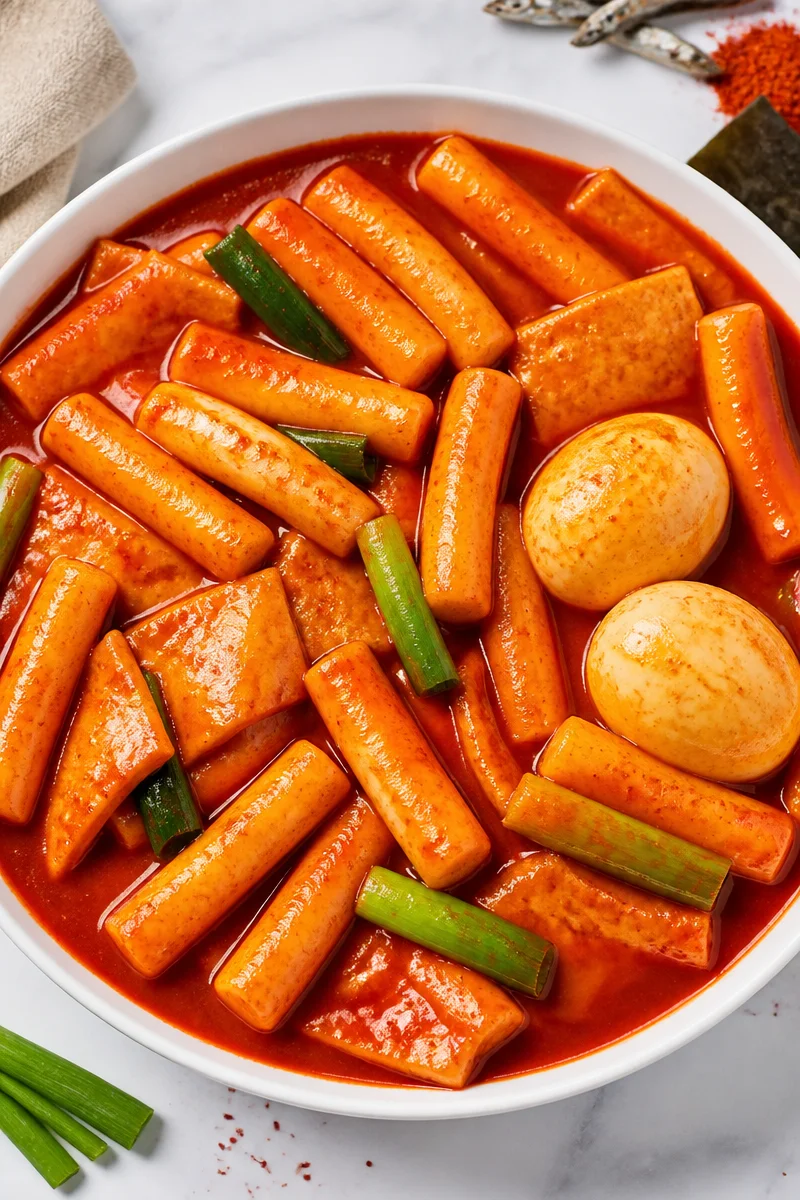
What to Serve With Spicy Korean Tteokbokki Rice Cakes?
Spicy Korean tteokbokki rice cakes pair nicely with simple sides that calm the heat and round out the meal. For example, you could serve it with steamed dumplings, a crisp cucumber salad, or a mild cabbage slaw. In addition, a bowl of plain rice or a light soup can help balance the spice. If you want a fuller spread, add some kimchi, roasted seaweed, or a simple egg dish. That way, the meal feels complete without being heavy.
Storage Instructions
Store: Keep leftover spicy Korean tteokbokki rice cakes in an airtight container in the refrigerator for up to 3 days. The rice cakes will firm up as they sit, so they are best enjoyed fresh.
Freeze: Freezing is not ideal for the finished dish, because the rice cakes can become tough after thawing. However, you can freeze uncooked rice cakes separately for up to 2 months if needed.
Reheat: For the stovetop, place leftovers in a small pan with a splash of water and warm over low heat, stirring gently until hot. For the microwave, cover the dish loosely and heat in short bursts, adding a spoonful of water if the sauce looks too thick.
Recipe Info
Preparation Time: 10 minutes
Cooking Time: 30 minutes
Total Time: 40 minutes
Level of Difficulty: Easy
Servings: 3 servings
Estimated Nutrition
Estimated nutrition for the whole recipe (without optional ingredients):
Calories: about 480 to 540 kcal
Protein: about 10 to 14 g
Fat: about 2 to 5 g
Carbohydrates: about 105 to 120 g
Ingredients
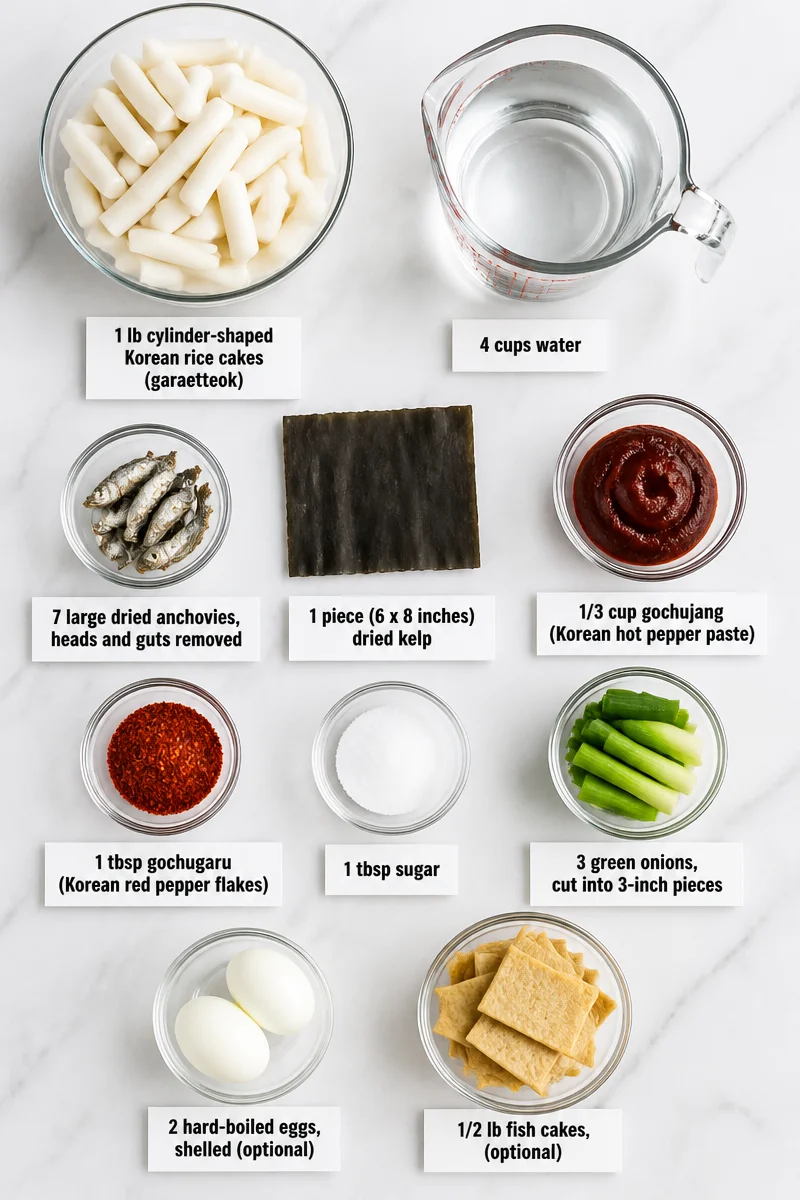
- 1 lb cylinder-shaped Korean rice cakes (garaetteok), fresh or frozen
- 4 cups water
- 7 large dried anchovies, heads and guts removed
- 1 piece (6 x 8 inches) dried kelp
- 1/3 cup gochujang (Korean hot pepper paste)
- 1 tbsp gochugaru (Korean red pepper flakes)
- 1 tbsp sugar
- 3 green onions, cut into 3-inch pieces
- 2 hard-boiled eggs, shelled (optional)
- 1/2 lb fish cakes (optional)
Step-by-Step Instructions
Step 1: Soak the Rice Cakes
If the rice cakes are frozen, thaw them first and then soak them in cold water until they soften. If they are fresh but stiff, give them a short soak in cold water. Then drain well before cooking. This helps them turn tender and chewy instead of hard.
Step 2: Make the Anchovy-Kelp Stock
Add the water, dried anchovies, and dried kelp to a shallow pot. Bring the pot to a boil over medium-high heat and let it cook uncovered for about 15 minutes. Then remove the anchovies and kelp, leaving a light stock with a deep savory taste.
Step 3: Mix the Spice Paste
In a small bowl, stir together the gochujang, gochugaru, and sugar until smooth. This simple paste gives the dish its signature red color, gentle sweetness, and spicy kick. Set it aside while you finish the base.
Step 4: Build the Dish
Return to the stock and add the rice cakes, spice paste, and green onions. If you are using fish cakes and hard-boiled eggs, add them now too. Stir gently so the sauce blends evenly and coats the rice cakes.
Step 5: Simmer Until Thick
Bring the pot back to a boil, then lower the heat and simmer for 10 to 15 minutes. Stir gently now and then, because the rice cakes can stick if left alone. Keep cooking until they are soft and the sauce looks thick, shiny, and clings to the rice cakes.
Step 6: Serve Hot
Taste the sauce before serving. If needed, add a little more water for a looser texture or a touch more sugar for balance. Then serve the spicy Korean tteokbokki rice cakes right away while they are warm and tender.
Conclusion
Spicy Korean tteokbokki rice cakes bring together chewy rice cakes, savory broth, and a bold chili sauce for a dish that feels comforting and exciting at the same time. Because the recipe is simple, it is a great choice for cooks who want big flavor without a long list of hard steps. Also, the optional eggs and fish cakes make it easy to adjust for your own table.
If you try this recipe, I would love to hear how it turned out for you. Share your results, leave a comment with your favorite variation, or save this post for your next cozy meal. If you enjoy easy Korean-inspired recipes, keep browsing for more warm and satisfying dishes.
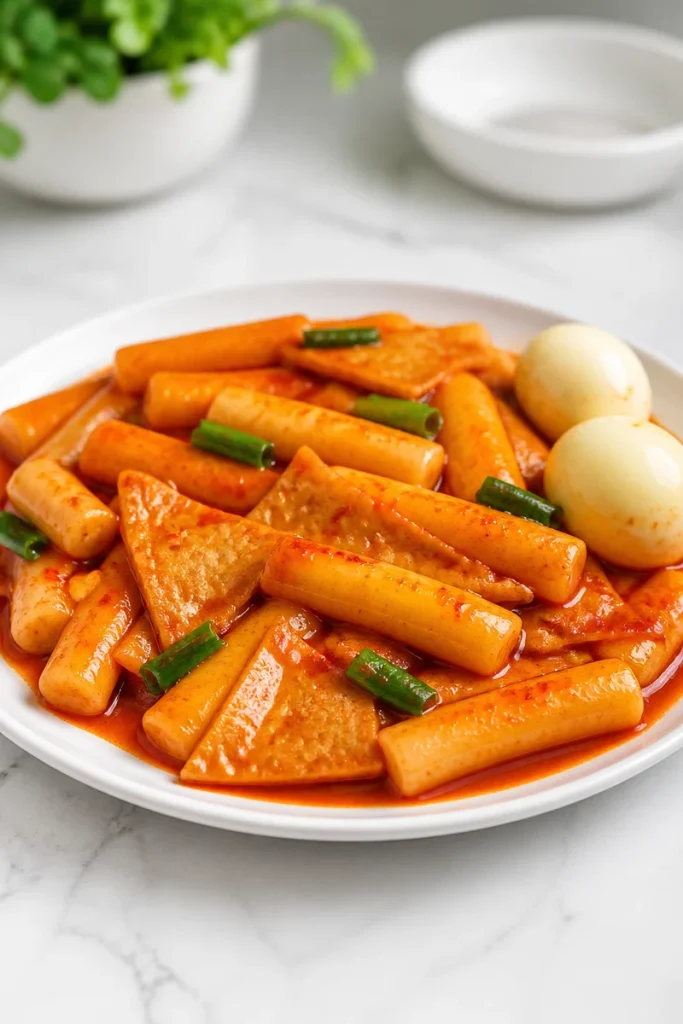
Spicy Korean Tteokbokki Rice Cakes
Ingredients
Method
- Soak the rice cakes. If frozen, thaw and then soak in cold water until they soften. If fresh but stiff, soak briefly in cold water and drain well before cooking.
- Add the water, dried anchovies, and dried kelp to a shallow pot. Bring to a boil over medium-high heat and cook uncovered for about 15 minutes. Remove anchovies and kelp to leave a light stock.
- In a small bowl, combine gochujang, gochugaru, and sugar, stirring until smooth. Set aside.
- Return to the stock, adding the soaked rice cakes, spice paste, and chopped green onions. If desired, add fish cakes and hard-boiled eggs. Stir gently to coat.
- Bring the mixture to a boil, then reduce to a simmer for 10 to 15 minutes. Stir occasionally until the rice cakes are soft and the sauce is thick and glossy.
- Taste the sauce and adjust with more water for a looser texture or a bit more sugar for balance as needed. Serve hot.
