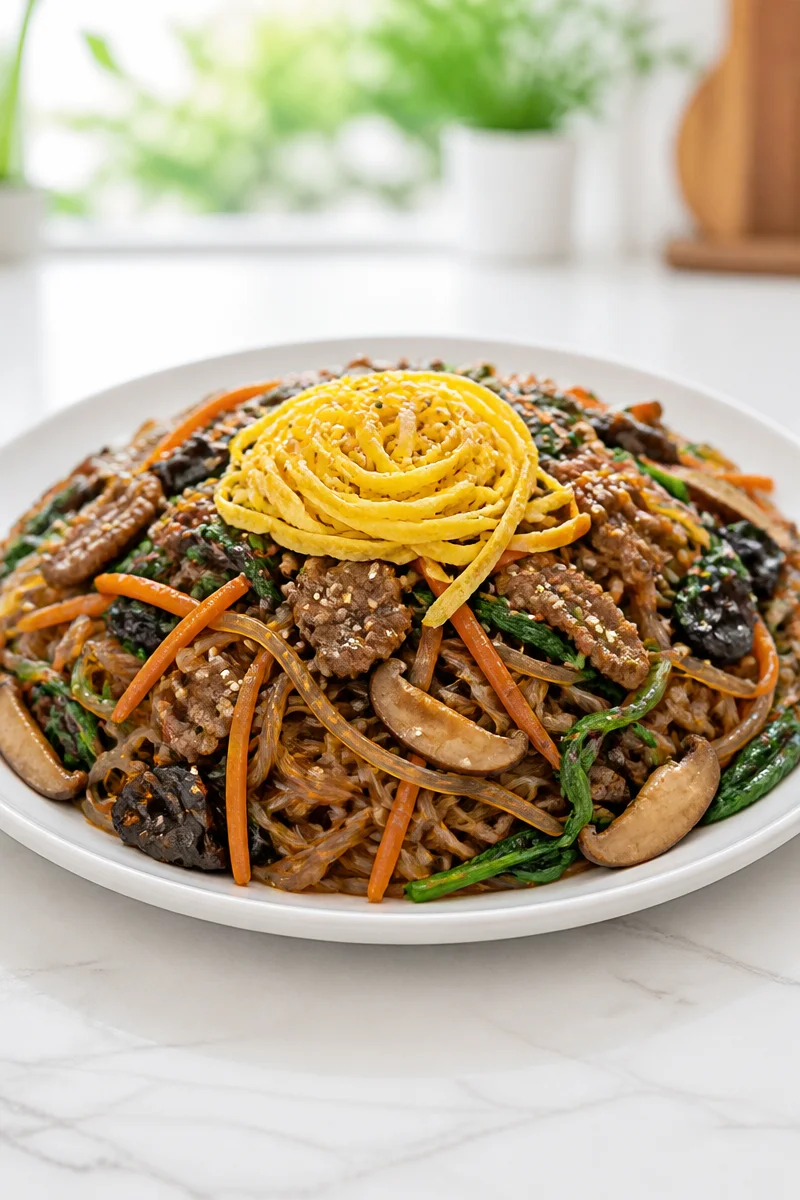
Japchae is pure comfort in a bowl. It is soft, savory, glossy, and full of texture, so it feels like a special meal even though it is very homey. I love how this Korean glass noodle stir fry brings people to the table fast, and then keeps them there for seconds.
This dish is built with sweet potato starch noodles, also called dangmyeon, plus mushrooms, onion, carrot, spinach, and a rich seasoning sauce made from soy sauce, brown or white sugar, black pepper, and garlic. If you want more heartiness, you can add 8 oz pork belly, pork shoulder, beef, or chicken, and then finish with toasted sesame oil and sesame seeds. For a lovely extra touch, the optional egg garnish adds a soft, pretty finish.
The method is simple, which is one reason I recommend this Korean glass noodle japchae stir fry so often. First, you soak the noodles and mushrooms. Next, you cook the meat if you are using it, make the egg garnish if you like, and stir together the sauce. Then everything goes into one pot, where it steams and turns glossy with very little fuss. In short, it is a smart recipe for busy days.
It is perfect for chilly nights, family dinners, and potlucks. Also, because it holds well for a few days, it works nicely for meal prep. So, if you want a cozy dish that feels generous and satisfying, this Korean glass noodle japchae stir fry is a great one to keep close.
Why You’ll Love This Korean Glass Noodle Japchae Stir Fry
- It has a rich, savory-sweet flavor that feels comforting without being heavy.
- It uses simple pantry items, so you do not need a long shopping list.
- The noodles cook in the pot with the vegetables, which saves time and dishes.
- It is flexible, so you can make it with pork, beef, chicken, or no meat at all.
- It works well for dinner now and leftovers later, which makes it practical for busy weeks.
Pork Belly Tips
If you choose pork belly for this Korean glass noodle japchae stir fry, pick slices with a good balance of meat and fat. That fat helps the meat stay tender and also adds flavor to the noodles. However, if you want something lighter, pork shoulder, beef, or chicken strips also work well. For the best result, cut the meat into thin, even pieces so it cooks quickly and blends nicely with the vegetables and glass noodles.
Options for Substitutions
- Use pork shoulder instead of pork belly if you want a less rich meat.
- Use beef strips for a deeper flavor and a classic stir fry feel.
- Use chicken breast or thigh if you prefer a lighter version.
- Swap wood ear mushrooms for more shiitake or white button mushrooms if that is what you have.
- Replace spinach with baby kale or another tender green that cooks quickly.
- If needed, use regular brown sugar or white sugar in the sauce, since both work well in this recipe.
Watch Out for These Mistakes
One common mistake is soaking the noodles too little. Dangmyeon needs enough time in cold water, or it may stay stiff in the center. On the other hand, do not soak them for so long that they get mushy before cooking. The same idea applies to the wood ear mushrooms, so give them enough time to soften and then trim them well.
Another issue is overcooking the vegetables. Because the Korean glass noodle japchae stir fry steams in the pot, the vegetables will soften as the noodles cook. So, if you slice the onion or carrot too thick, they may stay too firm. Likewise, if you add extra vegetables with a lot of water, the dish can turn watery instead of glossy.
Also, be careful with the sauce. The soy sauce, sugar, pepper, and garlic should mix well before you pour them in. If the sugar is not dissolved, the seasoning may land unevenly in the pot. So, stir it until smooth, and then distribute it over the noodles as evenly as you can.
Finally, do not skip the final toss. After steaming, the Korean glass noodle japchae stir fry needs that last minute or two uncovered so the liquid can cook off. If you stop too soon, the noodles may seem wet instead of shiny. However, if you keep cooking too long, they can dry out, so watch closely near the end.
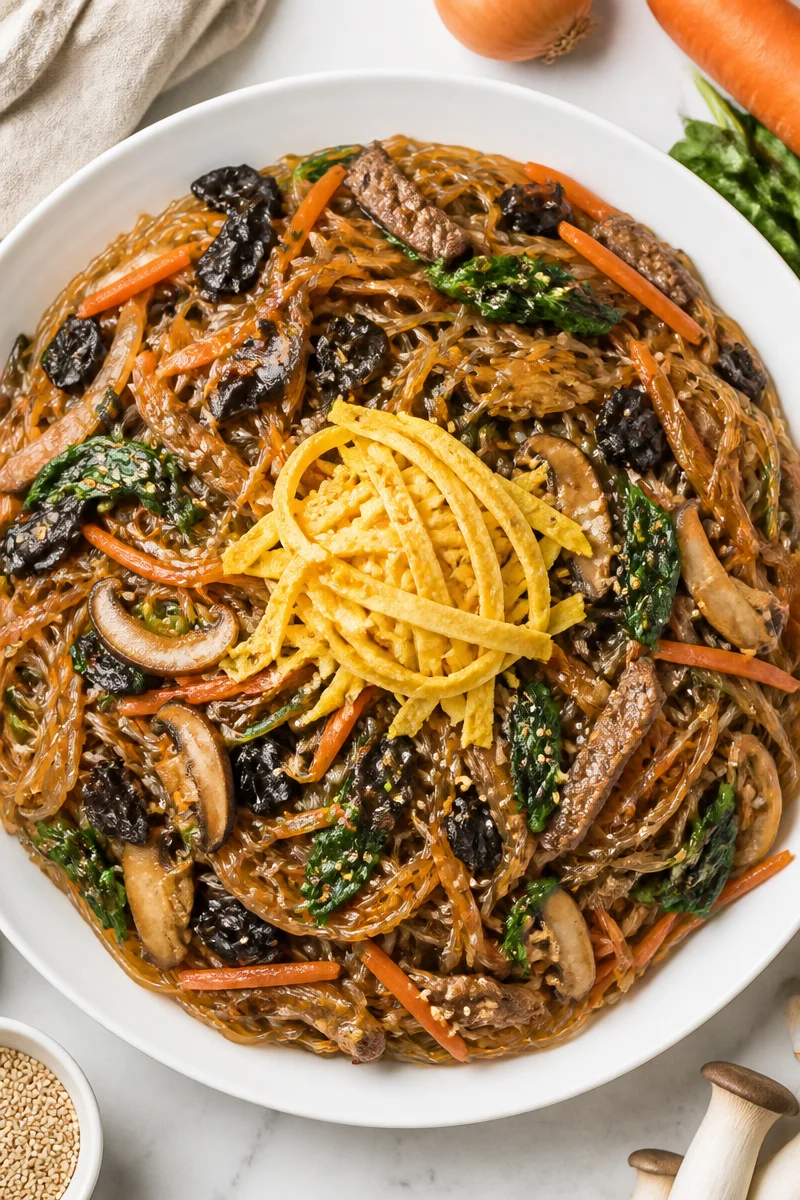
What to Serve With Korean Glass Noodle Japchae Stir Fry?
This Korean glass noodle japchae stir fry pairs well with simple side dishes that balance the sweet-savory flavor. For a full meal, I like to serve it with kimchi, a crisp cucumber salad, steamed rice if you want something extra filling, or a light soup such as miso-style broth or clear vegetable soup. Since japchae already brings noodles, vegetables, and optional meat together, the best sides are fresh, bright, and easy.
Storage Instructions
Store: Place leftovers in an airtight container and refrigerate for up to 3 days.
Freeze: For longer storage, freeze for up to 2 months. The noodles may soften a little after thawing, but the flavor will still be good.
Reheat: For the stovetop, stir-fry leftovers with a splash of water or a little oil over medium heat until warm. For the microwave, cover loosely and heat in short bursts, stirring between rounds so the noodles warm evenly.
Recipe Info
Preparation Time: 20 minutes plus 40 minutes soaking
Cooking Time: 15 minutes
Total Time: 1 hour 15 minutes
Level of Difficulty: Easy
Servings: 5 servings
Estimated Nutrition
Estimated nutrition for the whole recipe (without optional ingredients):
Calories: about 400 to 450 per serving
Protein: about 8 to 12 g per serving
Fat: about 14 to 18 g per serving
Carbohydrates: about 55 to 65 g per serving
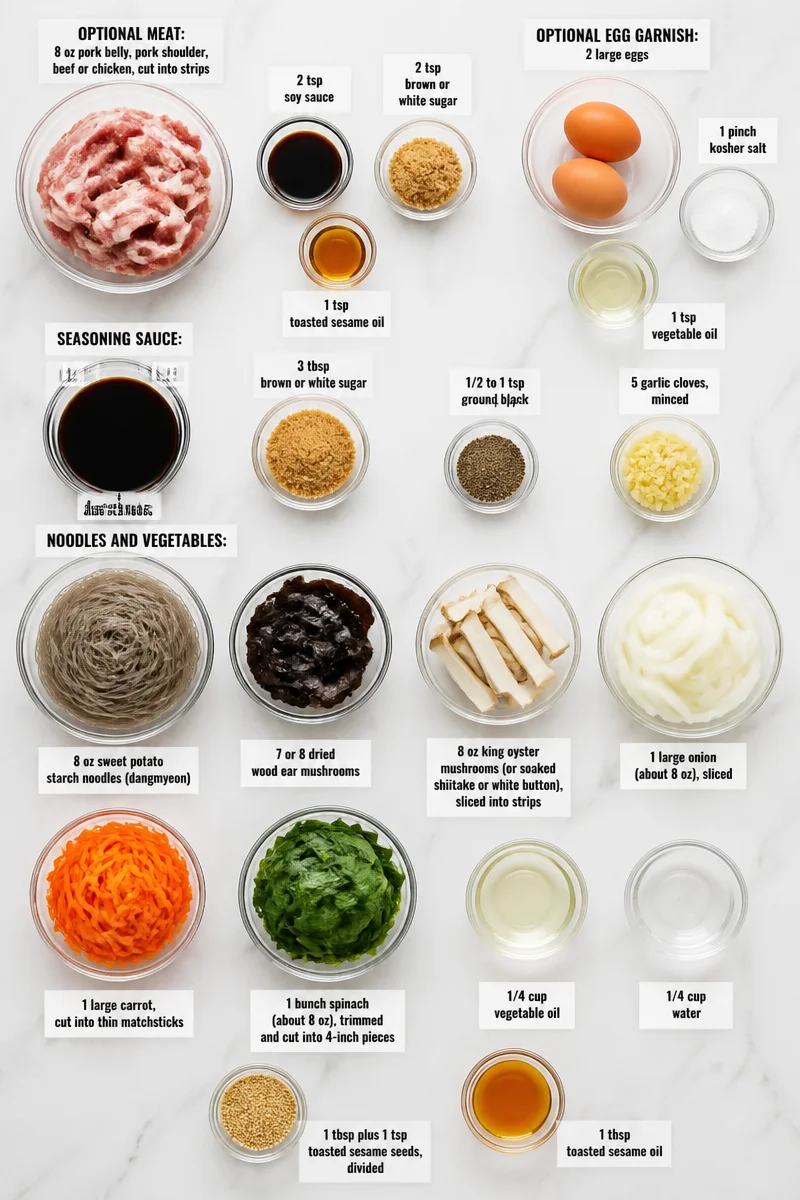
Ingredients
- OPTIONAL MEAT:
- 8 oz pork belly, pork shoulder, beef or chicken, cut into strips
- 2 tsp soy sauce
- 2 tsp brown or white sugar
- 1 tsp toasted sesame oil
- OPTIONAL EGG GARNISH:
- 2 large eggs
- 1 pinch kosher salt
- 1 tsp vegetable oil
- SEASONING SAUCE:
- 1/4 cup soy sauce
- 3 tbsp brown or white sugar
- 1/2 to 1 tsp ground black pepper
- 5 garlic cloves, minced
- NOODLES AND VEGETABLES:
- 8 oz sweet potato starch noodles (dangmyeon)
- 7 or 8 dried wood ear mushrooms
- 8 oz king oyster mushrooms (or soaked shiitake or white button), sliced into strips
- 1 large onion (about 8 oz), sliced
- 1 large carrot, cut into thin matchsticks
- 1 bunch spinach (about 8 oz), trimmed and cut into 4-inch pieces
- 1/4 cup vegetable oil
- 1/4 cup water
- 1 tbsp plus 1 tsp toasted sesame seeds, divided
- 1 tbsp toasted sesame oil
Step-by-Step Instructions
Step 1: Soak the Noodles and Mushrooms
Soak the sweet potato starch noodles in cold water for at least 40 minutes. At the same time, soak the dried wood ear mushrooms in water for at least 30 minutes. This gives both ingredients the soft texture they need for the Korean glass noodle japchae stir fry.
Step 2: Cook the Optional Meat
If you are using meat, toss it with the soy sauce, sugar, and toasted sesame oil. Let it sit for 5 minutes, and then cook it in a skillet for 4 to 5 minutes, until done. Set it aside while you move on to the rest of the dish.
Step 3: Make the Egg Garnish
Whisk the eggs with the salt, and then strain the mixture if you want a smoother egg ribbon. Cook it into a thin pancake in an oiled nonstick skillet over low heat, flipping once. After it cools, slice it into thin strips for garnish.
Step 4: Mix the Sauce and Build the Pot
Stir the soy sauce, sugar, pepper, and garlic together until the sugar dissolves. Trim the wood ear mushrooms and cut them into bite-size pieces. Then put them in a large pot with the king oyster mushrooms, onion, and carrot. Add the vegetable oil and water, and toss by hand to coat everything well. Spread the spinach on top, then add the noodles cut into 5 to 6-inch lengths with scissors.
Step 5: Steam, Finish, and Serve
Drizzle the sauce over the noodles. Cover the pot and cook over medium-high heat for 10 minutes. Then uncover and toss for 1 to 2 minutes, until the liquid is gone and the noodles look glossy. Add the cooked meat, 1 tablespoon sesame oil, and 1 tablespoon sesame seeds, and toss well. Transfer to a platter, then garnish with the egg strips and the remaining sesame seeds.
Step 6: Store Leftovers
Refrigerate any leftovers for up to 3 days. When you reheat them, stir-fry with a little water or oil so the noodles loosen up and warm evenly.
Conclusion
This Korean glass noodle japchae stir fry is colorful, comforting, and easy to make at home. It gives you soft noodles, tender vegetables, and a sweet-savory sauce that brings everything together beautifully. Also, because it is flexible, you can make it with pork, beef, chicken, or keep it meatless.
If you are looking for a dish that feels special but still fits into a normal weeknight, this is a great one to try. Make it for dinner, share it with family, and then come back and tell me how it turned out. If you enjoy this recipe, you may also want to explore more cozy noodle dishes and easy Korean-inspired meals next.
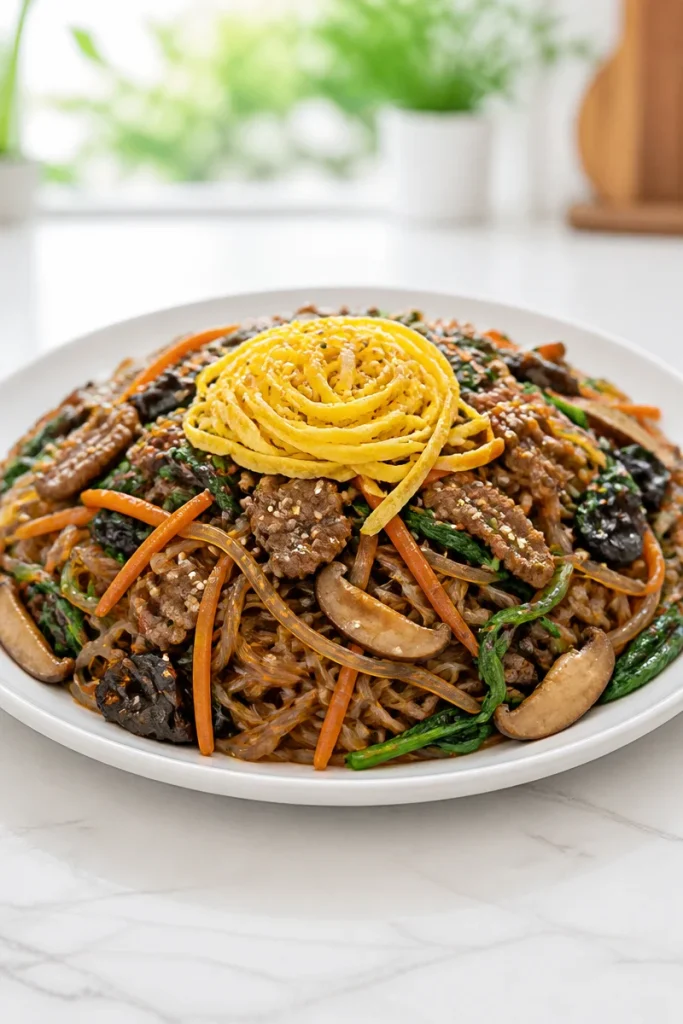
Japchae
Ingredients
Method
- Soak the sweet potato starch noodles in cold water for at least 40 minutes.
- At the same time, soak the dried wood ear mushrooms in water for at least 30 minutes.
- If you are using meat, toss it with the soy sauce, sugar, and toasted sesame oil. Let it sit for 5 minutes.
- Cook the meat in a skillet for 4 to 5 minutes, until done. Set it aside.
- Whisk the eggs with salt and strain if necessary for a smoother texture.
- Cook it into a thin pancake in an oiled nonstick skillet over low heat, flipping once.
- After it cools, slice it into thin strips for garnish.
- Stir the soy sauce, sugar, pepper, and garlic until the sugar dissolves.
- Trim the wood ear mushrooms and cut into bite-size pieces.
- Put the mushrooms, onion, and carrot in a large pot. Add vegetable oil and water, then toss to coat.
- Spread spinach on top, then add the noodles cut into 5 to 6-inch lengths.
- Drizzle the sauce over the noodles, cover the pot and cook over medium-high heat for 10 minutes.
- Uncover and toss for 1 to 2 minutes until the liquid is gone and the noodles look glossy.
- Add the cooked meat, toast sesame oil, and remaining sesame seeds, and toss well.
- Transfer to a platter, garnished with egg strips and sesame seeds.
