This broiled Japanese yakitori chicken skewer recipe is pure comfort in a small, glossy package. I love how it brings that warm, savory-sweet grilled flavor right into a home kitchen, without needing a backyard grill. The chicken turns juicy, the negi softens and sweetens, and the sauce gives every bite that classic yakitori shine.
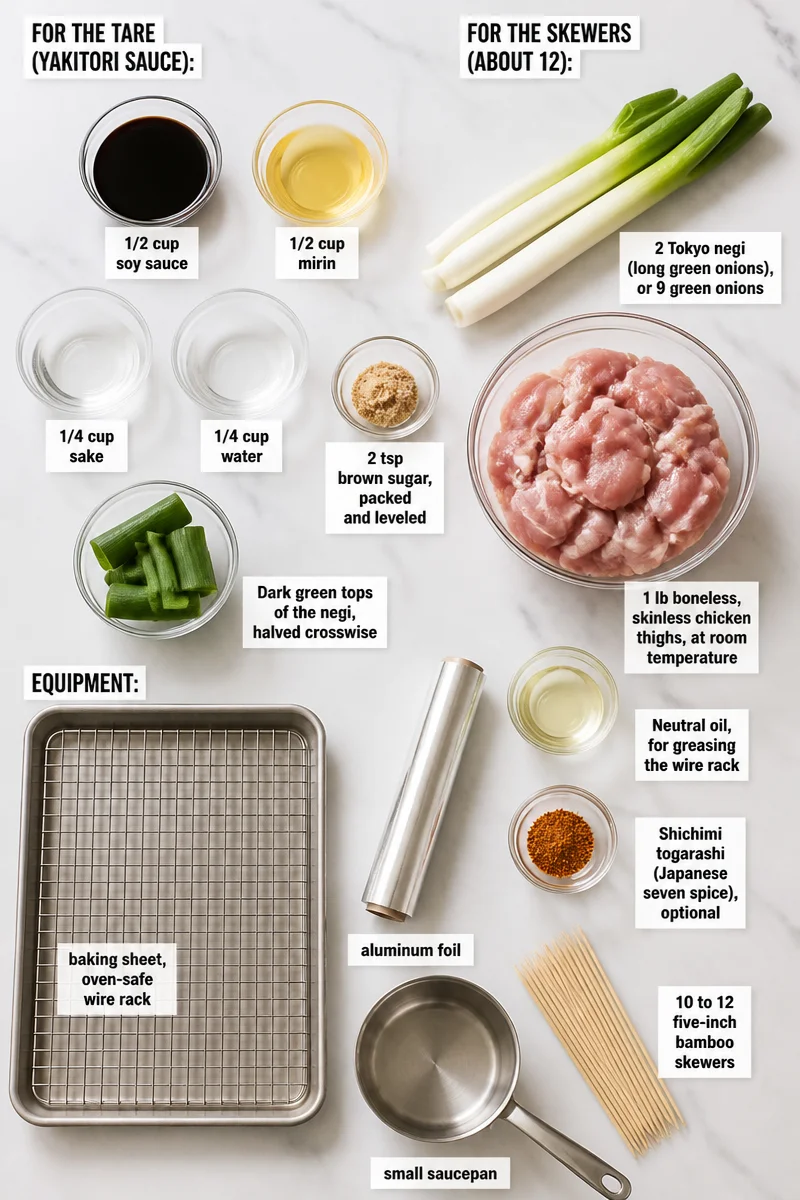
What makes this dish stand out is the simple but powerful mix of ingredients. The tare, or yakitori sauce, uses 1/2 cup soy sauce, 1/2 cup mirin, 1/4 cup sake, 1/4 cup water, 2 tsp brown sugar, and the dark green tops of the negi for extra depth. Then the skewers come together with 2 Tokyo negi or 9 green onions, 1 lb boneless, skinless chicken thighs, neutral oil, optional shichimi togarashi, and 10 to 12 five-inch bamboo skewers. You also need a baking sheet, small saucepan, oven-safe wire rack, and aluminum foil. Altogether, the flavor is savory, slightly sweet, and rich, with a little caramel edge from the broiler.
The method is straightforward, too. First, you soak the skewers, prep the negi, and simmer the tare until glossy. Then you thread the chicken and onions, set up the broiler, and cook the skewers in a few easy rounds. Because the sauce is reduced ahead of time, basting is simple and the flavor builds fast. Just keep in mind that this recipe contains alcohol and is intended for guests of legal drinking age.
This is the kind of dish that works well for a cozy dinner, a small gathering, or even a weekend meal when you want something a little special. It is also great for potlucks, since the skewers look neat and taste even better warm from the oven.
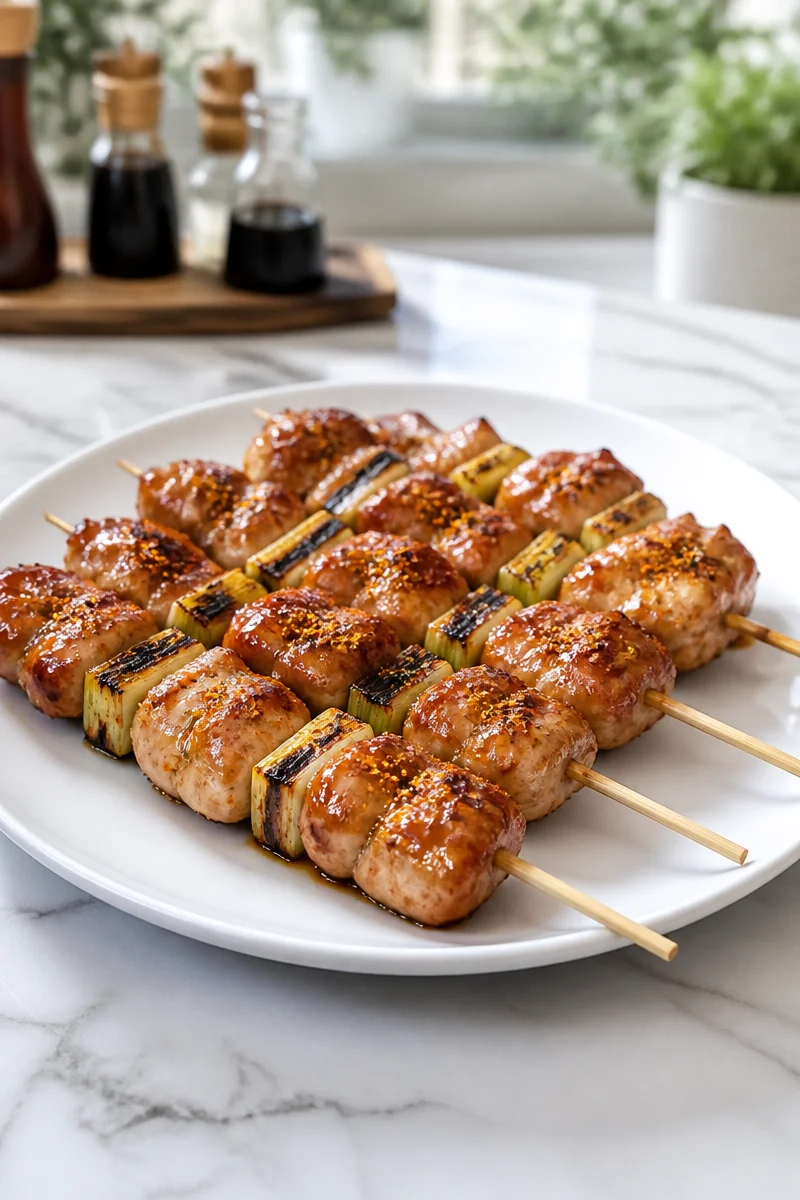
Why You’ll Love This Broiled Japanese Yakitori Chicken Skewers
- It uses simple ingredients you can find in many grocery stores.
- The broiler method gives you great color and flavor without a grill.
- Chicken thighs stay tender and juicy, which makes the dish hard to overdo.
- The tare sauce adds deep umami and a light sweetness that feels balanced.
- It is a smart make-ahead meal, since the sauce keeps well in the fridge.
Chicken Thigh Tips
The best choice for yakitori chicken skewers is boneless, skinless chicken thighs at room temperature. Thighs stay moist under high heat, so they work especially well for broiling. Try to cut the pieces into even 1 1/4-inch squares so they cook at the same speed. Also, let the chicken sit out briefly before skewering, because cold meat can cook unevenly. If you want the best texture, choose thighs with a little fat, since that helps the chicken stay juicy and gives the skewers a richer finish.
Options for Substitutions
- Use green onions instead of Tokyo negi if that is what your store carries.
- Swap chicken thighs for boneless chicken breast if you prefer leaner meat, but reduce cooking time so it does not dry out.
- Replace sake with extra water or low-sodium chicken broth if you need a non-alcoholic sauce base.
- Use honey or maple syrup instead of brown sugar for a slightly different sweetness.
- If you do not have shichimi togarashi, try toasted sesame seeds or a pinch of red pepper flakes.
- If you do not have a wire rack, cook the skewers on a lightly oiled baking sheet, then turn them carefully more often.
Watch Out for These Mistakes
One common mistake is not reducing the tare long enough. If the sauce stays too thin, it will not coat the chicken well, and the flavor will feel flat. So, simmer it until it drops by about one-third and turns glossy as it cools. That step matters a lot.
Another issue is using sauce that touched raw chicken for the final brush. Instead, always set aside part of the tare before you start basting. Then use a clean brush for the reserved sauce at the end. This keeps the flavor bright and also helps food safety.
Also, do not skip soaking the bamboo skewers. Even though the broiler time is not very long, soaked skewers are less likely to scorch. At the same time, make sure the chicken pieces are similar in size, because uneven cuts can leave you with dry edges and undercooked centers.
Finally, watch the broiler closely. Broilers can go from golden to burnt very fast, so keep an eye on the skewers during the last few minutes. Because the sauce contains sugar, it can caramelize quickly. Therefore, stay near the oven and turn the skewers on time.
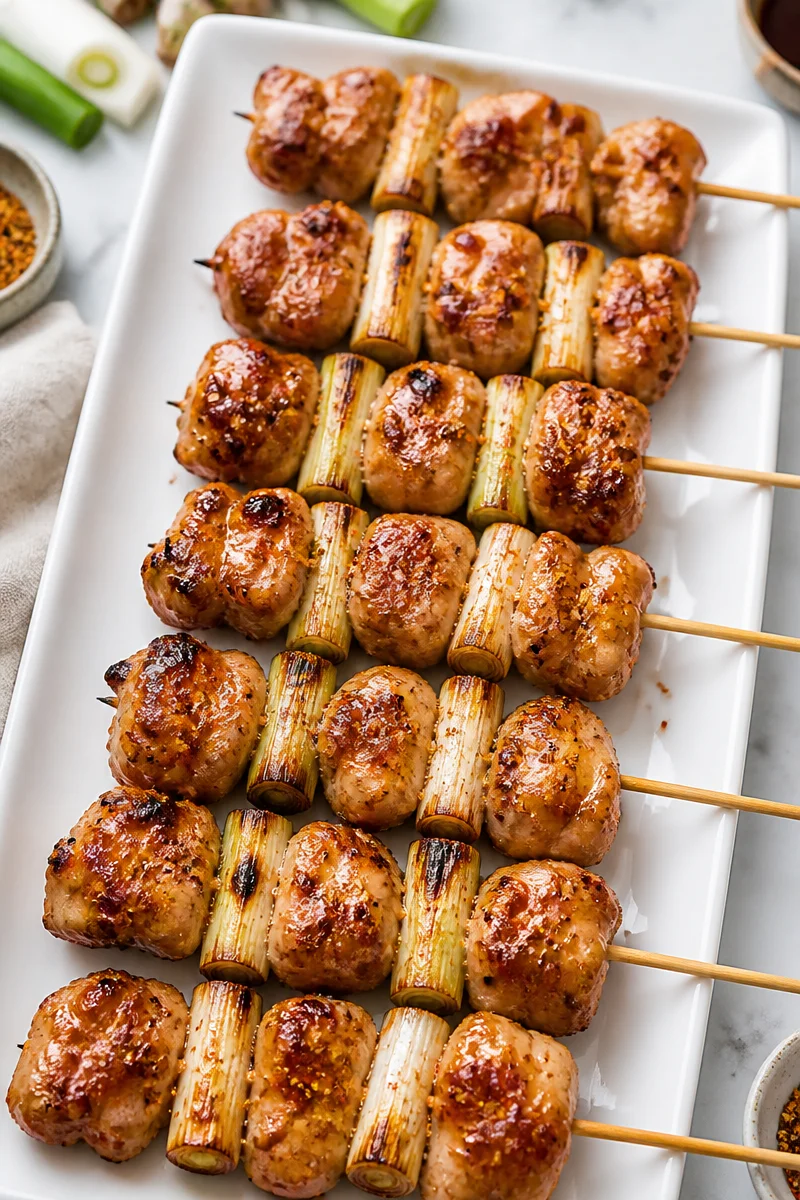
What to Serve With Broiled Japanese Yakitori Chicken Skewers?
These broiled Japanese yakitori chicken skewers go well with simple sides that let the savory-sweet flavor shine. I like them with steamed white rice, a light cucumber salad, and miso soup for a classic Japanese-style meal. You could also serve them with sautéed greens, sesame noodles, or a crisp cabbage slaw. Since the chicken is rich and glossy, a fresh, cool side helps balance each bite.
Storage Instructions
Store: Keep leftover yakitori skewers in an airtight container in the refrigerator for up to 3 days. Also, store any extra tare sauce in a sealed jar in the fridge for 2 to 3 months, as long as you leave out the green tops before storing.
Freeze: You can freeze the cooked skewers for up to 1 month. Wrap them well or place them in a freezer-safe container so they do not dry out.
Reheat: For the stovetop, warm the skewers in a covered skillet over low heat until hot, adding a spoonful of water if needed. For the microwave, heat in short bursts at medium power so the chicken stays tender and the sauce does not burn.
Recipe Info
Preparation Time: 15 minutes
Cooking Time: 45 minutes
Total Time: 1 hour
Level of Difficulty: Easy
Servings: 4 servings
Calories: 210 kcal per serving
Estimated Nutrition
Estimated nutrition for the whole recipe (without optional ingredients):
- Calories: 820 to 900
- Protein: 90 to 105 g
- Fat: 40 to 55 g
- Carbohydrates: 30 to 45 g
Ingredients
- FOR THE TARE (YAKITORI SAUCE):
- 1/2 cup soy sauce
- 1/2 cup mirin
- 1/4 cup sake
- 1/4 cup water
- 2 tsp brown sugar, packed and leveled
- Dark green tops of the negi (see below), halved crosswise
- FOR THE SKEWERS (ABOUT 12):
- 2 Tokyo negi (long green onions), or 9 green onions
- 1 lb boneless, skinless chicken thighs, at room temperature
- Neutral oil, for greasing the wire rack
- Shichimi togarashi (Japanese seven spice), optional
- 10 to 12 five-inch bamboo skewers
- EQUIPMENT: baking sheet, small saucepan, oven-safe wire rack, aluminum foil
Step-by-Step Instructions
Step 1: Soak the Skewers
Soak the bamboo skewers in water for 30 minutes, or at least 10 minutes if you are short on time. This helps protect them in the broiler and makes the process easier later.
Step 2: Prep the Negi
Separate the dark green tops from the white and light green parts of the negi. Then cut the white and light green parts into 1 1/4-inch pieces. After that, halve the dark green tops crosswise so they are ready for the tare.
Step 3: Simmer the Tare
In a small saucepan, combine the soy sauce, mirin, sake, water, brown sugar, and green negi tops. Bring it to a boil over high heat, then lower the heat and simmer uncovered until the mixture reduces to about one-third of its volume, which takes about 30 minutes. As a result, the sauce becomes richer and more flavorful.
Step 4: Cool and Set Aside Sauce
Let the tare cool to room temperature. As it cools, it thickens and turns glossy. Remove the green tops, then reserve about one-third of the sauce for the final basting. Use a clean brush for the reserved portion so you never use sauce that touched raw chicken.
Step 5: Cut and Thread the Chicken
Cut the chicken thighs into 1 1/4-inch squares. Then fold each piece in half, pierce the folded edge at a 45-degree angle, and thread it onto the skewer. Add a piece of white negi, then repeat with chicken, ending with chicken. Each skewer should hold about 3 chicken pieces and 2 negi pieces.
Step 6: Broil and Finish the Skewers
Line a baking sheet with foil, place an oven-safe wire rack on top, and grease the rack with neutral oil. Lay the skewers in two rows, with the handles resting on the edges of the sheet, and cover the exposed ends with folded foil strips. Then heat the broiler to High, 550°F, with the rack in the middle position about 8 inches from the heat. Preheat for 3 to 5 minutes, broil for 6 minutes, baste, flip, and broil a few minutes more. Finish with the presentation side up, then baste again and broil until the chicken reaches 165°F and looks glossy. If you prefer, you can also use the pan-fry option in a skillet.
Conclusion
These broiled Japanese yakitori chicken skewers bring big flavor with simple steps. The tare is savory and sweet, the chicken stays juicy, and the negi adds just the right mellow bite. Because the broiler does most of the work, this is a great recipe when you want something special without too much fuss. Serve it with rice or a fresh side dish, and you have a meal that feels warm, balanced, and satisfying.
If you try this recipe, I would love to know how it turned out. Leave a comment, share your own twist, or explore more easy Japanese-inspired dinners for your next meal.
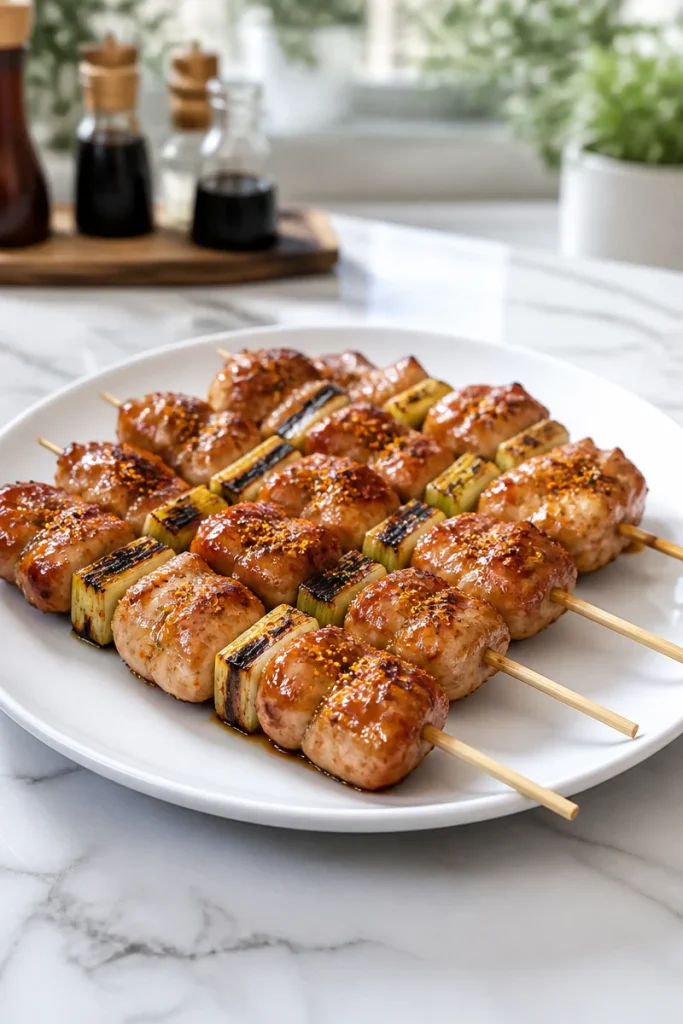
Yakitori Chicken Skewers
Ingredients
Method
- Soak the bamboo skewers in water for 30 minutes, or at least 10 minutes if you are short on time.
- Separate the dark green tops from the white and light green parts of the negi. Cut the white and light green parts into 1 1/4-inch pieces and halve the dark green tops crosswise.
- In a small saucepan, combine the soy sauce, mirin, sake, water, brown sugar, and green negi tops. Bring to a boil over high heat, then lower the heat and simmer uncovered until the mixture reduces to about one-third of its volume, about 30 minutes.
- Let the tare cool to room temperature, then reserve about one-third of the sauce for final basting.
- Cut the chicken thighs into 1 1/4-inch squares, fold each piece in half, pierce the folded edge at a 45-degree angle, and thread onto the skewer with a piece of negi.
- Each skewer should hold about 3 chicken pieces and 2 negi pieces.
- Line a baking sheet with foil, place an oven-safe wire rack on top, and grease the rack with neutral oil.
- Lay the skewers in two rows on the rack, cover the exposed ends with folded foil strips. Heat the broiler to High (550°F), with the rack in the middle position about 8 inches from the heat.
- Preheat for 3 to 5 minutes, then broil for 6 minutes. Baste, flip, and broil for a few minutes more until the chicken reaches 165°F and looks glossy.
