Salmon is one of those ingredients that always feels like a special treat, even when you cook it at home. There’s something so satisfying about a well-cooked piece of salmon glazed with a sweet and savory sauce. For me, the baked teriyaki glazed salmon fillet is pure comfort. It’s a dish that brings warmth to the table and is simple enough to make on a weeknight yet elegant enough for guests. The rich flavors, combined with tender, flaky fish, create a perfect harmony.
This recipe revolves around four 6-ounce salmon fillets, each coated in a homemade teriyaki glaze. The glaze is a vibrant mix of low-sodium soy sauce, pure maple syrup, rice vinegar, toasted sesame oil, garlic, and fresh ginger. This blend delivers a great balance of sweet, tangy, and nutty notes. Toasted sesame seeds and thinly sliced green onions add a final touch of crunch and freshness. It’s served best over fluffy white rice and paired with steamed broccoli to round out the meal.
What I love most about this baked teriyaki salmon recipe is how straightforward the process is. You start by preheating your oven to 400 degrees Fahrenheit and preparing a baking sheet. Next, you make a glossy, thick glaze on the stovetop by simmering the soy sauce mixture and gently thickening it with cornstarch. Then, you brush half the glaze over the salmon and bake it until tender and juicy. Lastly, you finish with a final brush of the extra glaze and a sprinkle of sesame seeds and green onions. It all comes together with hardly any fuss.
This dish is perfect for cozy family dinners or when you want a light yet delicious meal during chilly evenings. It’s also a great option for potlucks, as it can be made ahead and reheated gently without losing flavor. The recipe stores well, making it easy to enjoy leftovers too.
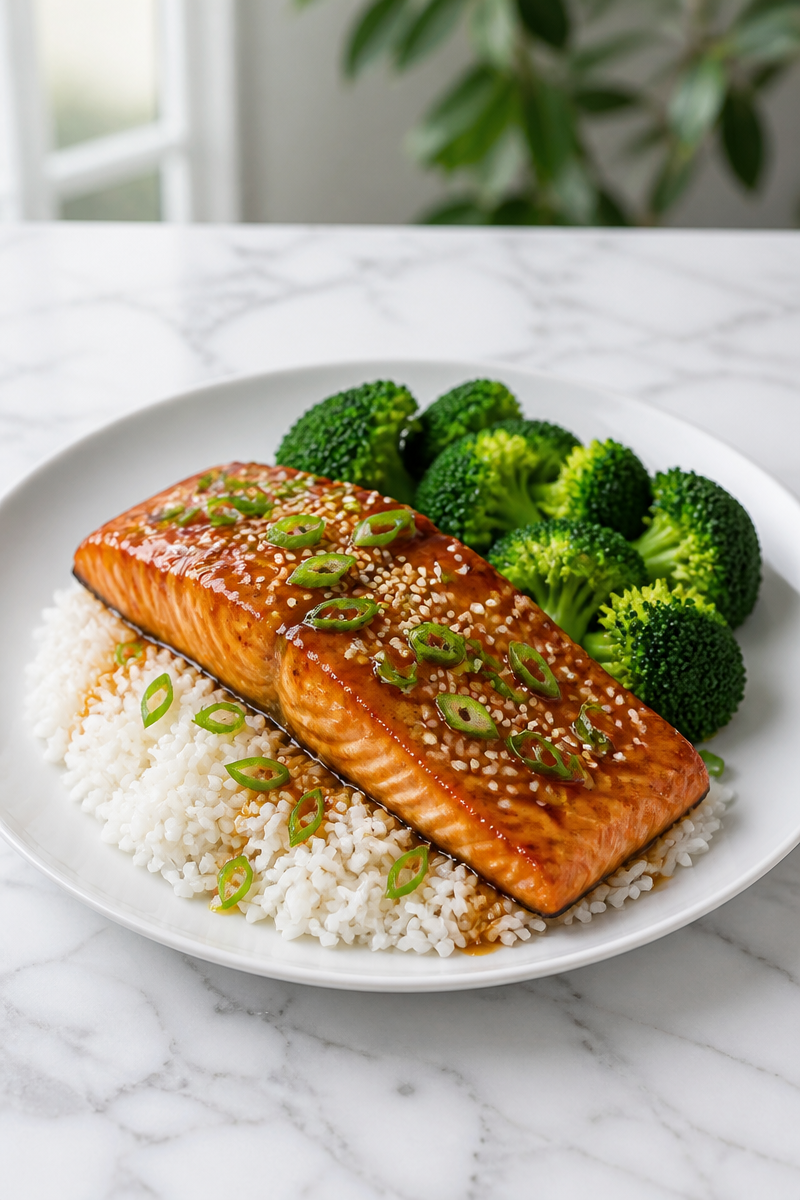
Why You’ll Love This Baked Teriyaki Glazed Salmon Fillet
- Quick to Prepare: The sauce comes together in minutes, and the salmon bakes in under 15 minutes.
- Simple Ingredients: Most are pantry staples or easy to find at any grocery store, including the low-sodium soy sauce and maple syrup.
- Balanced Flavors: The glaze combines sweet, salty, tangy, and nutty notes for a tasty punch.
- Healthy and Light: It’s a nutritious meal packed with omega-3 fatty acids, protein, and vegetables.
- Family Friendly: The flavors appeal to all ages, including seniors, and it pairs wonderfully with plain rice and steamed veggies.
Salmon Tips
Choosing the right salmon is key to making this recipe shine. Freshness is important, so look for fillets with a vibrant pink color and firm texture. If fresh salmon isn’t available, frozen wild-caught salmon works well—just thaw it in the refrigerator overnight. For the best flavor and tenderness, opt for skin-on fillets if possible; you can easily remove the skin after cooking if you prefer. When baking, make sure your salmon is at room temperature before putting it in the oven so it cooks evenly. If you like, pat the fillets dry with paper towels before glazing to help the sauce stick better.
Options for Substitutions
- Replace low-sodium soy sauce with tamari for a gluten-free option.
- Substitute pure maple syrup with honey or brown sugar for a different sweetness.
- Use apple cider vinegar or white vinegar instead of rice vinegar if needed.
- Swap toasted sesame oil with a neutral oil like avocado or vegetable oil, although the sesame flavor will be less pronounced.
- Instead of garlic cloves, use garlic powder—about 1/2 teaspoon works well.
- For an alternative side, serve with quinoa or cauliflower rice instead of white rice.
Watch Out for These Mistakes
Overcooking the salmon is a common pitfall. Salmon can dry out quickly if baked too long or at too high a temperature. To avoid this, aim for an internal temperature of 145°F, and check the fish at the 12-minute mark. It should flake easily but still feel moist.
When making the glaze, be careful not to boil it for too long after adding the cornstarch slurry. Overcooking can cause it to become too thick or lumpy. Stir continuously on medium heat until it turns glossy and thickens, then remove it from the heat.
Another mistake is adding all the glaze before baking. Brushing only half the glaze before baking and reserving the rest to brush on after baking ensures your salmon stays moist and glossy without burning the sugars in the sauce.
Finally, seasoning is important. Using low-sodium soy sauce allows you to control the saltiness, but if your brand is saltier, adjust the glaze ingredients accordingly or skip adding extra salt.
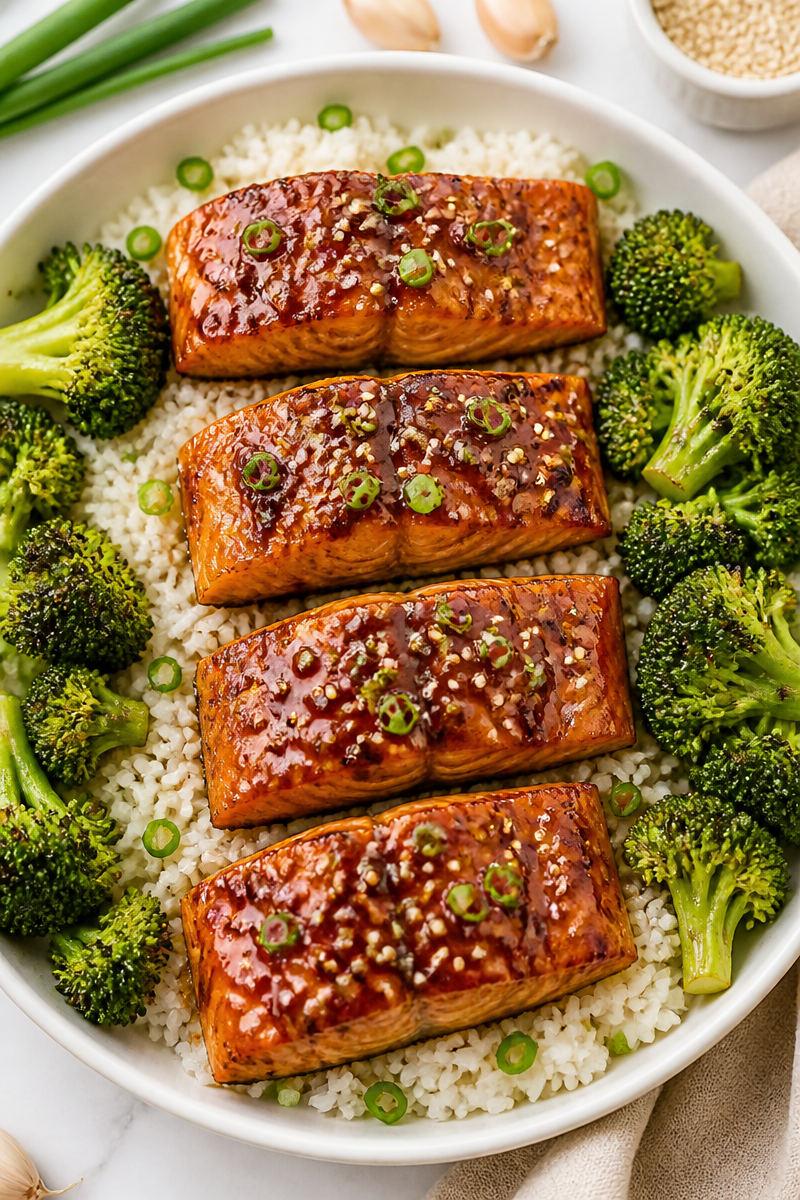
What to Serve With Baked Teriyaki Glazed Salmon Fillet?
This baked teriyaki glazed salmon pairs beautifully with simple sides like steamed broccoli and fluffy cooked white rice to soak up all the extra glaze. For variety, try serving it alongside sautéed snap peas, roasted sweet potatoes, or a crisp cucumber salad for added freshness and crunch. Light Asian-style slaws or steamed bok choy are also wonderful complements to round out the meal.
Storage Instructions
Store: Refrigerate leftover salmon covered well in an airtight container. It will keep fresh for up to 2 days.
Freeze: While you can freeze cooked salmon, it’s best to do so within 24 hours of cooking. Wrap tightly in foil and place in a freezer-safe bag or container. Use within 1 to 2 months for best flavor and texture.
Reheat: For reheating, gently warm the salmon in a covered skillet over low heat on the stove. This method helps maintain moisture and avoids drying out the fish. Alternatively, you can microwave leftovers on medium power for 30-45 seconds, covered loosely to prevent splattering.
Recipe Info
Preparation Time: About 15 minutes, including glaze preparation and oven preheating
Cooking Time: 12 to 15 minutes baking time for the salmon
Total Time: Around 30 minutes from start to finish
Level of Difficulty: Easy
Servings: 4 servings, based on 4 (6 oz) salmon fillets
Estimated Nutrition
Estimated nutrition for the whole recipe (without optional ingredients):
- Calories: 600 to 700
- Protein: 80 to 90 grams
- Fat: 20 to 25 grams (mostly healthy fats from salmon and sesame oil)
- Carbohydrates: 25 to 30 grams (mainly from maple syrup and rice)
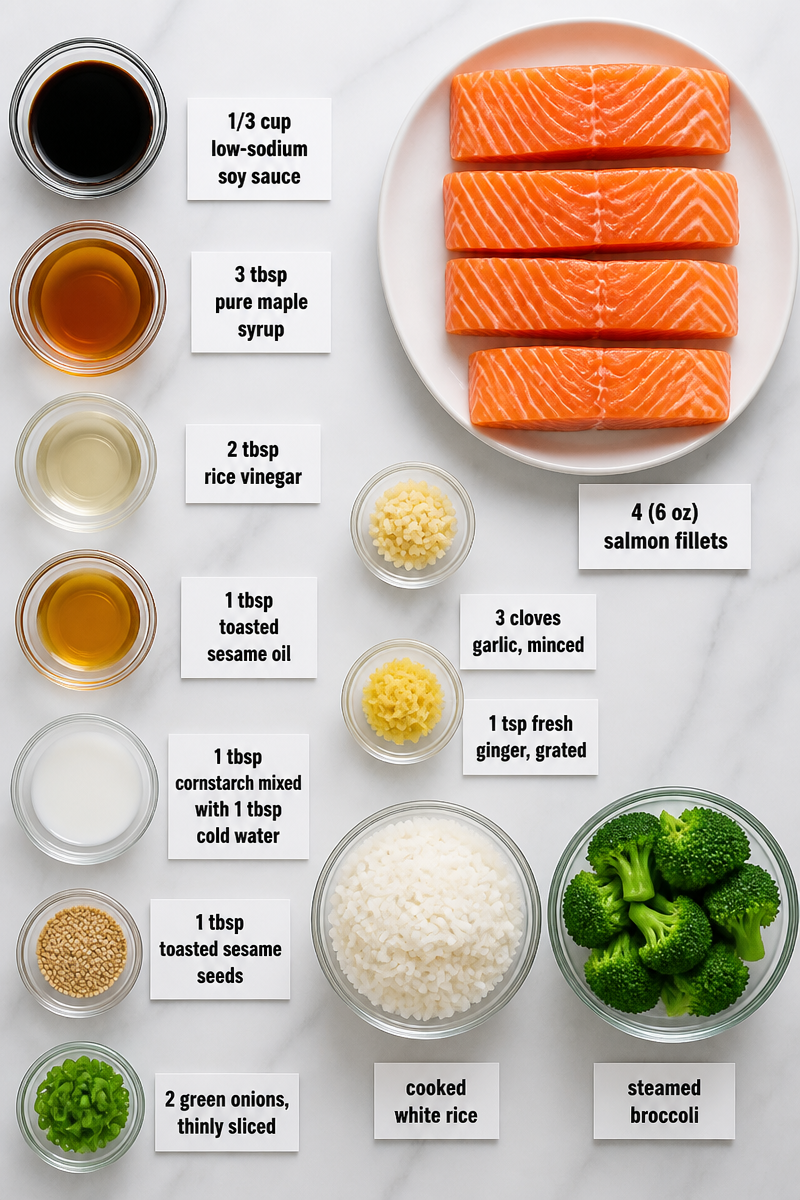
Ingredients
- 4 (6 oz) salmon fillets
- 1/3 cup low-sodium soy sauce
- 3 tbsp pure maple syrup
- 2 tbsp rice vinegar
- 1 tbsp toasted sesame oil
- 3 cloves garlic, minced
- 1 tsp fresh ginger, grated
- 1 tbsp cornstarch mixed with 1 tbsp cold water
- 1 tbsp toasted sesame seeds
- 2 green onions, thinly sliced
- Cooked white rice and steamed broccoli, for serving
Step-by-Step Instructions
Step 1: Preheat Oven and Prepare Baking Sheet
Preheat your oven to 400°F. Line a baking sheet with aluminum foil and lightly grease the surface to prevent the salmon from sticking. This setup will make cleanup easier too.
Step 2: Make the Teriyaki Glaze
In a small saucepan, whisk together the low-sodium soy sauce, maple syrup, rice vinegar, toasted sesame oil, minced garlic, and grated ginger. Place the saucepan over medium heat and bring the mixture to a gentle simmer. Cook for about 2 minutes, stirring regularly to combine the flavors.
Next, whisk in the cornstarch mixed with cold water (cornstarch slurry) to the simmering sauce. Continue stirring and cook for 1 to 2 minutes until the glaze thickens and becomes glossy. Remove the saucepan from the heat to prevent over-thickening.
Step 3: Glaze the Salmon Fillets
Arrange the salmon fillets on the prepared baking sheet. Brush each fillet generously with half of the teriyaki glaze, reserving the other half for later. Make sure the fillets are coated well for maximum flavor.
Step 4: Bake the Salmon
Place the baking sheet in the preheated oven. Bake the salmon for 12 to 15 minutes, depending on thickness, until it flakes easily with a fork and reaches an internal temperature of 145°F as measured with a food thermometer.
Step 5: Finish with Glaze and Garnish
Once baking is complete, brush the baked salmon with the remaining teriyaki glaze for an extra layer of flavor. Sprinkle the fillets with toasted sesame seeds and the thinly sliced green onions for a beautiful and tasty finish.
Step 6: Serve Immediately
Serve your glazed salmon fillets immediately over bowls of fluffy white rice with a side of steamed broccoli. This combination complements the rich marinade beautifully and balances the meal.
Conclusion
This baked teriyaki glazed salmon fillet recipe is a simple, healthy, and delicious meal anyone can prepare at home. It combines wholesome ingredients with a sweet-and-savory glaze that enhances the natural flavors of the salmon. Since it’s quick to make, light on ingredients, and perfect for any occasion, I highly recommend giving it a try. You’ll love how tender and flavorful the salmon turns out. Don’t forget to share your experience or variations in the comments below, and check out my other easy salmon recipes and dinner ideas to keep your meals exciting!
Baked Teriyaki Glazed Salmon Fillet
Ingredients
Method
- Preheat your oven to 400°F. Line a baking sheet with aluminum foil and lightly grease the surface.
- In a small saucepan, whisk together the low-sodium soy sauce, maple syrup, rice vinegar, toasted sesame oil, minced garlic, and grated ginger. Heat over medium and bring to a gentle simmer, cooking for about 2 minutes.
- Whisk in the cornstarch slurry and cook for another 1 to 2 minutes until the glaze thickens and becomes glossy. Remove from heat.
- Arrange the salmon fillets on the prepared baking sheet and brush each with half of the teriyaki glaze.
- Bake the salmon for 12 to 15 minutes until it flakes easily and reaches an internal temperature of 145°F.
- Once baked, brush the remaining glaze on the salmon and sprinkle with toasted sesame seeds and green onions.
- Serve immediately over bowls of fluffy white rice with a side of steamed broccoli.
